


Preclinical assessment for selectively disrupting a traumatic memory via postretrieval inhibition of glucocorticoid receptors
- PMID: 18708183
- PMCID: PMC2668168
- DOI: 10.1016/j.biopsych.2008.07.005
Preclinical assessment for selectively disrupting a traumatic memory via postretrieval inhibition of glucocorticoid receptors
Abstract
Background: Traumatic experiences may lead to debilitating psychiatric disorders including acute stress disorder and posttraumatic stress disorder. Current treatments for these conditions are largely ineffective, and novel therapies are needed. A cardinal symptom of these pathologies is the reexperiencing of the trauma through intrusive memories and nightmares. Studies in animal models indicate that memories can be weakened by interfering with the postretrieval restabilization process known as memory reconsolidation. We previously reported that, in rats, intraamygdala injection of the glucocorticoid receptor antagonist RU38486 disrupts the reconsolidation of a traumatic memory. Here we tested parameters important for designing novel clinical protocols targeting the reconsolidation of a traumatic memory with RU38486.
Methods: Using rat inhibitory avoidance, we tested the efficacy of postretrieval systemic administration of RU38486 on subsequent memory retention and evaluated several key preclinical parameters.
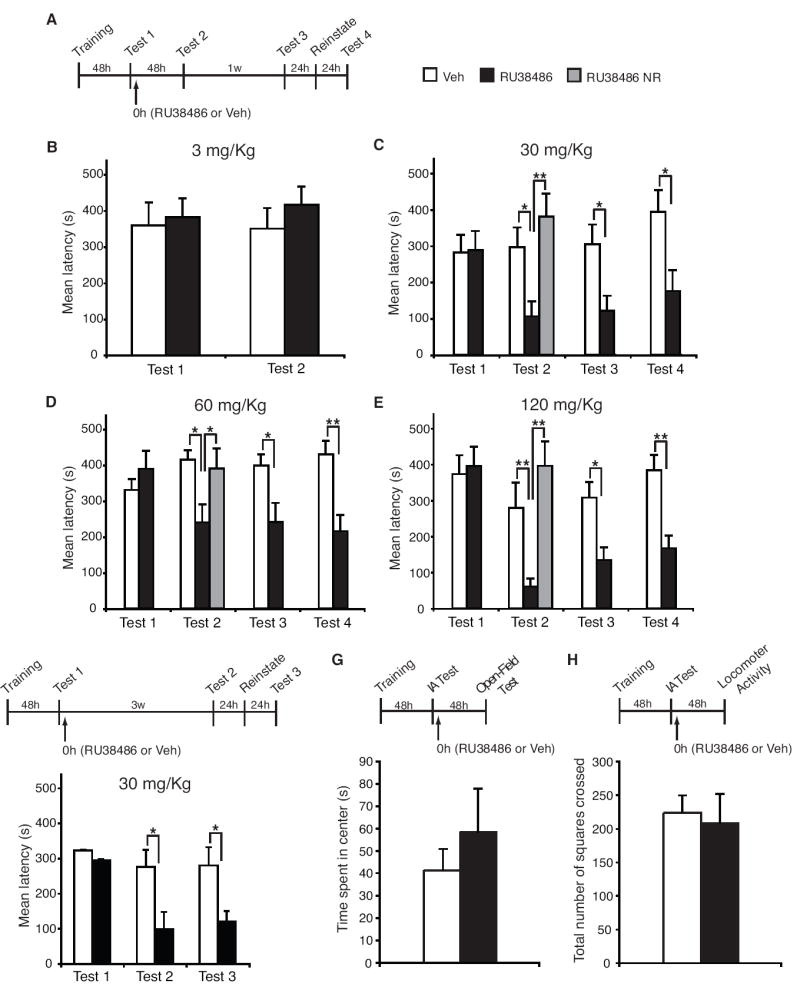
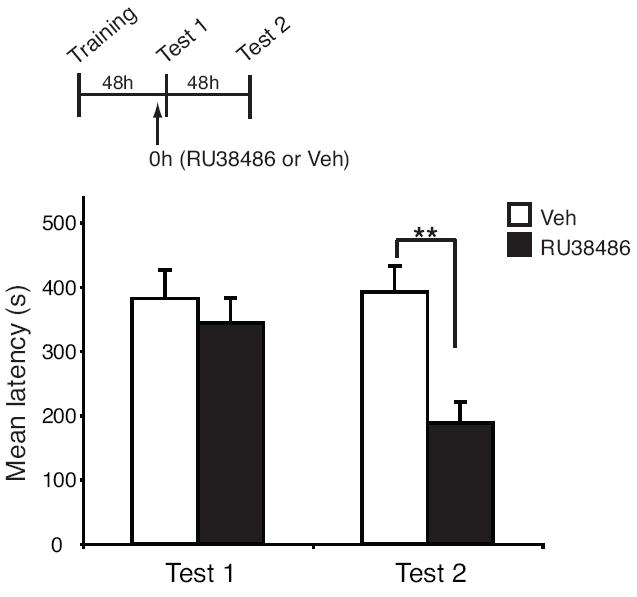
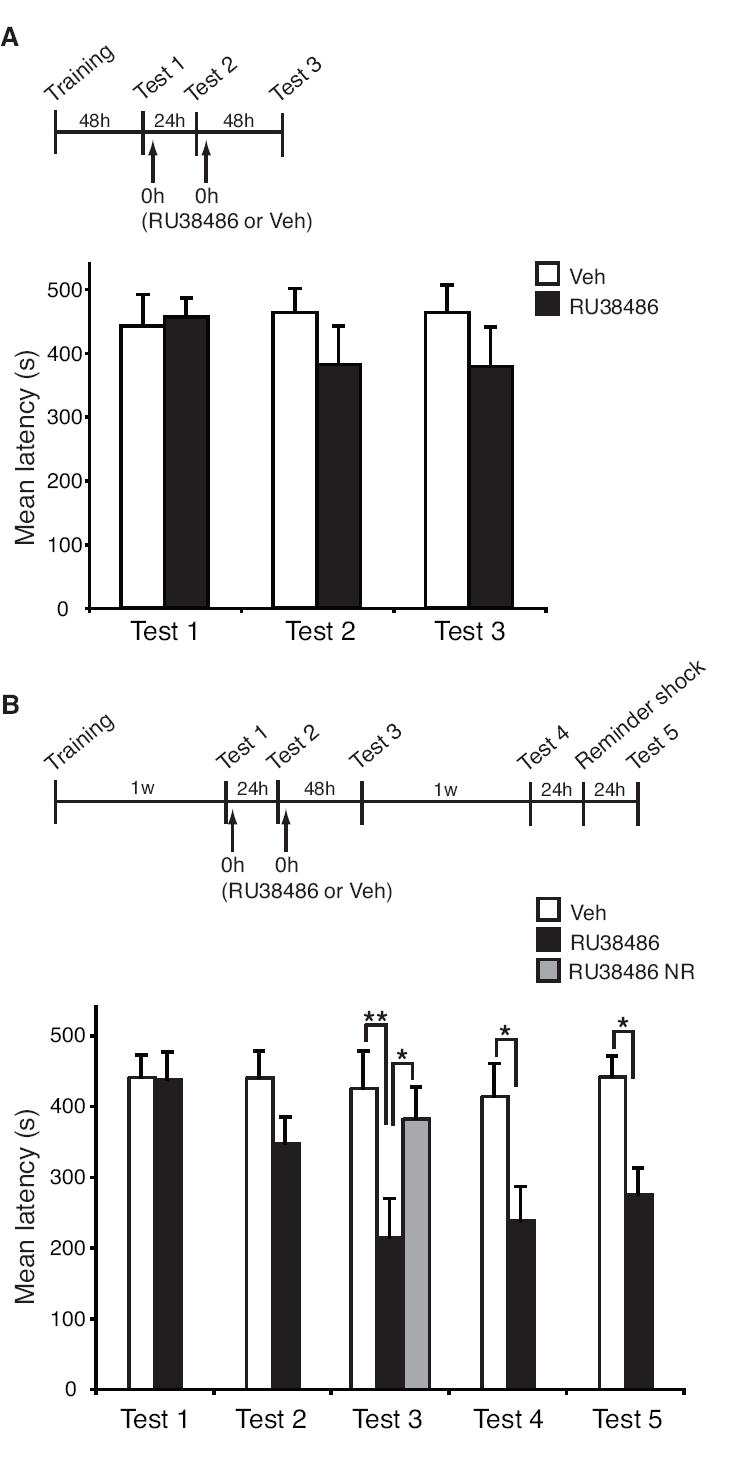
Results: Systemic administration of RU38486 before or after retrieval persistently weakens inhibitory avoidance memory retention in a dose-dependent manner, and memory does not reemerge following a footshock reminder. The efficacy of treatment is a function of the intensity of the initial trauma, and intense traumatic memories can be disrupted by changing the time and number of interventions. Furthermore, one or two treatments are sufficient to disrupt the memory maximally. The treatment selectively targets the reactivated memory without interfering with the retention of another nonreactivated memory.
Conclusions: RU38486 is a potential novel treatment for psychiatric disorders linked to traumatic memories. Our data provide the parameters for designing promising clinical trials for the treatment of flashback-type symptoms of PTSD.
Conflict of interest statement
The authors reported no biomedical financial interests or potential conflicts of interest.
Figures



References
-
- American Psychiatric Association. Diagnostic and Statistical Manual of Mental Disorders. Washington, DC: American Psychiatric Association Press; 2000.
-
- Kessler RC, Sonnega A, Bromet E, Hughes M, Nelson CB. Posttraumatic stress disorder in the National Comorbidity Survey. Arch Gen Psychiatry. 1995;52:1048–1060. - PubMed
-
- Brady K, Pearlstein T, Asnis GM, Baker D, Rothbaum B, Sikes CR, et al. Efficacy and safety of sertraline treatment of posttraumatic stress disorder: a randomized controlled trial. Jama. 2000;283:1837–1844. - PubMed
-
- Tucker P, Zaninelli R, Yehuda R, Ruggiero L, Dillingham K, Pitts CD. Paroxetine in the treatment of chronic posttraumatic stress disorder: results of a placebo-controlled, flexible-dosage trial. J Clin Psychiatry. 2001;62:860–868. - PubMed
-
- Fairbank JA, Nicholson RA. Theoretical and empirical issues in the treatment of post-traumatic stress disorder in Vietnam veterans. J Clin Psychol. 1987;43:44–55. - PubMed
Publication types
MeSH terms
Substances
Grants and funding
LinkOut - more resources
Full Text Sources
Medical
