


Lateral retinacular release rates in mobile- versus fixed-bearing TKA
- PMID: 18709430
- PMCID: PMC2565058
- DOI: 10.1007/s11999-008-0425-y
Lateral retinacular release rates in mobile- versus fixed-bearing TKA
Abstract
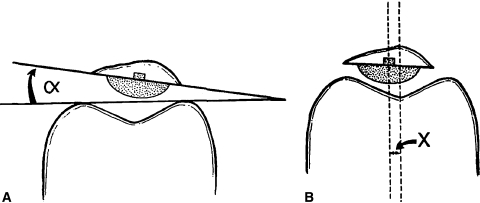
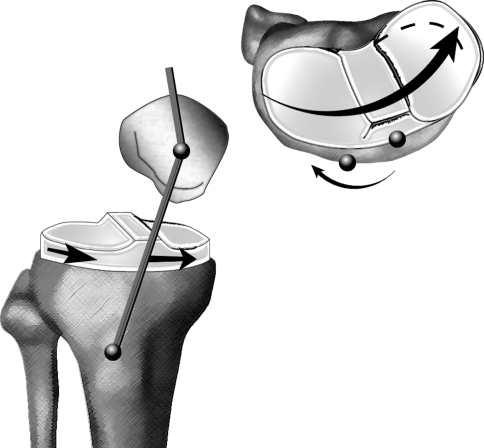
Controversy exists as to whether bearing mobility facilitates centralization of the extensor mechanism after TKA. To assess the incidence of lateral retinacular release, we retrospectively reviewed 1318 consecutive primary TKAs (1032 patients) performed by one surgeon using either a rotating-platform bearing (940) or a fixed bearing (378) from the same implant system. The selection of a fixed- versus mobile-bearing TKA was primarily based on age with patients younger than 70 years receiving a mobile-bearing TKA. We performed a lateral release whenever continuous symmetric patellar facet contact with the trochlear groove from 0 degrees to 90 degrees of flexion was not obtained using the rule of no thumb after tourniquet release. One hundred four of 1318 knees (7.9%) had a lateral release. We performed more lateral releases in the fixed-bearing group (14.3% [54 of 378]) than in the mobile-bearing group (5.3% [50 of 940]). Patellar tilt occurred more often in the mobile-bearing group (10% [94 of 940]) than in the fixed-bearing group (6.9% [26 of 378]), although the magnitude of mean patellar tilt was small in both groups (mobile-bearing 3.0 degrees ; fixed bearing 2.55 degrees ). No patient had patellar subluxation greater than 5 mm. We suspect the fewer lateral releases in the mobile-bearing group is the result of better extensor mechanism centralization provided by bearing rotation.
Level of evidence: Level III, prognostic study. See the Guidelines for a complete description of levels of evidence.
Figures
References
-
- Arima J, Whiteside LA, McCarthy DS, White SE. Femoral rotation alignment based on the anteroposterior axis in total knee arthroplasty. J Bone Joint Surg Am. 1995;77:1331–1334. - PubMed
-
- Berger RA, Rubash HE, Seel MJ, Thompson WH, Crossett LS. Determining the rotation alignment of the femoral component in the total knee arthroplasty using the epicondylar axis. Clin Orthop Relat Res. 1993;286:40–47. - PubMed
-
- Bindelglass DF, Cohen JL, Dorr LD. Patellar tilt and subluxation in total knee arthroplasty: relationship to pain, fixation, and design. Clin Orthop Relat Res. 1993;286:103–109. - PubMed
-
- Brick GW, Scott RD. The patellofemoral component of total knee arthroplasty. Clin Orthop Relat Res. 1988;231:163–178. - PubMed
Publication types
MeSH terms
LinkOut - more resources
Full Text Sources
Medical
