


Introduction and immunopathogenesis of acquired immune deficiency syndrome
- PMID: 18711263
- PMCID: PMC2636143
- DOI: 10.4103/0301-4738.42411
Introduction and immunopathogenesis of acquired immune deficiency syndrome
Abstract
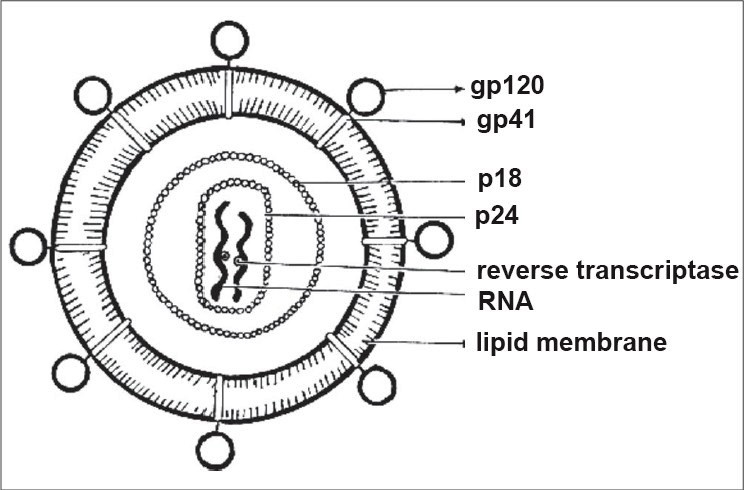
India has a large number of patients with acquired immune deficiency syndrome (AIDS), the third largest population of this group in the world. This disease was first described in patients with Pneumocystis pneumonia in 1981. Ocular lesions can occur at any stage of the disease but are more commonly seen at the late stages. Human immunodeficiency virus (HIV), the causative agent of AIDS is a retrovirus with RNA genome and a unique 'Reverse transcriptase enzyme' and is of two types, HIV-1 and 2. Most human diseases are caused by HIV-1. The HIV-1 subtypes prevalent in India are A, B and C. They act predominantly by reducing the CD4+ cells and thus the patient becomes susceptible to opportunistic infections. High viral titers in the peripheral blood during primary infection lead to decrease in the number of CD4+ T lymphocytes. Onset of HIV-1-specific cellular immune response with synthesis of HIV-1 specific antibodies leads to the decline of plasma viral load and chronification of HIV-1 infection. However, the asymptomatic stage of infection may lead to persistent viral replication and a rapid turnover of plasma virions which is the clinical latency. During this period, there is further decrease in the CD4+ counts which makes the patient's immune system incapable of controlling opportunistic pathogens and thus life-threatening AIDS-defining diseases emerge. Advent of highly active antiretroviral treatment (HAART) has revolutionized the management of AIDS though there is associated increased development of immune recovery uveitis in a few of these patients.
Figures
References
-
- Fanci AS. Twenty-five years of HIV-AIDS. Science. 2006;315:409. - PubMed
-
- HIV-AIDS epidemiological Surveillance and Estimation report for the year 2005. Indian National AIDS Control Organization (NACO) 2006 Apr
-
- Biswas J, Madhavan HN, Badrinath SS. Ocular lesions in AIDS: A report of first two cases in India. Indian J Ophthalmol. 1995;43:69–72. - PubMed
-
- Biswas J, Madhavan HN, George AE, Kumarasamy N, Solomon S. Ocular lesions associated with HIV infection in India: A series of 100 consecutive patients evaluated at a referral center. Am J Ophthalmol. 2000;129:9–15. - PubMed
-
- Babu RB, Sudharshan S, Kumarasamy N, Therese KL, Biswas J. Ocular tuberculosis in acquired immunodeficiency syndrome. Am J Ophthalmol. 2006;142:413–8. - PubMed
Publication types
MeSH terms
Substances
LinkOut - more resources
Full Text Sources
Medical
Research Materials
