. 2008 Aug 20;3(8):e3023.
doi: 10.1371/journal.pone.0003023.

Neutralization of botulinum neurotoxin by a human monoclonal antibody specific for the catalytic light chain

Affiliations

Neutralization of botulinum neurotoxin by a human monoclonal antibody specific for the catalytic light chain

Sharad P Adekar et al. PLoS One. .

Abstract

Background: Botulinum neurotoxins (BoNT) are a family of category A select bioterror agents and the most potent biological toxins known. Cloned antibody therapeutics hold considerable promise as BoNT therapeutics, but the therapeutic utility of antibodies that bind the BoNT light chain domain (LC), a metalloprotease that functions in the cytosol of cholinergic neurons, has not been thoroughly explored.

Methods and findings: We used an optimized hybridoma method to clone a fully human antibody specific for the LC of serotype A BoNT (BoNT/A). The 4LCA antibody demonstrated potent in vivo neutralization when administered alone and collaborated with an antibody specific for the HC. In Neuro-2a neuroblastoma cells, the 4LCA antibody prevented the cleavage of the BoNT/A proteolytic target, SNAP-25. Unlike an antibody specific for the HC, the 4LCA antibody did not block entry of BoNT/A into cultured cells. Instead, it was taken up into synaptic vesicles along with BoNT/A. The 4LCA antibody also directly inhibited BoNT/A catalytic activity in vitro.

Conclusions: An antibody specific for the BoNT/A LC can potently inhibit BoNT/A in vivo and in vitro, using mechanisms not previously associated with BoNT-neutralizing antibodies. Antibodies specific for BoNT LC may be valuable components of an antibody antidote for BoNT exposure.


Conflict of interest statement

Competing Interests: SKD has ownership in a start-up company (Immunome, Inc.), which intends to license the 4LCA antibody. SPA is a part-time employee of Immunome.

Figures

Figure 1
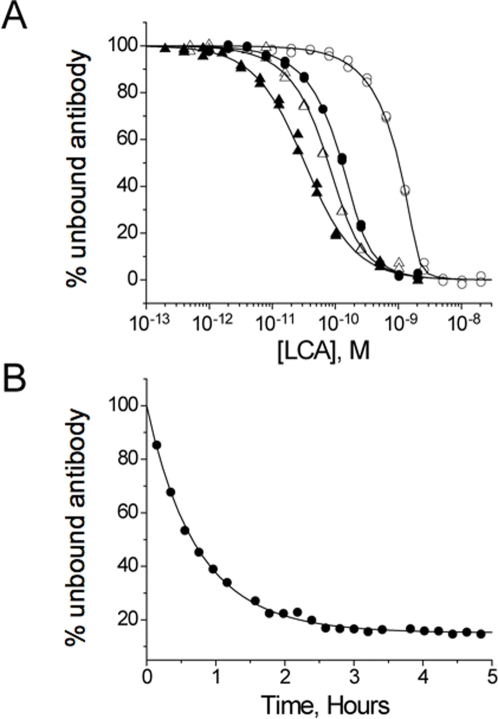
Figure 1. Kinetic exclusion analysis (KinExA) of the solution binding properties of the 4LCA antibody and BoNT/A LC.
(A) The equilibrium binding affinity was determined by titrating recombinant BoNT/A LC into solutions of fixed 4LCA concentration. At equilibrium, free 4LCA was captured by passage through a bead matrix conjugated to LC and measured by binding of a fluorescent secondary antibody. The data were fit using the manufacturer's software to a bimolecular binding model, giving an optimized KD value of 31±5×10⁻¹² M. (B) The association rate constant (kon) was measured by mixing 4LCA (200 pM) with LC (10 pM) and measuring the concentration of free antibody concentration over time. The average kon value for 4LCA was estimated to be 2.3±0.1×10⁶ M−1 s−1, which gives a calculated koff value of 7.1×10⁻⁵ s−1.
Figure 2
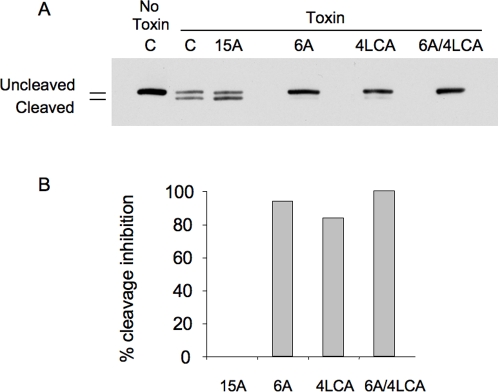
Figure 2. Effect of human antibodies on cleavage of SNAP-25 by BoNT/A in Neuro-2a cells.
Neuro-2a cells were incubated with BoNT/A for 48 hours in the presence or absence of human antibody. (A) Cleavage of SNAP-25 was detected by immunoblotting of whole cell extracts. Removal of a 9 amino acid C-terminal fragment gives a band of reduced size (Cleaved) in addition to an intact SNAP-25 band (Uncleaved). Cells received either the antibodies indicated or culture medium without antibody (M). (B) The extent of SNAP-25 cleavage in the experiment shown in Figure 2A was quantified by scanning densitometry. Values are reported normalized to the cell sample that contained BoNT/A but no antibody.
Figure 3
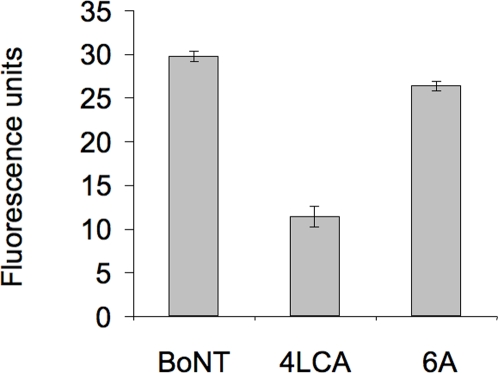
Figure 3. Inhibition of the catalytic activity of the BoNT/A metalloprotease by the 4LCA antibody in vitro.
In this fluorescence resonance energy transfer assay (FRET), cleavage of the SNAPtide by BoNT/A LC un-quenches FITC fluorescence, which is quantified as arbitrary fluorescence units. In triplicate samples, the SNAPtide was incubated with BoNT/A alone or with the 6A or 4LCA antibodies and fluorescence was measured. Standard deviation (s.d.) is indicated by error bars.
Figure 4
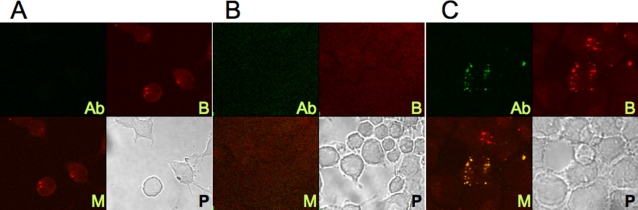
Figure 4. The effect of BoNT/A-specific antibodies on endocytosis of BoNT/A by Neuro-2a cells.
Neuro-2a cells were cultured with fluorescently-labeled BoNT/A (red), with or without human antibody (green), and visualized by confocal microscopy. Panel (A) No antibody. (B) 6A antibody. (C) 4LCA antibody. In each panel, 4 images of each field are shown: BoNT/A (BT), Antibody (AB), merged (M), and phase contrast (P).

References

    1. Arnon SS, Schechter R, Inglesby TV, Henderson DA, Bartlett JG, et al. Botulinum toxin as a biological weapon: medical and public health management. JAMA. 2001;285:1059–1070. - PubMed
    1. Wein LM, Liu Y. Analyzing a bioterror attack on the food supply: the case of botulinum toxin in milk. Proc Natl Acad Sci U S A. 2005;102:9984–9989. - PMC - PubMed
    1. Simpson LL. Identification of the major steps in botulinum toxin action. Annu Rev Pharmacol Toxicol. 2004;44:167–193. - PubMed
    1. Dong M, Yeh F, Tepp WH, Dean C, Johnson EA, et al. SV2 is the protein receptor for botulinum neurotoxin A. Science. 2006;312:592–596. - PubMed
    1. Mahrhold S, Rummel A, Bigalke H, Davletov B, Binz T. The synaptic vesicle protein 2C mediates the uptake of botulinum neurotoxin A into phrenic nerves. FEBS Lett. 2006;580:2011–2014. - PubMed

Publication types