


Weight-specific health-related quality of life in adolescents with extreme obesity
- PMID: 18719653
- PMCID: PMC2713008
- DOI: 10.1038/oby.2008.347
Weight-specific health-related quality of life in adolescents with extreme obesity
Abstract
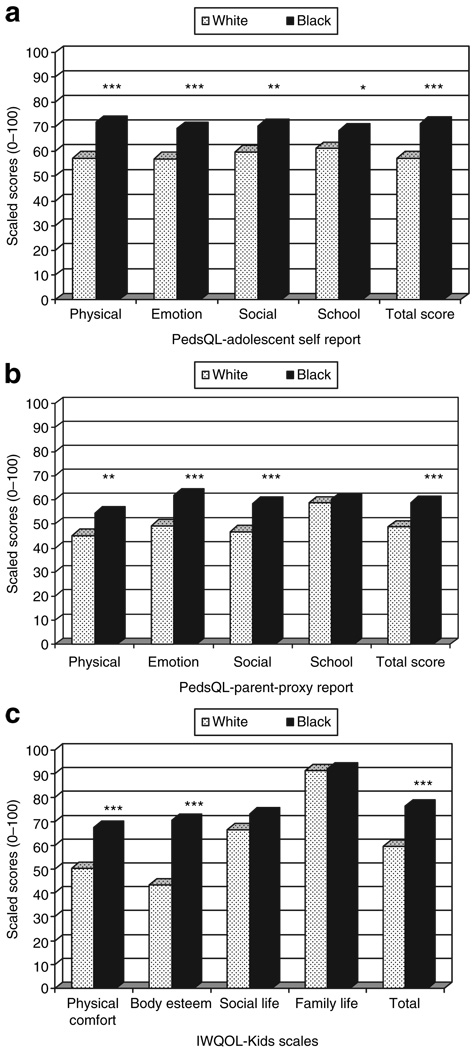
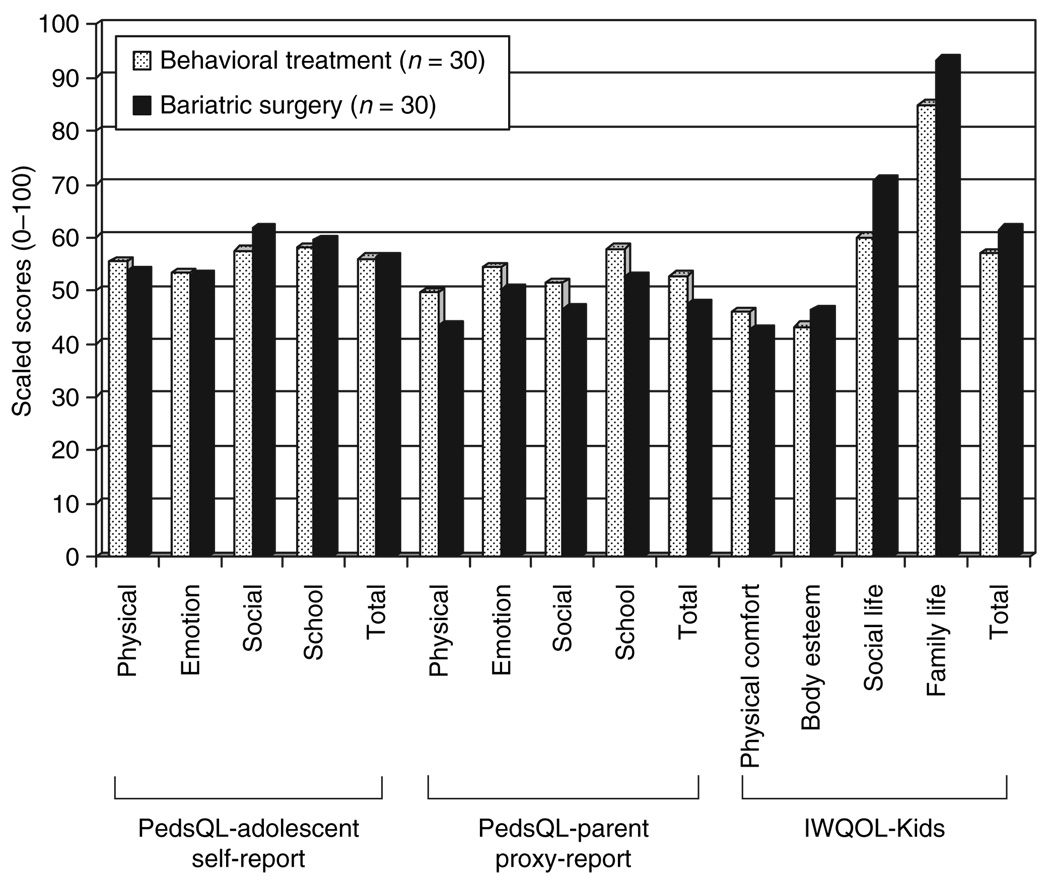
The objectives of this multisite study were to: (i) examine differences by gender and race on generic and weight- specific health-related quality of life (HRQOL) in adolescents with extreme obesity (BMI > or = 40 kg/m(2)) and (ii) explore HRQOL differences based on treatment pursued (behavioral vs. bariatric surgery). Study participants included 145 obese adolescents (mean age = 15.3 years; 68% female; 46% black; mean BMI = 50.6) referred to pediatric weight management programs. Participants completed generic (PedsQL) and weight-specific (Impact of Weight on Quality of Life-Kids (IWQOL-Kids)) HRQOL measures. Generic and weight-specific measures indicated global (e.g., all domains) HRQOL impairment and significant differences by race. Physical, emotional, and social scores of the PedsQL (Ps < 0.01) and the physical comfort and body esteem scores of the IWQOL-Kids (Ps < 0.001) were significantly higher for black compared to white adolescents with extreme obesity. Extremely obese adolescents pursuing bariatric surgery reported similar HRQOL to adolescents pursuing behavioral treatment (n = 30 matched pairs). HRQOL did not differ for extremely obese adolescents based on type of treatment sought, but race/ethnicity should be considered when characterizing these youth. Although racial differences in adolescent body image/esteem have been reported, it is unknown why black adolescents with extreme obesity would report less impact of weight on their physical functioning. Overall, these data suggest that HRQOL is not homogenous in adolescents with extreme obesity.
Conflict of interest statement
The authors declared no conflict of interest.
Figures
References
-
- Freedman DS, Khan LK, Serdula MK, Ogden CL, Dietz WH. Racial and ethnic differences in secular trends for childhood BMI, weight, and height. Obesity (Silver Spring) 2006;14:301–308. - PubMed
-
- Jolliffe D. Extent of overweight among US children and adolescents from 1971 to 2000. Int J Obes Relat Metab Disord. 2004;28:4–9. - PubMed
-
- Ogden CL, Carroll MD, Curtin LR, et al. Prevalence of overweight and obesity in the United States, 1999–2004. JAMA. 2006;295:1549–1555. - PubMed
-
- Kirk S, Zeller MH, Claytor R, et al. The relationship of health outcomes to improvement in BMI in children and adolescents. Obes Res. 2005;13:876–882. - PubMed
-
- Levine MD, Ringham RM, Kalarchian MA, Wisniewski L, Marcus MD. Is family-based behavioral weight control appropriate for severe pediatric obesity? Int J Eat Disord. 2001;30:318–328. - PubMed
Publication types
MeSH terms
Grants and funding
LinkOut - more resources
Full Text Sources
Medical
