. 2008 Oct 2;455(7213):674-8.
doi: 10.1038/nature07317. Epub 2008 Aug 24.

STING is an endoplasmic reticulum adaptor that facilitates innate immune signalling

Affiliations

STING is an endoplasmic reticulum adaptor that facilitates innate immune signalling

Hiroki Ishikawa et al. Nature. .

Erratum in

  • Nature. 2008 Nov 13;456(7219):274

Abstract

The cellular innate immune system is essential for recognizing pathogen infection and for establishing effective host defence. But critical molecular determinants responsible for facilitating an appropriate immune response-following infection with DNA and RNA viruses, for example-remain to be identified. Here we report the identification, following expression cloning, of a molecule (STING; stimulator of interferon genes) that appears essential for effective innate immune signalling processes. It comprises five putative transmembrane regions, predominantly resides in the endoplasmic reticulum and is able to activate both NF-kappaB and IRF3 transcription pathways to induce expression of type I interferon (IFN-alpha and IFN-beta ) and exert a potent anti-viral state following expression. In contrast, loss of STING rendered murine embryonic fibroblasts extremely susceptible to negative-stranded virus infection, including vesicular stomatitis virus. Further, STING ablation abrogated the ability of intracellular B-form DNA, as well as members of the herpesvirus family, to induce IFN-beta, but did not significantly affect the Toll-like receptor (TLR) pathway. Yeast two-hybrid and co-immunoprecipitation studies indicated that STING interacts with RIG-I and with SSR2 (also known as TRAPbeta), which is a member of the translocon-associated protein (TRAP) complex required for protein translocation across the endoplasmic reticulum membrane following translation. Ablation by RNA interference of both TRAPbeta and translocon adaptor SEC61beta was subsequently found to inhibit STING's ability to stimulate expression of IFN-beta. Thus, as well as identifying a regulator of innate immune signalling, our results imply a potential role for the translocon in innate signalling pathways activated by select viruses as well as intracellular DNA.


Figures
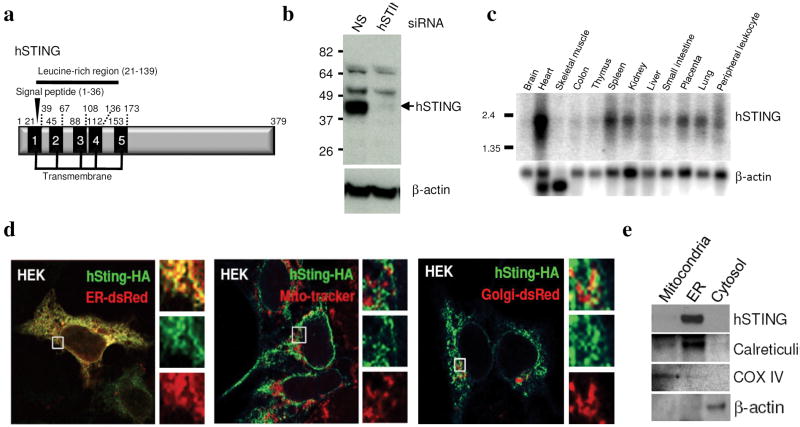
Fig 1
Fig 1. STING is an ER protein
a. Schematic of hSTING indicating transmembrane and leucine rich regions. b. Immunoblot analysis of STING in HEK 293 cells treated with RNAi to STING (hSTING) or control RNAi (NS). c. Northern blot analysis of human STING. d. Confocal analysis of HEK 293 cells transfected with hSTING tagged at the carboxyl end with HA. Transfected cells were also analyzed using ER-dsRed, Mitotracker or Golgi-dsRed. e. Fractionation experiments confirm that STING resides in the ER. Control antibodies indicate accuracy of fractionation (Calreticulin- ER, COX IV-mitochondria, β-actin- cytosol).
Fig 2
Fig 2. STING facilitates IFN induction
a. 293T cells were transfected with an IFNβ-Luc (p110-Luc) plasmid and increasing amounts of human (hSTING), murine (mSTING) or control ΔRIG-I. b. 293T cells transfected as in (a) with either PRD-III-I-Luc (b), NF-κB-Luc (c) or ISRE-Luc (d) reporter plasmids were analyzed similarly. e. MEF’s were transfected as in (a) and IFNβ mRNA was analyzed by qRT-PCR. f. Medium from transfected MEFs was analyzed for IFNβ protein by ELISA. g. Microarray analysis of 293T cells transfected with hSTING. h. MEF’s transfected with STING or ΔRIG-I or IPS-1 are resistant to VSV-GFP infection (MOI 1). i. Plaque assay from (h). j. TBK-1 deficient MEFs do not facilitate STING signaling. k. Schematic of hSTING variants. l. 293T cells were transfected as in (a) with hSTING or variants and luciferase measured. m. 293T cells were transfected with STING and increasing amounts of hSTING-Full, hSTING-N or hSTING-C with luciferase plasmids as in (a). Asterisks indicate significant difference (P < 0.05) as determined by Student’s t-test. Error bars; +/− s.d.
Fig 3
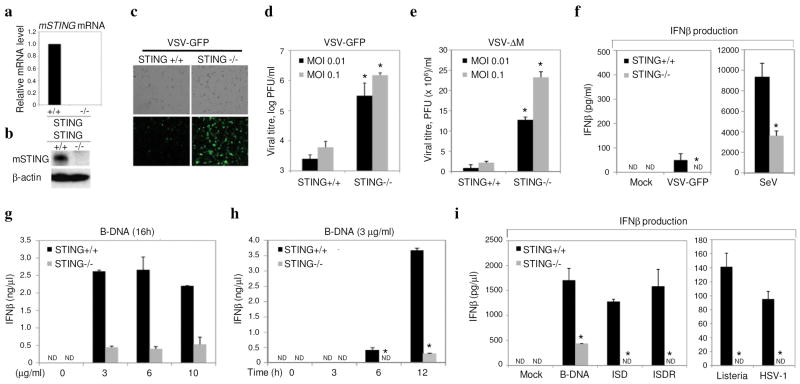
Fig 3. Loss of STING affects host defense
a. qRT-PCR analysis of mSTING mRNA in STING −/− or control MEFs. b. Immunoblot of mSTING in −/− cells or controls. c. Fluorescence microscopy (GFP) of mSTING −/− or controls infected with VSV-GFP (MOI 0.1). d. Viral titers from (c). e. Viral titers following VSVΔM infection. f. Endogenous IFNβ levels from STING −/− or controls after infection with VSV-GFP (MOI 1) or Sendai Virus (SeV MOI 1) g. STING −/− MEF’s or controls were treated with transfected B-DNA and IFNβ measured by ELISA. h. Time course analysis of (g). i. STING −/− or controls were exposed to transfected B-form DNA, interferon stimulatory DNA (ISD), or ISD reversed nucleotide sequene (ISDR), Listeria monocytogenes (MOI 50), HSV (MOI 5) for 12 hours, and IFNβ measured by ELISA. Asterisks indicate significant difference (P < 0.05) as determined by Student’s t-test. Error bars; +/− s.d. ND; not detectable.
Fig 4
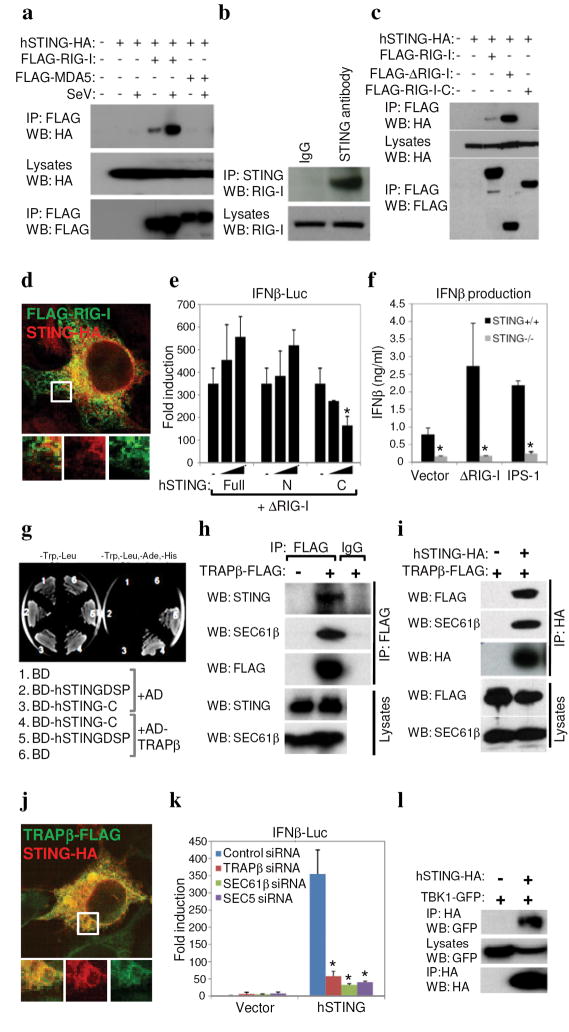
Fig 4. STING associates with the translocon
a. 293T cells were co-transfected with HA-STING, FLAG-RIG-I or MDA5 and infected with SeV (MOI 1). Lysates were immunoprecipitated (IP) and immunoblotted (IB) using antibodies to HA or FLAG. b. Endogenous hSTING associates with RIG-I in HUVECs. c. ΔRIG-I (aa1-284) and not RIG-I-C (aa218-925) associates with STING in co-transfected 293T cells. d. Confocal image of 293T cells co-transfected with tagged STING and RIG-I. e. 293T cells were co-transfected with control vector (−) or increasing amounts of full-length, amino (aa1-230) or carboxyl (aa173-379) STING and ΔRIG-I, and IFNβ-Luc was measured. f. Control or STING −/− MEFs were transfected with ΔRIG-I (aa1-284) or IPS-1 and IFNβ was measured by ELISA. g. BD-hSTING-C interacts with Ssr-2/TRAPβ (AD-hTRAPβ) in yeast-two hybrid screening (BD-hSTINGΔSP, amino acids 36-369; BD-hSTING-C amino acids 173-379). h. HEK 293 cells were transfected with FLAG-tagged TRAPβ and endogenous STING or Sec61β measured by immunoblot. i. STING and TRAPβ were co-transfected HEK 293 cells and analysis carried out as in (h). j. Co-localization of STING and TRAPβ in 293T cells. k. RNAi to TRAPβ, SEC61β or Sec5 in HEK 293 cells ablates STING signaling. l. HA-STING associates with GFP-TBK-1 in co-transfected HEK 293 cells. Asterisks indicate significant difference (P < 0.05) as determined by Student’s t-test. Error bars; +/− s.d.

References

    1. Hartmann E, et al. A tetrameric complex of membrane proteins in the endoplasmic reticulum. Eur J Biochem. 1993;214(2):375–81. - PubMed
    1. Menetret JF, et al. Architecture of the ribosome-channel complex derived from native membranes. J Mol Biol. 2005;348(2):445–57. - PubMed
    1. Takeuchi O, Akira S. Recognition of viruses by innate immunity. Immunol Rev. 2007;220:214–24. - PubMed
    1. Beutler B, et al. Genetic analysis of resistance to viral infection. Nat Rev Immunol. 2007;7(10):753–66. - PubMed
    1. Takahasi K, et al. Nonself RNA-Sensing Mechanism of RIG-I Helicase and Activation of Antiviral Immune Responses. Mol Cell. 2008;29(4):428–40. - PubMed