. 2008 Sep;118(9):3208-18.
doi: 10.1172/JCI35424.

Misfolded proteins activate factor XII in humans, leading to kallikrein formation without initiating coagulation

Affiliations

Misfolded proteins activate factor XII in humans, leading to kallikrein formation without initiating coagulation

Coen Maas et al. J Clin Invest. 2008 Sep.

Abstract

When blood is exposed to negatively charged surface materials such as glass, an enzymatic cascade known as the contact system becomes activated. This cascade is initiated by autoactivation of Factor XII and leads to both coagulation (via Factor XI) and an inflammatory response (via the kallikrein-kinin system). However, while Factor XII is important for coagulation in vitro, it is not important for physiological hemostasis, so the physiological role of the contact system remains elusive. Using patient blood samples and isolated proteins, we identified a novel class of Factor XII activators. Factor XII was activated by misfolded protein aggregates that formed by denaturation or by surface adsorption, which specifically led to the activation of the kallikrein-kinin system without inducing coagulation. Consistent with this, we found that Factor XII, but not Factor XI, was activated and kallikrein was formed in blood from patients with systemic amyloidosis, a disease marked by the accumulation and deposition of misfolded plasma proteins. These results show that the kallikrein-kinin system can be activated by Factor XII, in a process separate from the coagulation cascade, and point to a protective role for Factor XII following activation by misfolded protein aggregates.


Figures
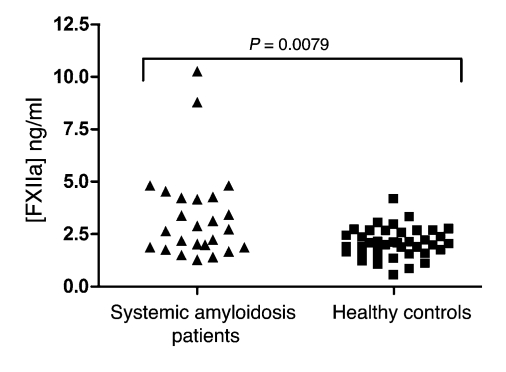
Figure 1
Figure 1. Elevated FXIIa levels in systemic amyloidosis.
Plasma samples from 25 patients with systemic amyloidosis (average age, 52 ± 11 years, 36% male) and of 40 healthy controls (average age, 49.4 ± 7.3 years, 37.5% male) were tested for levels of FXIIa by ELISA. Patients with systemic amyloidosis had significantly elevated levels of FXIIa, as compared by 2-tailed Student’s t test.
Figure 2
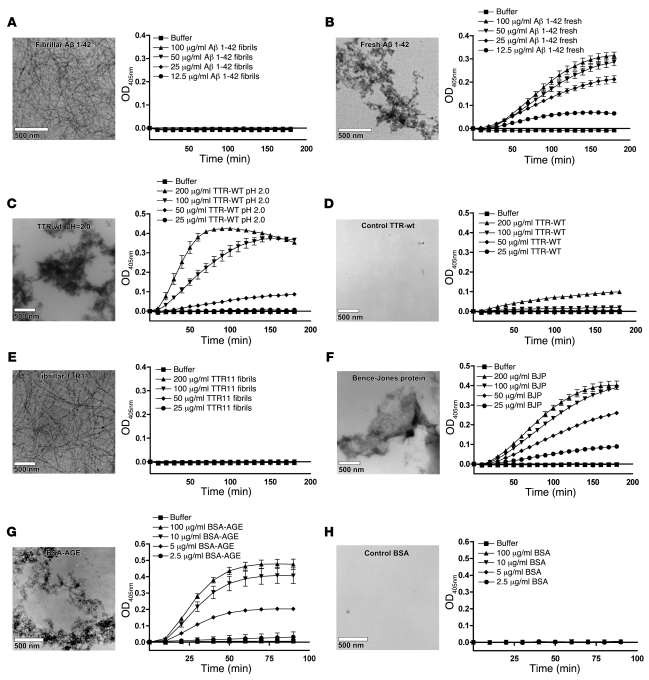
Figure 2. FXII-dependent kallikrein generation is induced by misfolded protein aggregates, but not by amyloid fibrils, in vitro.
FXII-dependent kallikrein generation was measured in vitro by a chromogenic assay. The conversion of 0.3 mM Chromozym PK in the presence of 7.7 nM PK was determined in the presence and absence of 0.97 nM FXII. None of the protein preparations tested was capable of converting Chromozym PK in the presence of PK without FXII present (data not shown). Amyloid fibrils of Aβ 1–42 did not stimulate FXII-dependent kallikrein generation (A), whereas amorphous aggregates of the freshly dissolved peptide did (B). Similarly, only amorphous aggregates of TTR (C), but not native TTR (D), or amyloid fibrils of TTR11 (E) could induce FXII-dependent kallikrein generation. Also, amorphous aggregates of Bence-Jones protein (BJP) (F) and BSA-AGE (G), but not freshly dissolved control BSA (H), could induce FXII-dependent kallikrein generation. The values in the graphs represent the mean ± SEM of duplicate determinations performed within 1 representative experiment of at least 3.
Figure 3
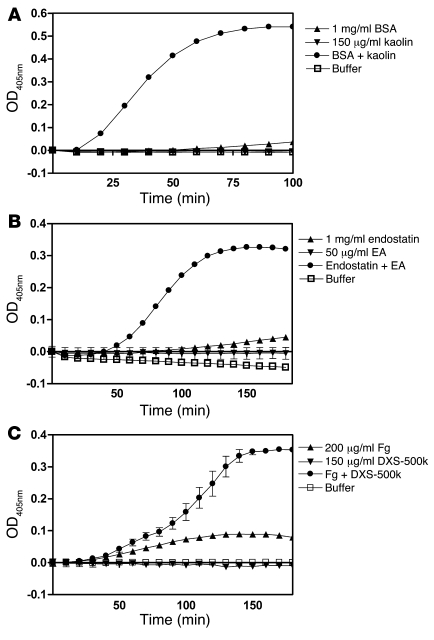
Figure 3. FXII-dependent kallikrein generation by surfaces is modulated by cofactor proteins.
Surfaces were incubated for 5 minutes at 37°C with 3 different proteins, BSA (A), endostatin (B) and Fg (C) and analyzed for their ability to induce FXII-dependent kallikrein generation. It was found that addition of these proteins was required for FXII activation by kaolin, EA, and DXS-500k. All other possible combinations of the above proteins with surfaces gave the same results (Supplemental Figure 3). The values in the graphs represent the mean ± SEM of duplicate determinations performed within 1 representative experiment of at least 3.
Figure 4
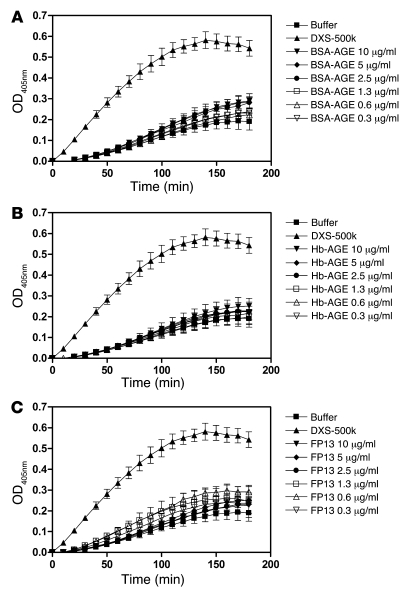
Figure 4. FXII-dependent activation of FXI, as measured by chromogenic assay in vitro, is not stimulated by misfolded protein aggregates.
Conversion of the chromogenic substrate Pefachrome XIa3371 in the presence of 1 nM FXII, 10 nM FXI, and 30 nM HK was measured. As a control, either FXII or FXI was omitted from the experiments. Although 2.5 μg/ml DXS-500k induced activation of FXIa in an FXII-dependent manner, as expected, misfolded protein aggregates of BSA-AGE (A), Hb-AGE (B), or FP13 (C) could not induce significant activation of FXI above buffer background at any concentration tested. Concentrations of these proteins up to 500 μg/ml were tested and found inactive (data not shown). The values in the graphs represent the mean ± SEM of duplicate determinations performed within 1 representative experiment of at least 3.
Figure 5
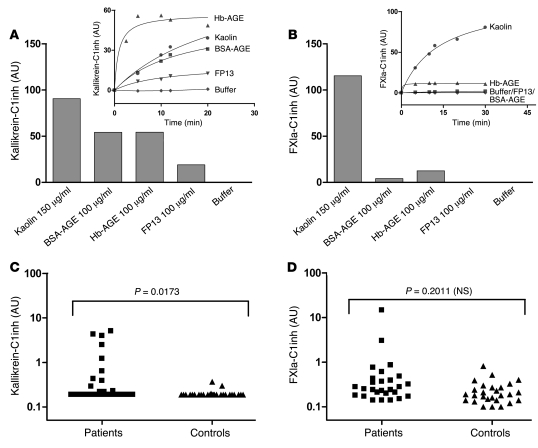
Figure 5. Misfolded proteins induce formation of kallikrein-C1inh complexes, but not FXIa-C1inh complexes, in plasma.
(A) The kallikrein-kinin system is activated in vitro when plasma is incubated with both contact surfaces and misfolded protein aggregates, as measured by levels of kallikrein-C1inh complexes. (B) Activation of coagulation, measured by plasma levels of FXIa-C1inh complexes, could only be determined in plasma that had been incubated with contact surfaces such as kaolin. The bars represent the maximal amounts of complexes that can be formed by an activator, as determined by nonlinear regression of the time curves of complex formation, shown in the insets. Determinations of these complexes in patients with systemic amyloidosis (average age, 51 ± 10 years, 40% male) show that in vivo kallikrein-C1inh complexes (C), but not FXIa-C1inh complexes (D), were significantly elevated as compared by 2-tailed Student’s t test with those in controls (average age, 49 ± 8 years, 40% male), indicating that circulating misfolded protein induces preferential activation of the kallikrein-kinin system via FXII.
Figure 6
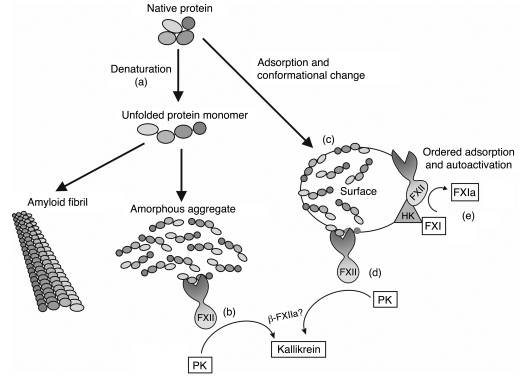
Figure 6. Activation of FXII by misfolded protein aggregates leads to specific activation of the kallikrein-kinin system.
A protein can lose its conformation in a number of ways, most notably by denaturation (a) (e.g., due to mechanical stress). Loss of conformation can lead to exposure of sites that are normally hidden within the protein molecule, e.g., due to electrostatic forces in an aqueous environment. As a result, the unfolded protein molecules will either aggregate into amorphous aggregates that can activate FXII-dependent kallikrein generation in the absence of a surface (b) or, in some cases, assemble into amyloid fibrils that do not activate this system independently. Apparently, amyloid fibrils have lost the epitope(s) required for activation of FXII. During adsorption of proteins to classical surface materials such as kaolin, several proteins also lose their native conformation (c), as was shown for BSA, Fg, and endostatin. These adsorbed proteins are able to stimulate FXII-dependent kallikrein generation (d). Misfolded proteins are not capable of inducing clotting, since they are unable to initiate FXII-dependent FXIa generation (e).

Comment in

References

    1. Bouma B.N., von dem Borne P.A., Meijers J.C. Factor XI and protection of the fibrin clot against lysis — a role for the intrinsic pathway of coagulation in fibrinolysis. Thromb. Haemost. 1998;80:24–27. - PubMed
    1. Gailani D., Broze G.J., Jr. Factor XI activation in a revised model of blood coagulation. Science. 1991;253:909–912. doi: 10.1126/science.1652157. - DOI - PubMed
    1. Naito K., Fujikawa K. Activation of human blood coagulation factor XI independent of factor XII. Factor XI is activated by thrombin and factor XIa in the presence of negatively charged surfaces. J. Biol. Chem. 1991;266:7353–7358. - PubMed
    1. Forbes C.D., Pensky J., Ratnoff O.D. Inhibition of activated Hageman factor and activated plasma thromboplastin antecedent by purified serum C1 inactivator. J. Lab. Clin. Med. 1970;76:809–815. - PubMed
    1. van der Graaf F., Koedam J.A., Bouma B.N. Inactivation of kallikrein in human plasma. J. Clin. Invest. 1983;71:149–158. doi: 10.1172/JCI110743. - DOI - PMC - PubMed

Publication types