


Gender influences monoallelic expression of ATP10A in human brain
- PMID: 18726118
- PMCID: PMC2830741
- DOI: 10.1007/s00439-008-0546-0
Gender influences monoallelic expression of ATP10A in human brain
Abstract
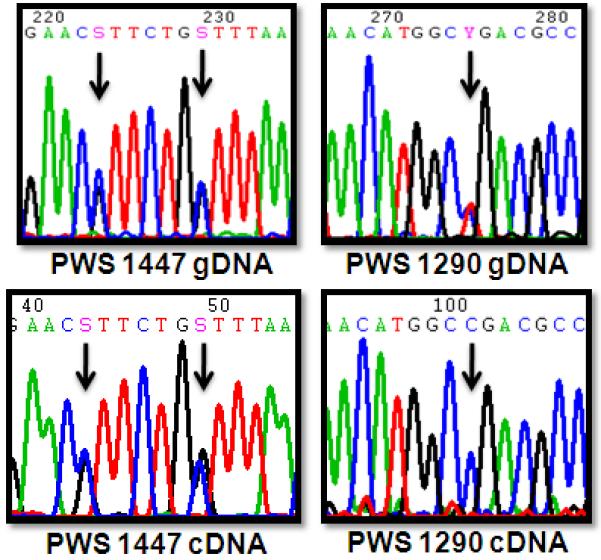
Human chromosome 15q11-13 and the syntenic region of mouse chromosome 7 contain multiple imprinted genes necessary for proper neurodevelopment. Due to imprinting, paternal 15q11-13 deficiencies lead to Prader-Willi syndrome (PWS) while maternal 15q11-13 deficiencies cause Angelman syndrome (AS). The mechanisms involved in parental imprinting of this locus are conserved between human and mouse, yet inconsistencies exist in reports of imprinting of the maternally expressed gene Atp10a/ATP10A. Excess maternal 15q11-13 dosage often leads to autism-spectrum disorder therefore further investigation to characterize the true imprinting status of ATP10A in humans was warranted. In this study, we examined allelic expression of ATP10A transcript in 16 control brain samples, and found that 10/16 exhibited biallelic expression while only 6/16 showed monoallelic expression. Contrary to the expectation for a maternally expressed imprinted gene, quantitative RT-PCR revealed significantly reduced ATP10A transcript in Prader-Willi syndrome brains with two maternal chromosomes due to uniparental disomy (PWS UPD). Furthermore, a PWS UPD brain sample with monoallelic ATP10A expression demonstrated that monoallelic expression can be independent of imprinting. Investigation of factors that may influence allelic ATP10A expression status revealed that gender has a major affect, as females were significantly more likely to have monoallelic ATP10A expression than males. Regulatory sequences were also examined, and a promoter polymorphism that disrupts binding of the transcription factor Sp1 also potentially contributes to allelic expression differences in females. Our results show that monoallelic expression of human ATP10A is variable in the population and is influenced by both gender and common genetic variation.
Figures



References
-
- Albrecht U, Sutcliffe JS, Cattanach BM, Beechey CV, Armstrong D, Eichele G, Beaudet AL. Imprinted expression of the murine Angelman syndrome gene, Ube3a, in hippocampal and Purkinje neurons. Nat Genet. 1997;17:75–8. - PubMed
-
- Amir RE, Van den Veyver IB, Wan M, Tran CQ, Francke U, Zoghbi HY. Rett syndrome is caused by mutations in X-linked MECP2, encoding methyl-CpG-binding protein 2. Nat. Genet. 1999;23:185–8. - PubMed
-
- Cassidy SB, Dykens E, Williams CA. Prader-Willi and Angelman syndromes: sister imprinted disorders. Am J Med Genet. 2000;97:136–46. - PubMed
Publication types
MeSH terms
Substances
Grants and funding
LinkOut - more resources
Full Text Sources
Research Materials
