


Monitoring psychomotor development in a resource-limited setting: an evaluation of the Kilifi Developmental Inventory
- PMID: 18727851
- PMCID: PMC3908377
- DOI: 10.1179/146532808X335679
Monitoring psychomotor development in a resource-limited setting: an evaluation of the Kilifi Developmental Inventory
Abstract
Background: Modifications made to the Kilifi Developmental Checklist and the psychometric characteristics of the new measure (The Kilifi Developmental Inventory) which assess the psychomotor functioning of children aged 6-35 months are described.
Methods: Two groups of community children (319 rural and 104 urban dwellers) and nine children with neurodevelopmental disorders were recruited for a cross-sectional study.
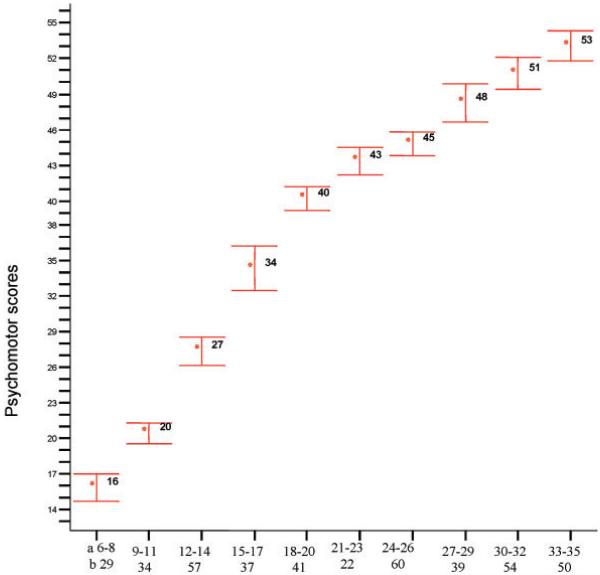
Results: In both a rural and urban reference population, the inventory showed excellent internal consistency, interobserver agreement, test-retest reliability and sensitivity to maturational changes. Children with neurodevelopmental impairment and those who were underweight had significantly lower scores than the community sample, attesting to the sensitivity of the measure. Mothers found the assessment procedures acceptable and informative.
Conclusions: The Kilifi Developmental Inventory is a culturally appropriate measure that can be used to monitor and describe the development of at-risk children in resource-limited settings in Kenya.
Figures
References
-
- Olness K. Effects on brain development leading to cognitive impairment: a worldwide epidemic. J Dev Behav Pediatr. 2003;24:120–30. - PubMed
-
- Simeonsson RJ. Prevention of childhood disability in developing countries. Int J Rehabil Res. 1991;14:1–12. - PubMed
-
- Holding PA, Taylor HG, Kazungu SD, et al. Assessing cognitive outcomes in a rural African population: development of a neuropsychological battery in Kilifi District, Kenya. J Int Neuropsychol Soc. 2004;10:246–260. - PubMed
-
- Connolly K, Grantham-McGregor S. Key issues in generating a psychological-testing protocol. Am J Clin Nutr. 1993;57:317S–318S. - PubMed