


A post-mortem survey on end-of-life decisions using a representative sample of death certificates in Flanders, Belgium: research protocol
- PMID: 18752659
- PMCID: PMC2533325
- DOI: 10.1186/1471-2458-8-299
A post-mortem survey on end-of-life decisions using a representative sample of death certificates in Flanders, Belgium: research protocol
Abstract
Background: Reliable studies of the incidence and characteristics of medical end-of-life decisions with a certain or possible life shortening effect (ELDs) are indispensable for an evidence-based medical and societal debate on this issue. This article presents the protocol drafted for the 2007 ELD Study in Flanders, Belgium, and outlines how the main aims and challenges of the study (i.e. making reliable incidence estimates of end-of-life decisions, even rare ones, and describing their characteristics; allowing comparability with past ELD studies; guaranteeing strict anonymity given the sensitive nature of the research topic; and attaining a sufficient response rate) are addressed in a post-mortem survey using a representative sample of death certificates.
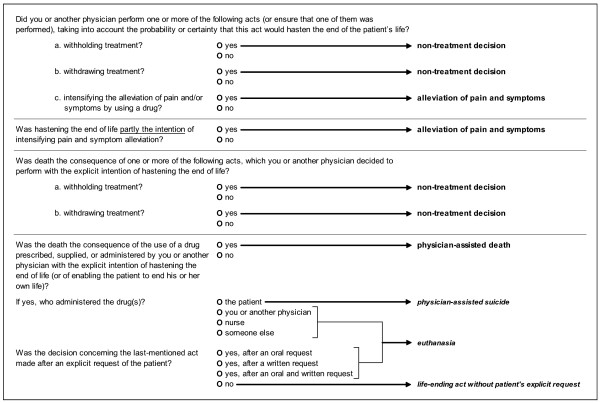
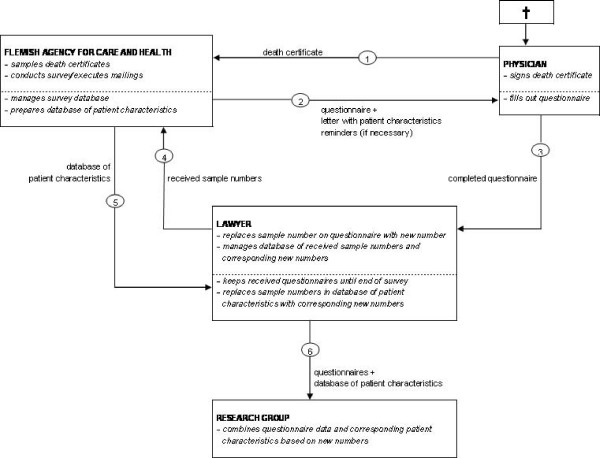
Study design: Reliable incidence estimates are achievable by using large at random samples of death certificates of deceased persons in Flanders (aged one year or older). This entails the cooperation of the appropriate administrative authorities. To further ensure the reliability of the estimates and descriptions, especially of less prevalent end-of-life decisions (e.g. euthanasia), a stratified sample is drawn. A questionnaire is sent out to the certifying physician of each death sampled. The questionnaire, tested thoroughly and avoiding emotionally charged terms is based largely on questions that have been validated in previous national and European ELD studies. Anonymity of both patient and physician is guaranteed through a rigorous procedure, involving a lawyer as intermediary between responding physicians and researchers. To increase response we follow the Total Design Method (TDM) with a maximum of three follow-up mailings. Also, a non-response survey is conducted to gain insight into the reasons for lack of response.
Discussion: The protocol of the 2007 ELD Study in Flanders, Belgium, is appropriate for achieving the objectives of the study; as past studies in Belgium, the Netherlands, and other European countries have shown, strictly anonymous and thorough surveys among physicians using a large, stratified, and representative death certificate sample are most suitable in nationwide studies of incidence and characteristics of end-of-life decisions. There are however also some limitations to the study design.
Figures
References
Publication types
MeSH terms
LinkOut - more resources
Full Text Sources
Miscellaneous
