BCR/ABL and other kinases from chronic myeloproliferative disorders stimulate single-strand annealing, an unfaithful DNA double-strand break repair
- PMID: 18757400
- PMCID: PMC2531069
- DOI: 10.1158/0008-5472.CAN-08-1101
BCR/ABL and other kinases from chronic myeloproliferative disorders stimulate single-strand annealing, an unfaithful DNA double-strand break repair
Abstract
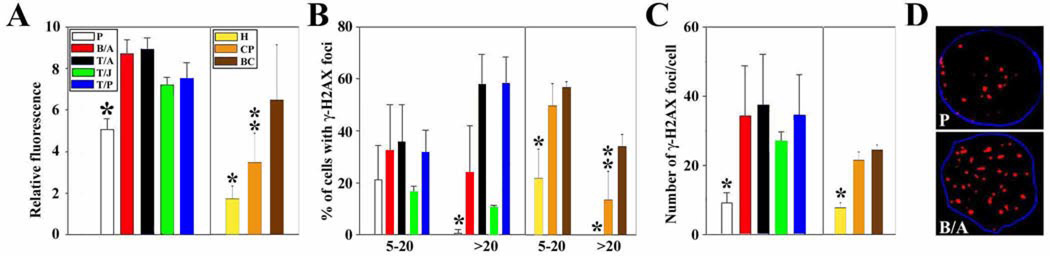
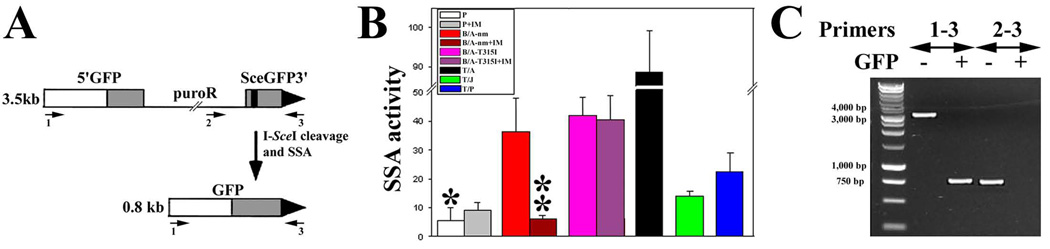
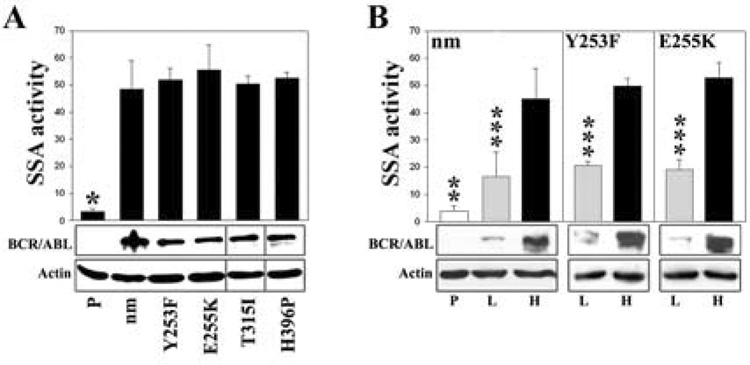
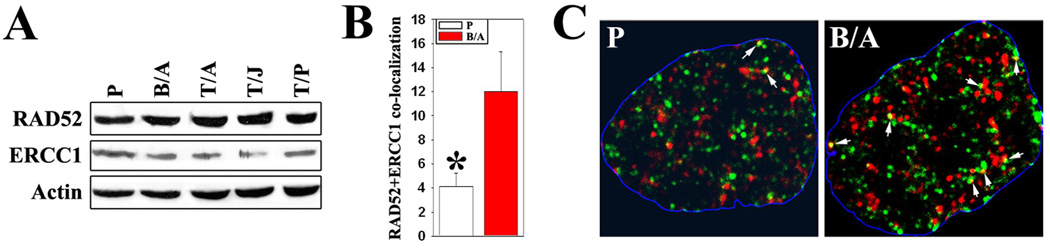
Myeloproliferative disorders (MPD) are stem cell-derived clonal diseases arising as a consequence of acquired aberrations in c-ABL, Janus-activated kinase 2 (JAK2), and platelet-derived growth factor receptor (PDGFR) that generate oncogenic fusion tyrosine kinases (FTK), including BCR/ABL, TEL/ABL, TEL/JAK2, and TEL/PDGFbetaR. Here, we show that FTKs stimulate the formation of reactive oxygen species and DNA double-strand breaks (DSB) both in hematopoietic cell lines and in CD34(+) leukemic stem/progenitor cells from patients with chronic myelogenous leukemia (CML). Single-strand annealing (SSA) represents a relatively rare but very unfaithful DSB repair mechanism causing chromosomal aberrations. Using a specific reporter cassette integrated into genomic DNA, we found that BCR/ABL and other FTKs stimulated SSA activity. Imatinib-mediated inhibition of BCR/ABL abrogated this effect, implicating a kinase-dependent mechanism. Y253F, E255K, T315I, and H396P mutants of BCR/ABL that confer imatinib resistance also stimulated SSA. Increased expression of either nonmutated or mutated BCR/ABL kinase, as is typical of blast phase cells and very primitive chronic phase CML cells, was associated with higher SSA activity. BCR/ABL-mediated stimulation of SSA was accompanied by enhanced nuclear colocalization of RAD52 and ERCC1, which play a key role in the repair. Taken together, these findings suggest a role of FTKs in causing disease progression in MPDs by inducing chromosomal instability through the production of DSBs and stimulation of SSA repair.
Figures
References
-
- Tefferi A, Gilliland DG. Oncogenes in myeloproliferative disorders. Cell Cycle. 2007;6:550–566. - PubMed
-
- Penserga ET, Skorski T. Fusion tyrosine kinases: a result and cause of genomic instability. Oncogene. 2007;26:11–20. - PubMed
-
- Bacher U, Haferlach T, Hiddemann W, et al. Additional clonal abnormalities in Philadelphia-positive ALL and CML demonstrate a different cytogenetic pattern at diagnosis and follow different pathways at progression. Cancer Genet Cytogenet. 2005;157:53–61. - PubMed
-
- Soverini S, Colarossi S, Gnani A, et al. Contribution of ABL kinase domain mutations to imatinib resistance in different subsets of Philadelphia-positive patients: by the GIMEMA Working Party on Chronic Myeloid Leukemia. Clin Cancer Res. 2006;12:7374–7379. - PubMed
-
- Neviani P, Santhanam R, Trotta R, et al. The tumor suppressor PP2A is functionally inactivated in blast crisis CML through the inhibitory activity of the BCR/ABL-regulated SET protein. Cancer Cell. 2005;8:355–368. - PubMed
Publication types
MeSH terms
Substances
Grants and funding
LinkOut - more resources
Full Text Sources
Molecular Biology Databases
Research Materials
Miscellaneous