


Modulation of GH/IGF-1 axis: potential strategies to counteract sarcopenia in older adults
- PMID: 18762207
- PMCID: PMC5992490
- DOI: 10.1016/j.mad.2008.08.001
Modulation of GH/IGF-1 axis: potential strategies to counteract sarcopenia in older adults
Abstract
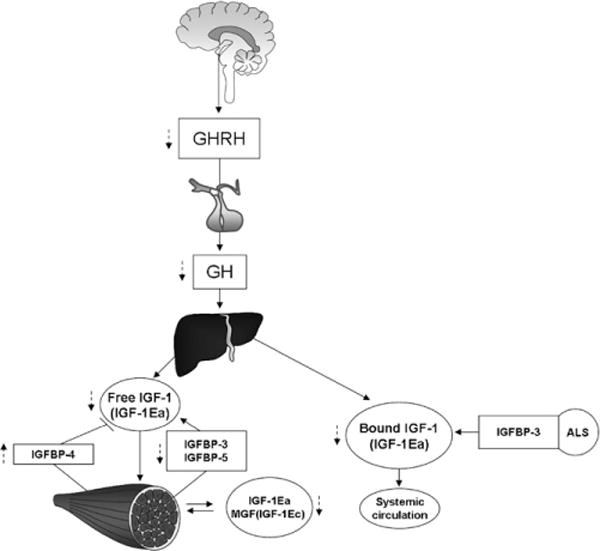
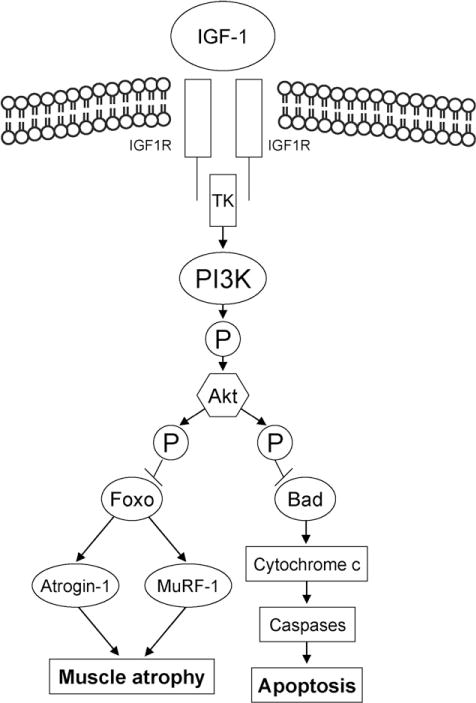
Aging is associated with progressive decline of skeletal muscle mass and function. This condition, termed sarcopenia, is associated with several adverse outcomes, including loss of autonomy and mortality. Due to the high prevalence of sarcopenia, a deeper understanding of its pathophysiology and possible remedies represents a high public health priority. Evidence suggests the existence of a relationship between declining growth hormone (GH) and insulin-like growth factor-1 (IGF-1) levels and age-related changes in body composition and physical function. Therefore, the age-dependent decline of GH and IGF-1 serum levels may promote frailty by contributing to the loss of muscle mass and strength. Preclinical studies showed that infusion of angiotensin II produced a marked reduction in body weight, accompanied by decreased serum and muscle levels of IGF-1. Conversely, overexpression of muscle-specific isoform of IGF-1 mitigates angiotensin II-induced muscle loss. Moreover, IGF-1 serum levels have been shown to increase following angiotensin converting enzyme inhibitors (ACEIs) treatment. Here we will review the most recent evidence regarding age-related changes of the GH/IGF-1 axis and its modulation by several interventions, including ACEIs which might represent a potential novel strategy to delay the onset and impede the progression of sarcopenia.
Figures
References
-
- Allen DL, Linderman JK, Roy RR, Grindeland RE, Mukku V, Edgerton VR. Growth hormone/IGF-I and/or resistive exercise maintains myonuclear number in hindlimb unweighted muscles. J Appl Physiol. 1997;83:1857–1861. - PubMed
-
- Andersen NB, Andreassen TT, Orskov H, Oxlund H. Growth hormone and mild exercise in combination increases markedly muscle mass and tetanic tension in old rats. Eur J Endocrinol. 2000;143:409–418. - PubMed
-
- Arvat E, Broglio F, Ghigo E. Insulin-Like growth factor I: implications in aging. Drugs Aging. 2000;16:29–40. - PubMed
-
- Barbieri M, Ferrucci L, Ragno E, Corsi A, Bandinelli S, Bonafe M, Olivieri F, Giovagnetti S, Franceschi C, Guralnik JM, Paolisso G. Chronic inflammation and the effect of IGF-I on muscle strength and power in older persons. Am J Physiol Endocrinol Metab. 2003;284:E481–E487. - PubMed
Publication types
MeSH terms
Substances
Grants and funding
LinkOut - more resources
Full Text Sources
Medical
Miscellaneous
