


Recombinant oncolytic poliovirus eliminates glioma in vivo without genetic adaptation to a pathogenic phenotype
- PMID: 18766173
- PMCID: PMC2856473
- DOI: 10.1038/mt.2008.184
Recombinant oncolytic poliovirus eliminates glioma in vivo without genetic adaptation to a pathogenic phenotype
Abstract
Many viruses, either naturally occurring or as a result of genetic manipulation, exhibit conditional replication in transformed cells. This principle is the basis for experimental therapeutic approaches exploiting the oncolytic potential of such agents without the danger of collateral damage to resistant normal tissues. One of the potential obstacles to these approaches is the possibility of genetic adaptation of oncolytic viruses upon replication in susceptible tumor tissues. Genetic variation can reverse genetic manipulations of parental viral genomes that determine attenuation of virulence, selective tumor cell tropism or other desirable traits. Alternatively, it may convey new properties not originally associated with parental strains, e.g., adaptation to a human host range. We examined genetic stability of an oncolytic nonpathogenic poliovirus recombinant considered for therapy of recurrent glioblastoma multiforme (GBM). This was done by serial passage experiments in glioma xenografts in vivo and investigation of phenotypic and genotypic markers of attenuation. Intratumoral inoculation of oncolytic poliovirus produced efficient tumor regress and elimination without altering temperature-sensitive growth, selective cytotoxicity, or genetic markers of attenuation of virus recovered from inoculated animals. Our studies demonstrate that active viral oncolysis of malignant glioma does not alter the conditional replication properties of oncolytic nonpathogenic poliovirus recombinants.
Figures
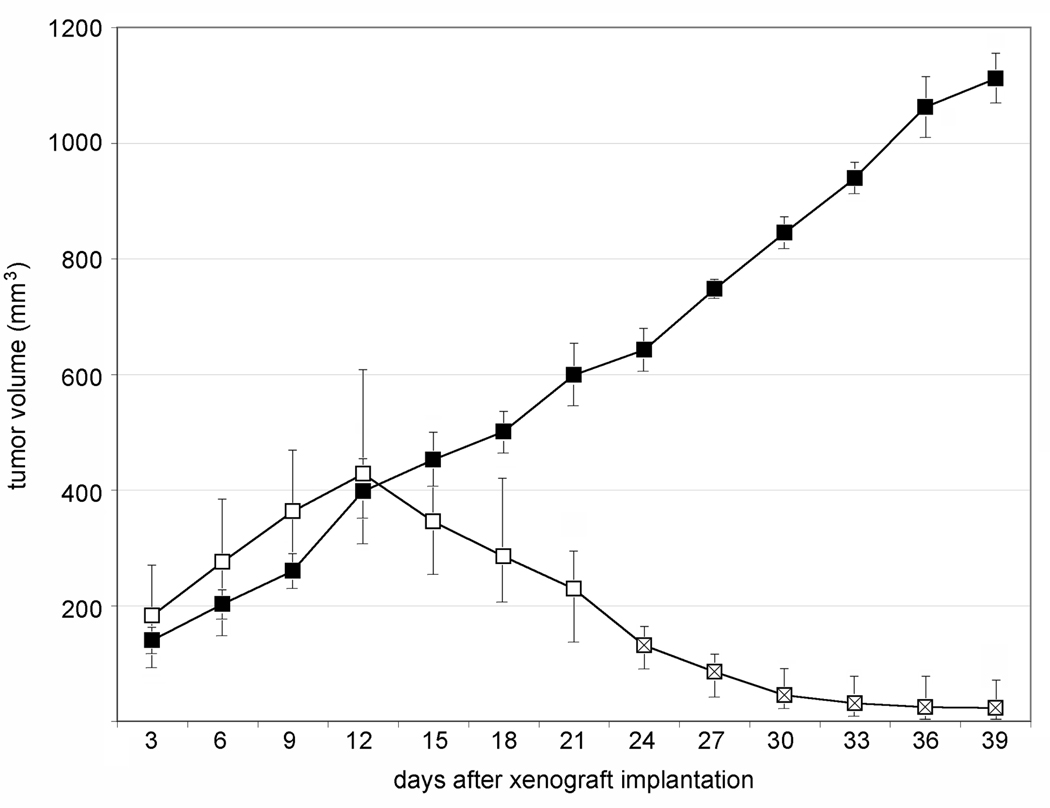
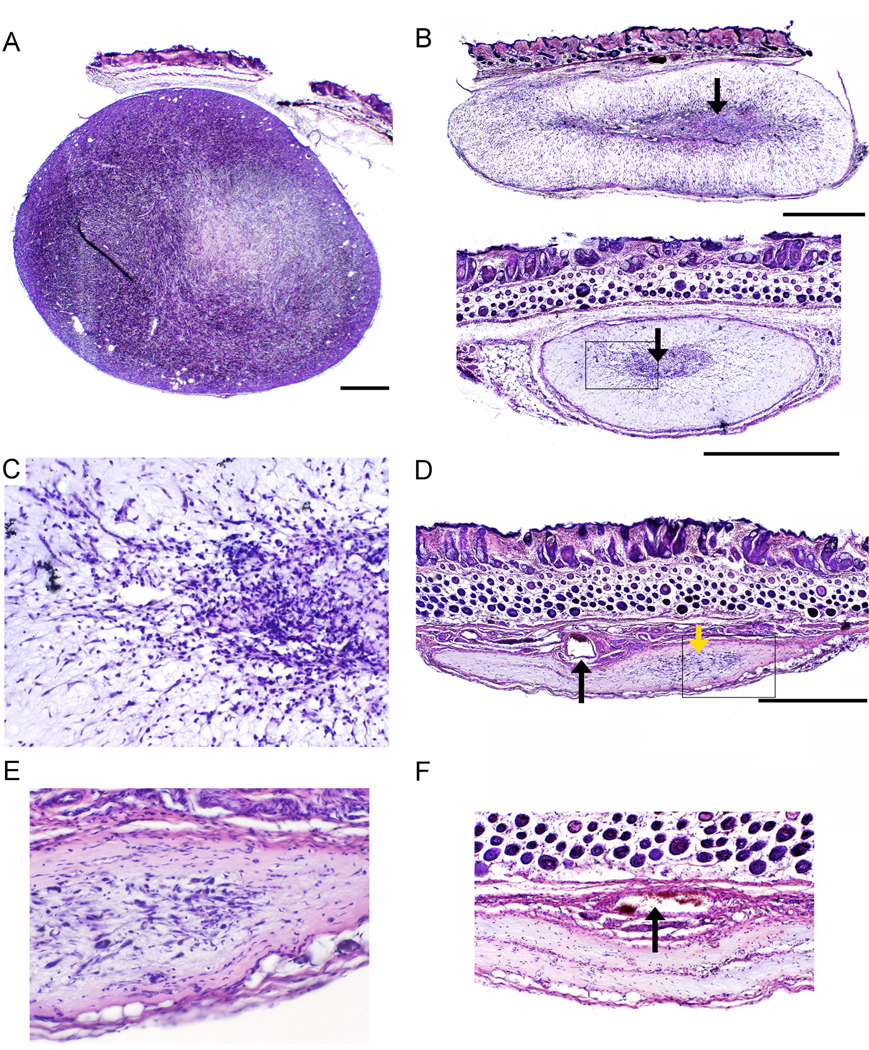
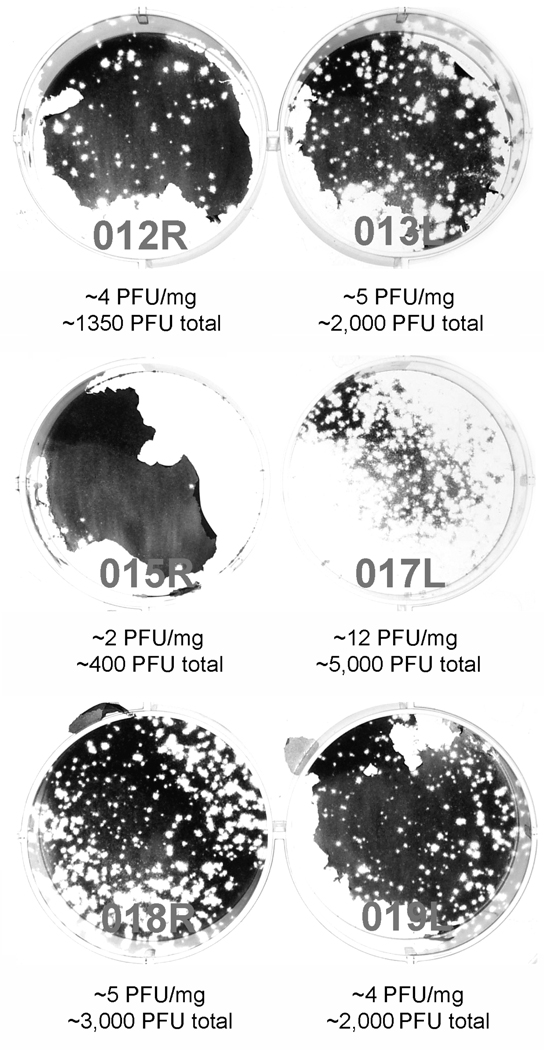
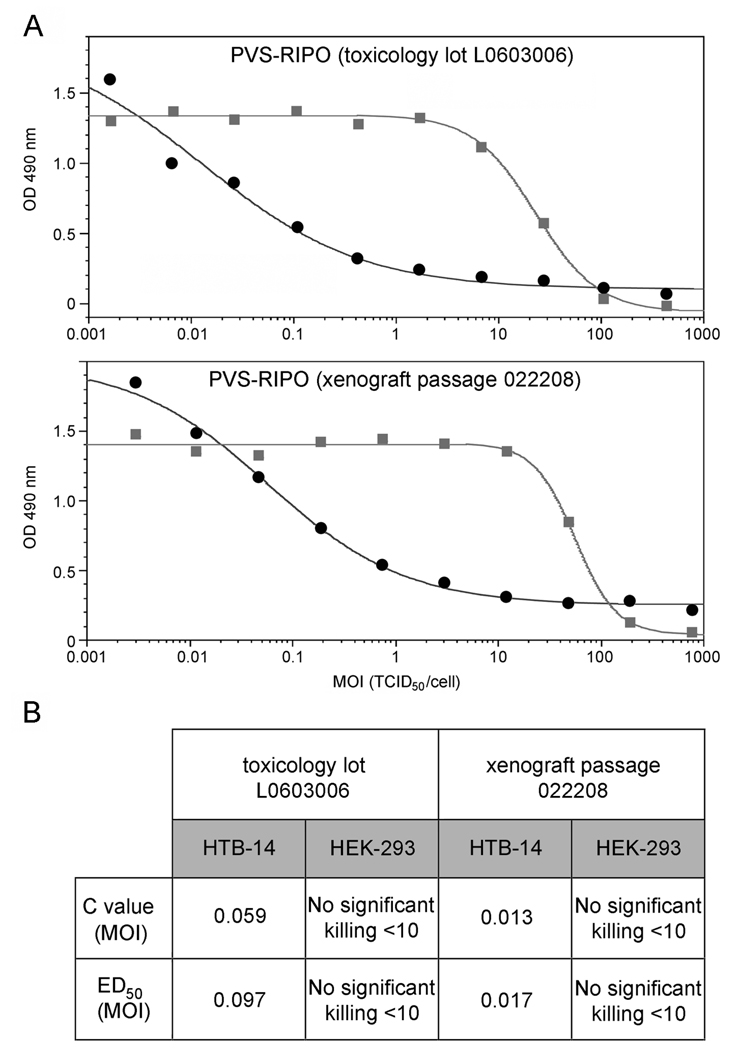
 ) yielded similar results. (b) C values refer to the virus titer at half maximal cell killing; ED50 values represent virus titers at 50% cell killing. C and ED50 values were unchanged upon PVS-RIPO xenograft passage.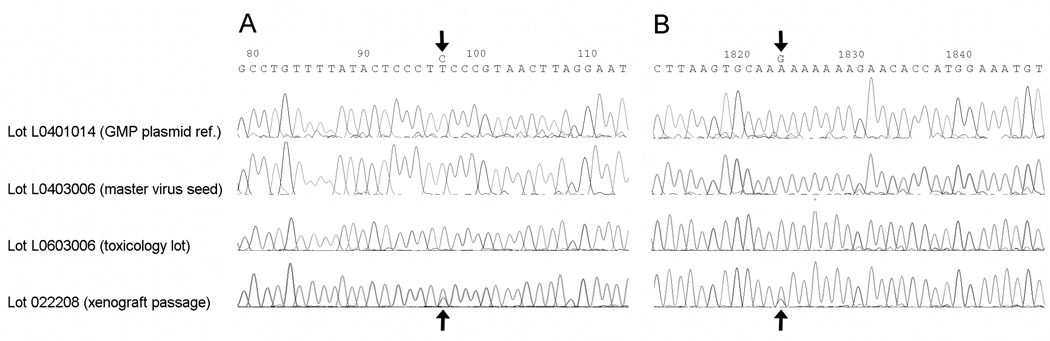
References
-
- Lorence RM, Reichard KW, Katubig BB, Reyes HM, Phuangsab A, Mitchell BR, et al. Complete regression of human neuroblastoma xenografts in athymic mice after local Newcastle disease virus therapy. J Natl Cancer Inst. 1994;86:1228–1233. - PubMed
-
- Stojdl DF, Lichty B, Knowles S, Marius R, Atkins H, Sonenberg N, et al. Exploiting tumor-specific defects in the interferon pathway with a previously unknown oncolytic virus. Nat Med. 2000;6:821–825. - PubMed
-
- Coffey MC, Strong JE, Forsyth PA, Lee PW. Reovirus therapy of tumors with activated Ras pathway. Science. 1998;282:1332–1334. - PubMed
-
- Kambara H, Okano H, Chiocca EA, Saeki Y. An oncolytic HSV-1 mutant expressing ICP34.5 under control of a nestin promoter increases survival of animals even when symptomatic from a brain tumor. Cancer Res. 2005;65:2832–2839. - PubMed
Publication types
MeSH terms
Grants and funding
LinkOut - more resources
Full Text Sources
Other Literature Sources
Medical
