


RAGE ligation affects T cell activation and controls T cell differentiation
- PMID: 18768885
- PMCID: PMC2643976
- DOI: 10.4049/jimmunol.181.6.4272
RAGE ligation affects T cell activation and controls T cell differentiation
Abstract
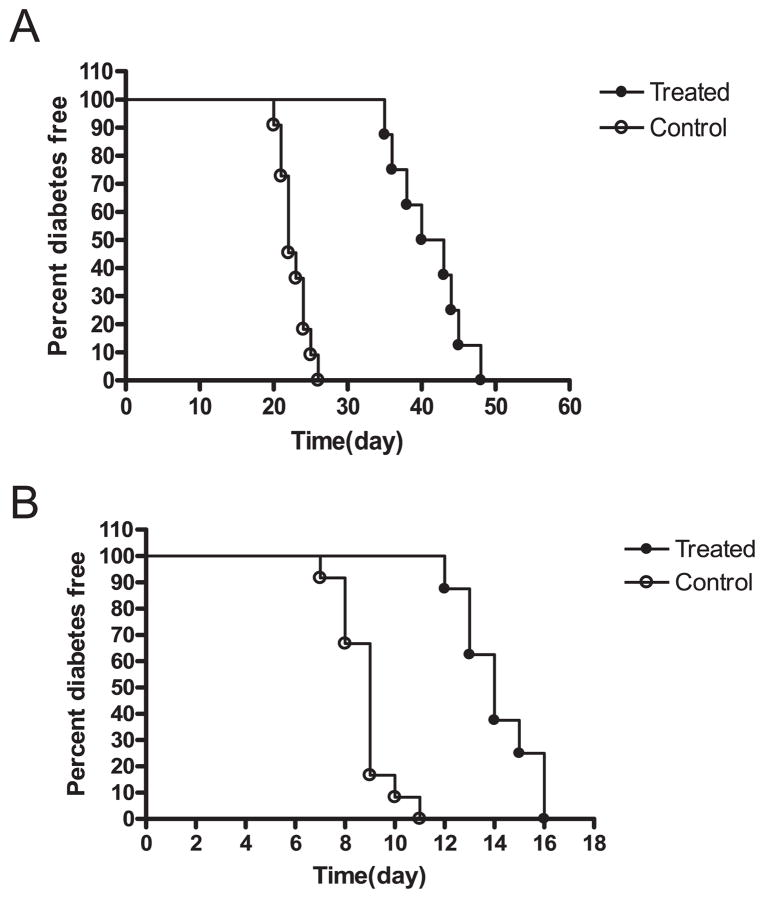
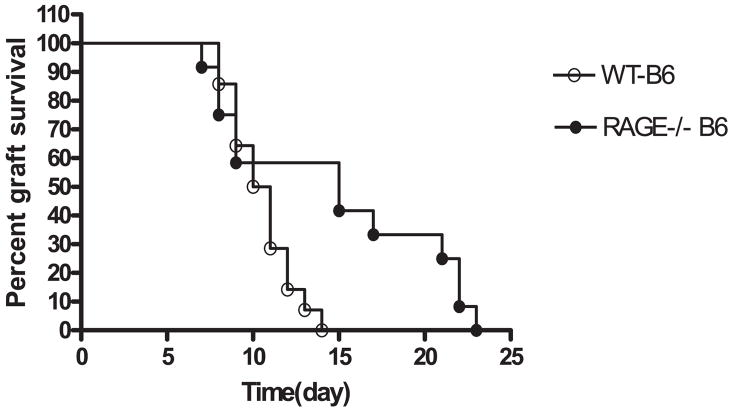
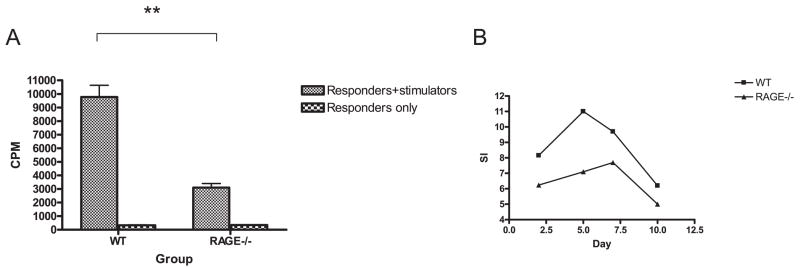
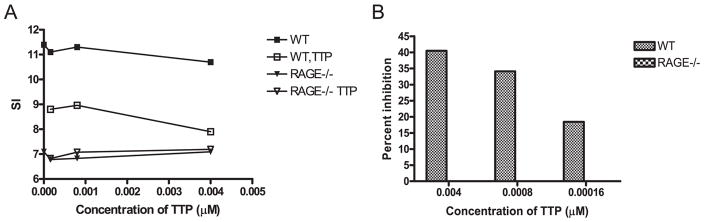
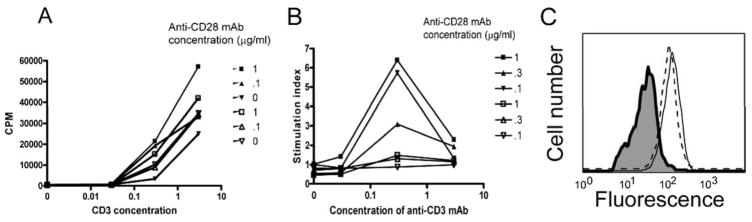
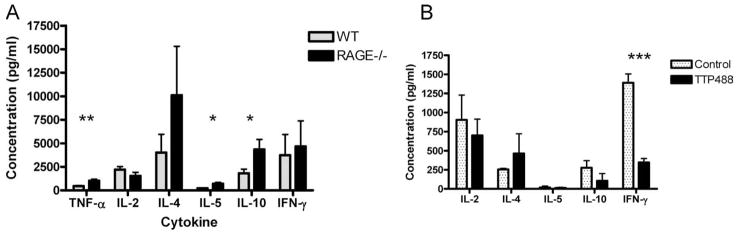
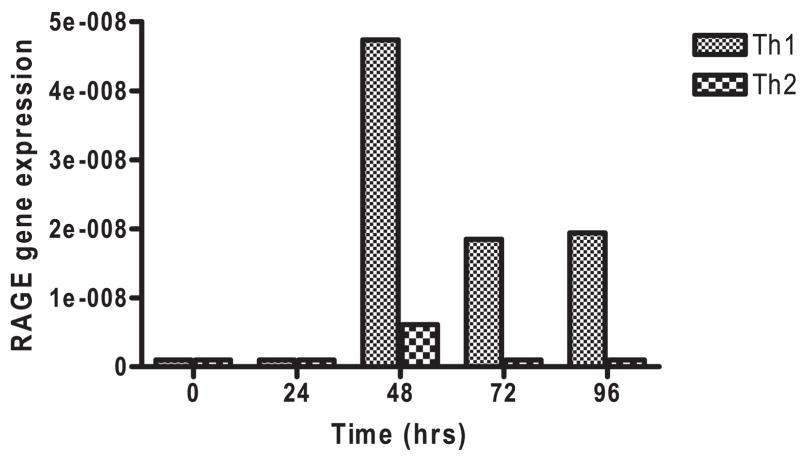
The pattern recognition receptor, RAGE, has been shown to be involved in adaptive immune responses but its role on the components of these responses is not well understood. We have studied the effects of a small molecule inhibitor of RAGE and the deletion of the receptor (RAGE-/- mice) on T cell responses involved in autoimmunity and allograft rejection. Syngeneic islet graft and islet allograft rejection was reduced in NOD and B6 mice treated with TTP488, a small molecule RAGE inhibitor (p < 0.001). RAGE-/- mice with streptozotocin-induced diabetes showed delayed rejection of islet allografts compared with wild type (WT) mice (p < 0.02). This response in vivo correlated with reduced proliferative responses of RAGE-/- T cells in MLRs and in WT T cells cultured with TTP488. Overall T cell proliferation following activation with anti-CD3 and anti-CD28 mAbs were similar in RAGE-/- and WT cells, but RAGE-/- T cells did not respond to costimulation with anti-CD28 mAb. Furthermore, culture supernatants from cultures with anti-CD3 and anti-CD28 mAbs showed higher levels of IL-10, IL-5, and TNF-alpha with RAGE-/- compared with WT T cells, and WT T cells showed reduced production of IFN-gamma in the presence of TTP488, suggesting that RAGE may be important in the differentiation of T cell subjects. Indeed, by real-time PCR, we found higher levels of RAGE mRNA expression on clonal T cells activated under Th1 differentiating conditions. We conclude that activation of RAGE on T cells is involved in early events that lead to differentiation of Th1(+) T cells.
Conflict of interest statement
Disclosures
The authors have no financial conflict of interest.
Figures
References
-
- Zanin-Zhorov A, Bruck R, Tal G, Oren S, Aeed H, Hershkoviz R, Cohen IR, Lider O. Heat shock protein 60 inhibits Th1-mediated hepatitis model via innate regulation of Th1/Th2 transcription factors and cytokines. J Immunol. 2005;174:3227–3236. - PubMed
-
- Alyanakian MA, Grela F, Aumeunier A, Chiavaroli C, Gouarin C, Bardel E, Normier G, Chatenoud L, Thieblemont N, Bach JF. Transforming growth factor-β and natural killer T-cells are involved in the protective effect of a bacterial extract on type 1 diabetes. Diabetes. 2006;55:179–185. - PubMed
-
- Zipris D, Lien E, Nair A, Xie JX, Greiner DL, Mordes JP, Rossini AA. TLR9-signaling pathways are involved in Kilham rat virus-induced autoimmune diabetes in the biobreeding diabetes-resistant rat. J Immunol. 2007;178:693–701. - PubMed
-
- Thomas HE, Irawaty W, Darwiche R, Brodnicki TC, Santamaria P, Allison J, Kay TW. IL-1 receptor deficiency slows progression to diabetes in the NOD mouse. Diabetes. 2004;53:113–121. - PubMed
Publication types
MeSH terms
Substances
Grants and funding
LinkOut - more resources
Full Text Sources
Other Literature Sources
Molecular Biology Databases
