


Formation of the food vacuole in Plasmodium falciparum: a potential role for the 19 kDa fragment of merozoite surface protein 1 (MSP1(19))
- PMID: 18769730
- PMCID: PMC2518119
- DOI: 10.1371/journal.pone.0003085
Formation of the food vacuole in Plasmodium falciparum: a potential role for the 19 kDa fragment of merozoite surface protein 1 (MSP1(19))
Abstract
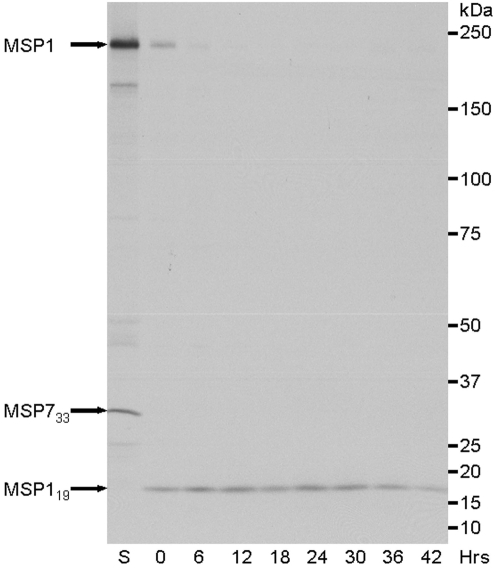
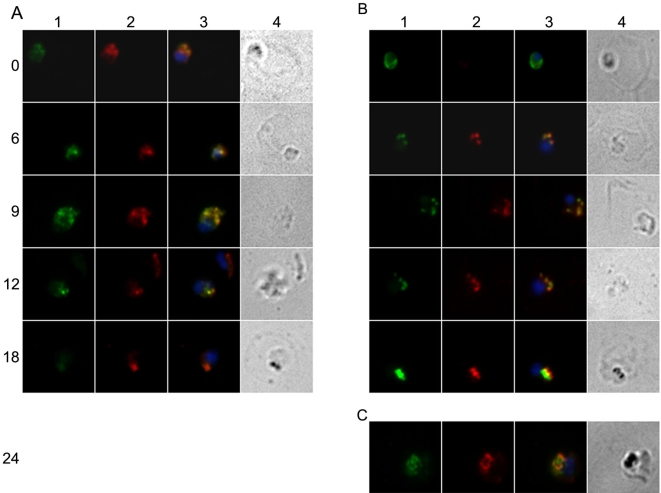
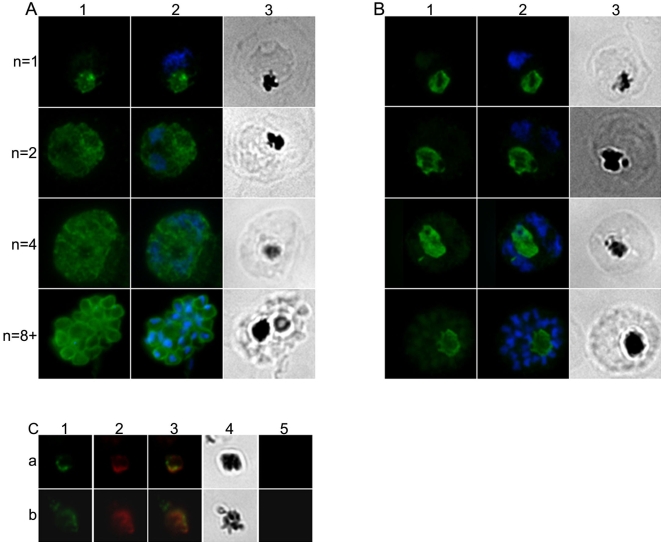
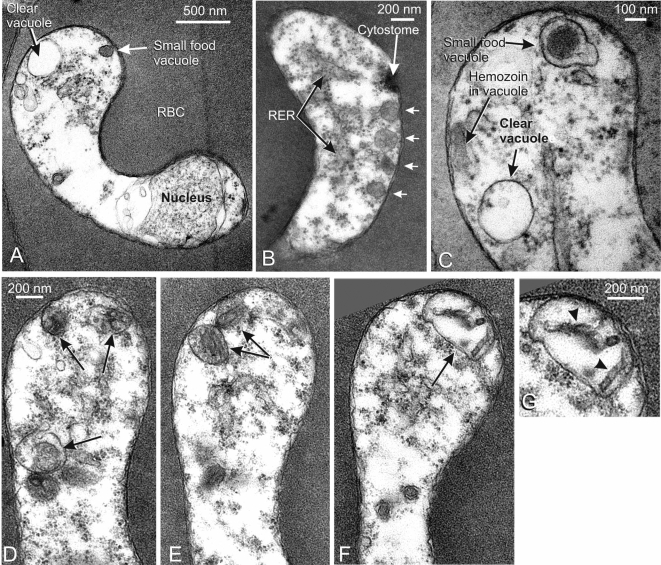
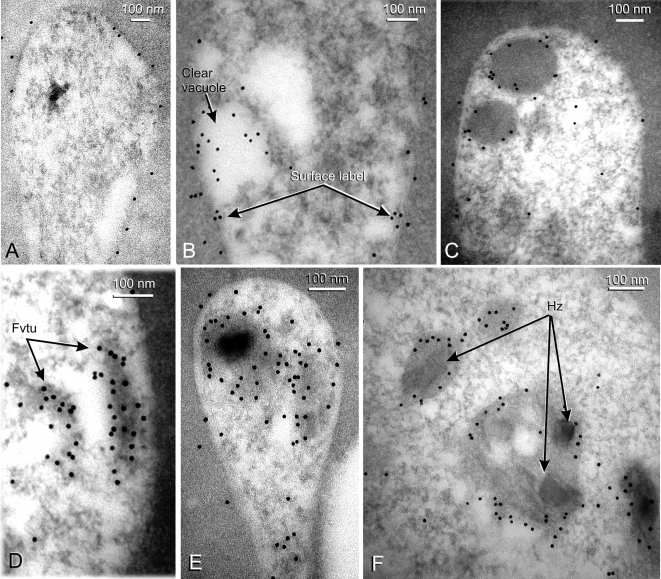
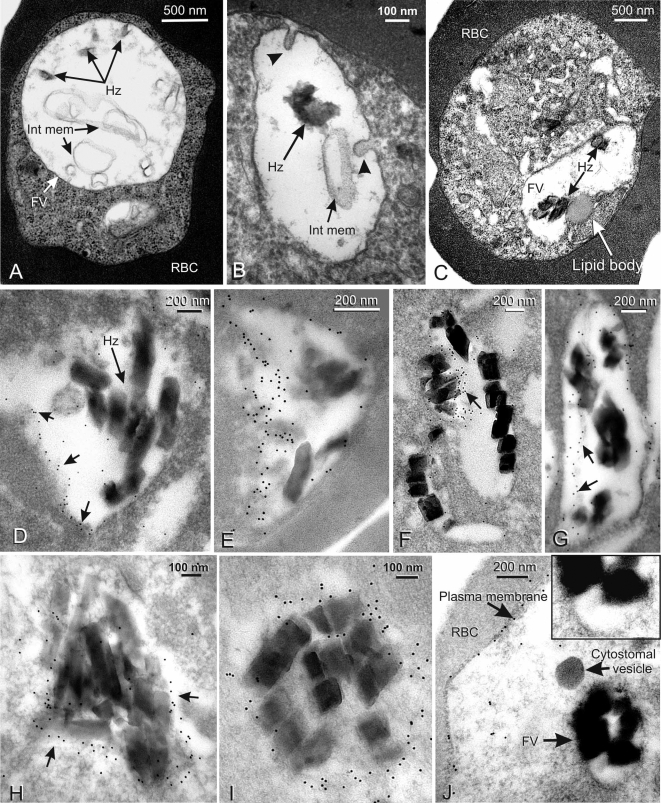
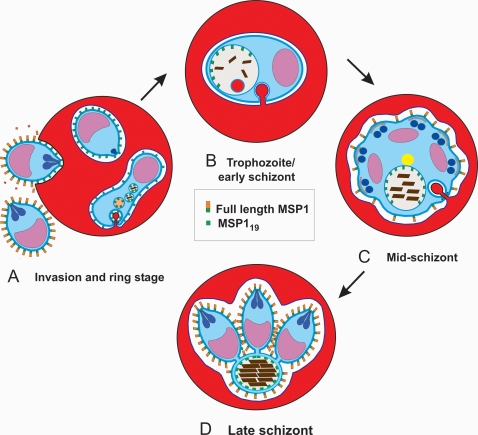
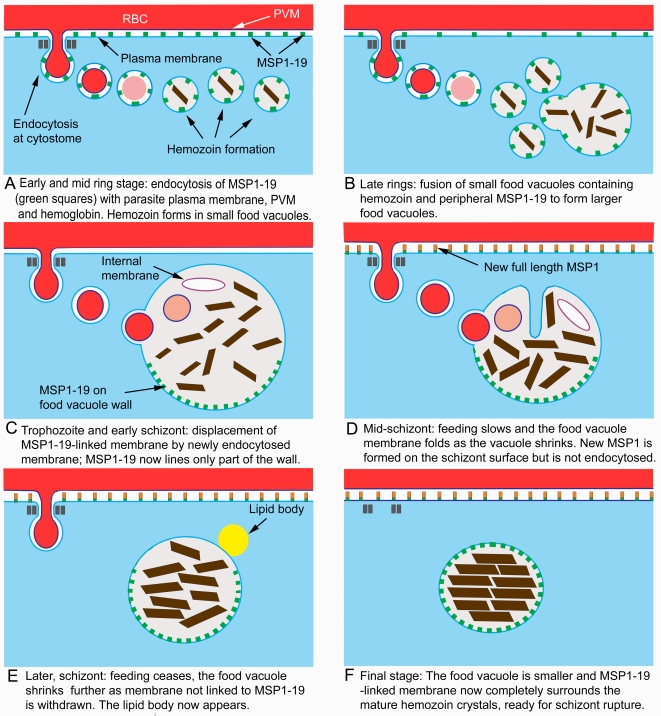
Plasmodium falciparum Merozoite Surface Protein 1 (MSP1) is synthesized during schizogony as a 195-kDa precursor that is processed into four fragments on the parasite surface. Following a second proteolytic cleavage during merozoite invasion of the red blood cell, most of the protein is shed from the surface except for the C-terminal 19-kDa fragment (MSP1(19)), which is still attached to the merozoite via its GPI-anchor. We have examined the fate of MSP1(19) during the parasite's subsequent intracellular development using immunochemical analysis of metabolically labeled MSP1(19), fluorescence imaging, and immuno-electronmicroscopy. Our data show that MSP1(19) remains intact and persists to the end of the intracellular cycle. This protein is the first marker for the biogenesis of the food vacuole; it is rapidly endocytosed into small vacuoles in the ring stage, which coalesce to form the single food vacuole containing hemozoin, and persists into the discarded residual body. The food vacuole is marked by the presence of both MSP1(19) and the chloroquine resistance transporter (CRT) as components of the vacuolar membrane. Newly synthesized MSP1 is excluded from the vacuole. This behavior indicates that MSP1(19) does not simply follow a classical lysosome-like clearance pathway, instead, it may play a significant role in the biogenesis and function of the food vacuole throughout the intra-erythrocytic phase.
Conflict of interest statement
Figures
References
-
- Hall R, McBride J, Morgan G, Tait A, Zolg JW, et al. Antigens of the erythrocytes stages of the human malaria parasite Plasmodium falciparum detected by monoclonal antibodies. Mol Biochem Parasitol. 1983;7:247–265. - PubMed
-
- Gilson PR, O'Donnell RA, Nebl T, Sanders PR, Wickham ME, et al. MSP1(19) miniproteins can serve as targets for invasion inhibitory antibodies in Plasmodium falciparum provided they contain the correct domains for cell surface trafficking. Mol Microbiol. 2008;68:124–138. - PubMed
-
- Oka M, Aikawa M, Freeman RR, Holder AA, Fine E. Ultrastructural localization of protective antigens of Plasmodium yoelii merozoites by the use of monoclonal antibodies and ultrathin cryomicrotomy. Am J Trop Med Hyg. 1984;33:342–346. - PubMed
-
- Heidrich HG, Matzner M, Miettinen-Baumann A, Strych W. Immunoelectron microscopy shows that the 80,000-dalton antigen of Plasmodium falciparum merozoites is localized in the surface coat. Z Parasitenkd. 1986;72:681–683. - PubMed
Publication types
MeSH terms
Substances
Grants and funding
LinkOut - more resources
Full Text Sources
Research Materials
