. 2008 Nov;51(11):2031-40.
doi: 10.1007/s00125-008-1138-1. Epub 2008 Sep 4.

Effects of pioglitazone and metformin on NEFA-induced insulin resistance in type 2 diabetes

Affiliations

Effects of pioglitazone and metformin on NEFA-induced insulin resistance in type 2 diabetes

R Basu et al. Diabetologia. 2008 Nov.

Abstract

Aims/hypothesis: We sought to determine whether pioglitazone and metformin alter NEFA-induced insulin resistance in type 2 diabetes and, if so, the mechanism whereby this is effected.

Methods: Euglycaemic-hyperinsulinaemic clamps (glucose approximately 5.3 mmol/l, insulin approximately 200 pmol/l) were performed in the presence of Intralipid-heparin (IL/H) or glycerol before and after 4 months of treatment with pioglitazone (n = 11) or metformin (n = 9) in diabetic participants. Hormone secretion was inhibited with somatostatin in all participants.

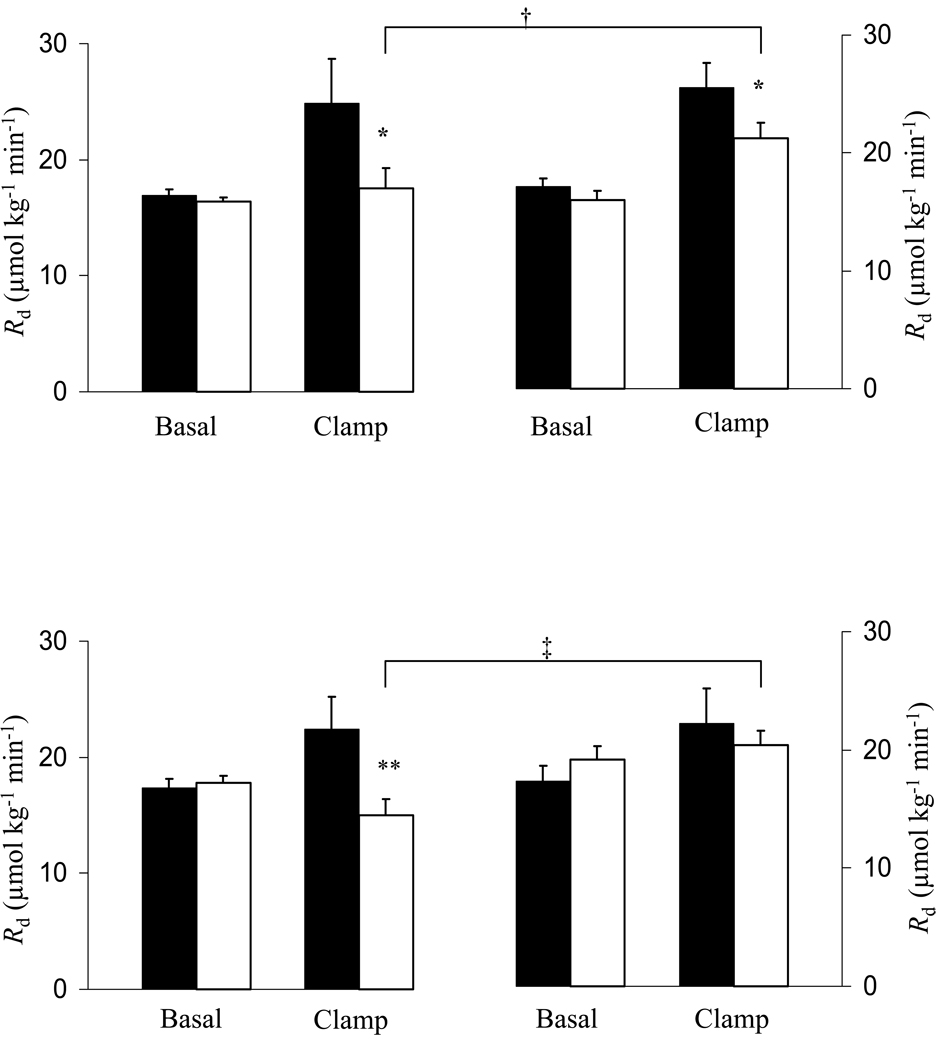
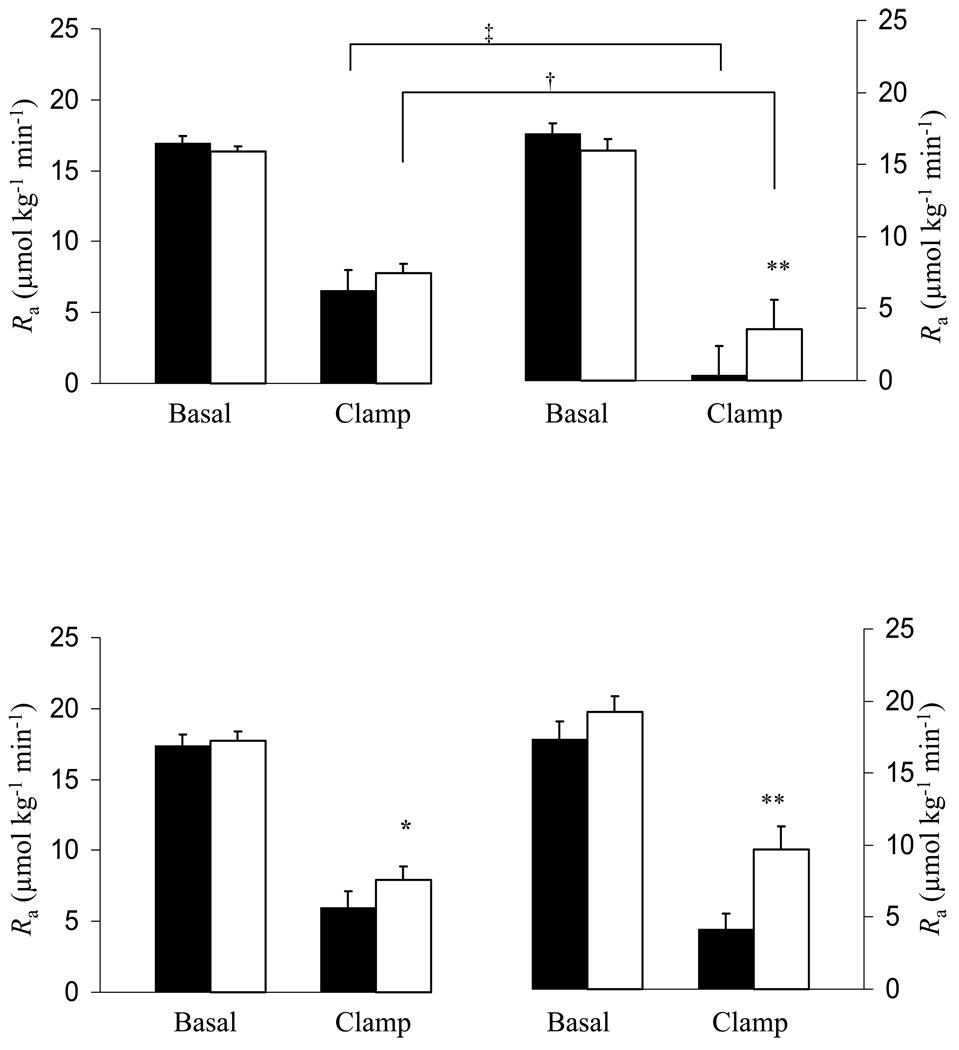
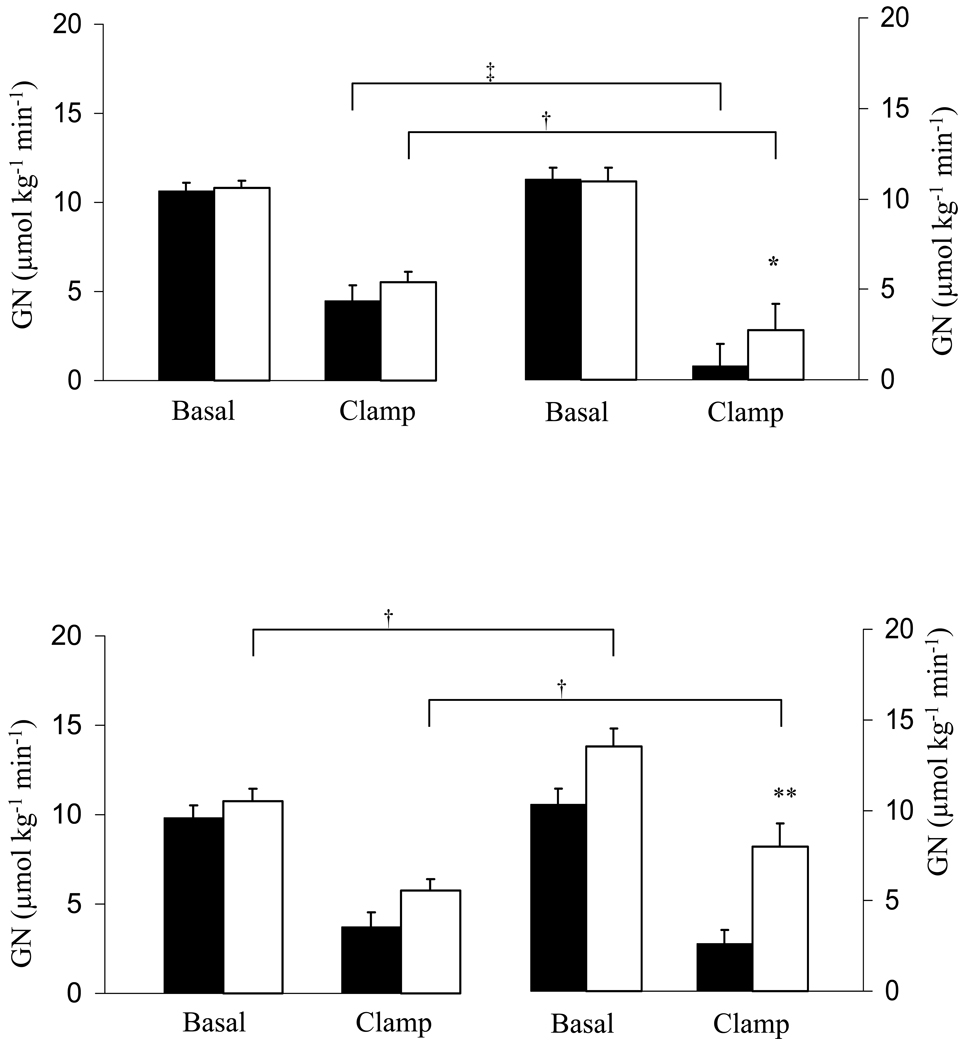
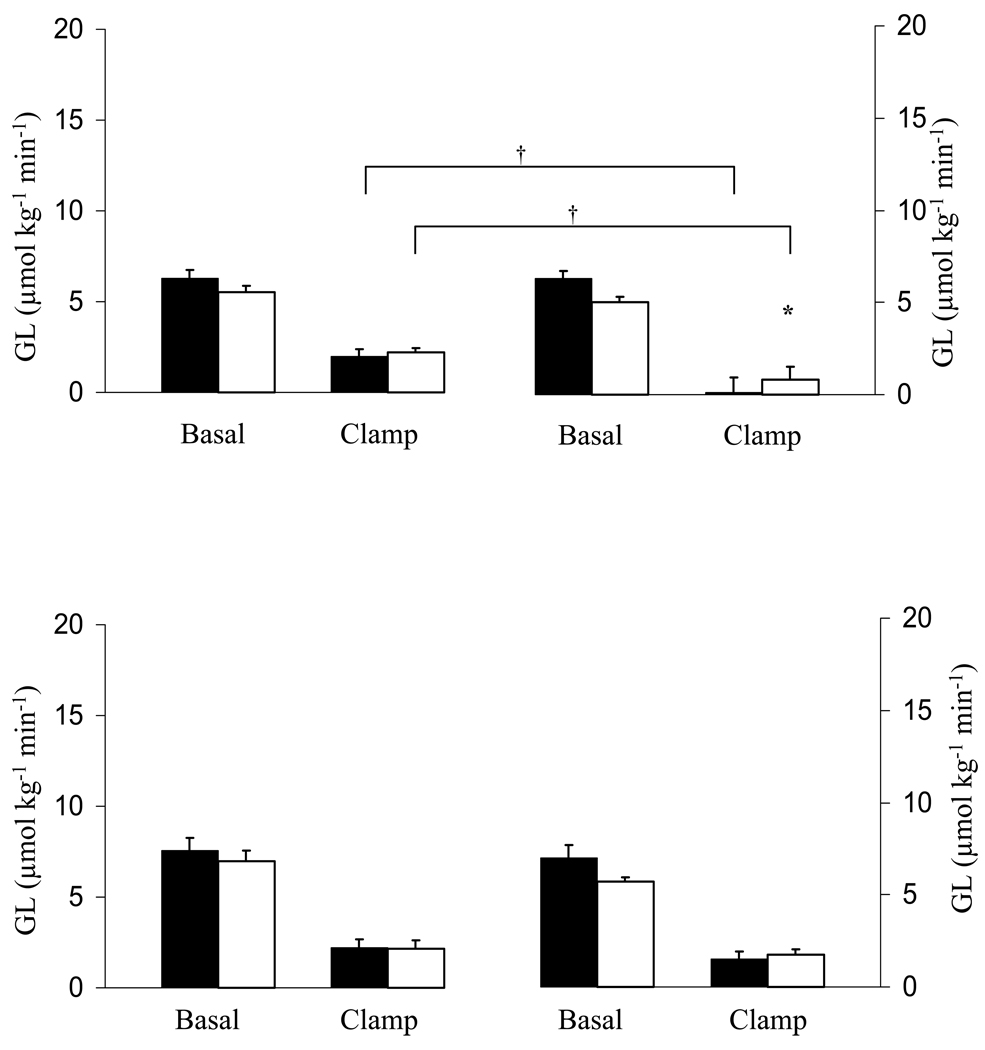
Results: Pioglitazone increased insulin-stimulated glucose disappearance (p < 0.01) and increased insulin-induced suppression of glucose production (p < 0.01), gluconeogenesis (p < 0.05) and glycogenolysis (p < 0.05) during IL/H. However, glucose disappearance remained lower (p < 0.05) whereas glucose production (p < 0.01), gluconeogenesis (p < 0.05) and glycogenolysis (p < 0.05) were higher on the IL/H study day than on the glycerol study day, indicating persistence of NEFA-induced insulin resistance. Metformin increased (p < 0.001) glucose disappearance during IL/H to rates present during glycerol treatment, indicating protection against NEFA-induced insulin resistance in extrahepatic tissues. However, glucose production and gluconeogenesis (but not glycogenolysis) were higher (p < 0.01) during IL/H than during glycerol treatment with metformin, indicating persistence of NEFA-induced hepatic insulin resistance.

Conclusions/interpretation: We conclude that pioglitazone improves both the hepatic and the extrahepatic action of insulin but does not prevent NEFA-induced insulin resistance. In contrast, whereas metformin prevents NEFA-induced extrahepatic insulin resistance, it does not protect against NEFA-induced hepatic insulin resistance.


Figures
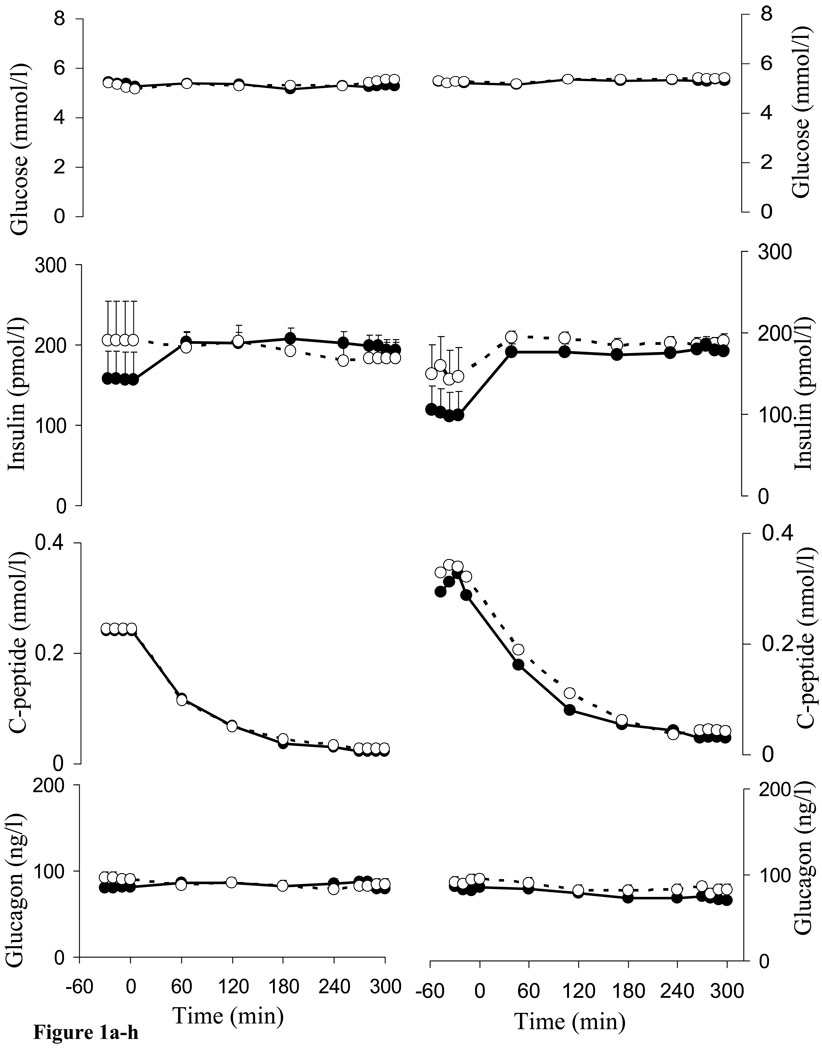
Fig. 1
Fig. 1
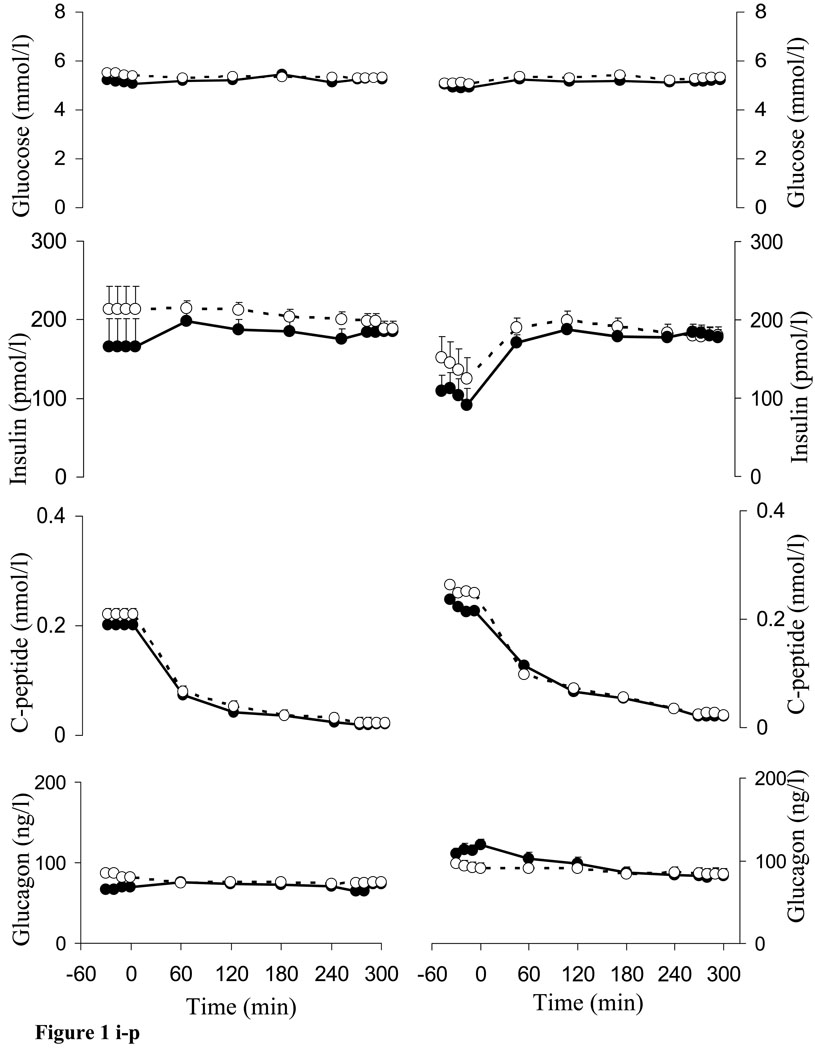
Glucose, insulin, C-peptide and glucagon concentrations during infusion of Intralipid and heparin (white circles) or glycerol (black circles). Studies were performed before (a, c, e, g, i, k, m, o) and after (b, d, f, h, j, l, n, p) 4 months of treatment with pioglitazone (a–h) or metformin (i–p). Infusion of insulin, somatostatin and glucagon was started at time zero
Fig. 1
Fig. 1
Glucose, insulin, C-peptide and glucagon concentrations during infusion of Intralipid and heparin (white circles) or glycerol (black circles). Studies were performed before (a, c, e, g, i, k, m, o) and after (b, d, f, h, j, l, n, p) 4 months of treatment with pioglitazone (a–h) or metformin (i–p). Infusion of insulin, somatostatin and glucagon was started at time zero
Fig. 2
Fig. 2
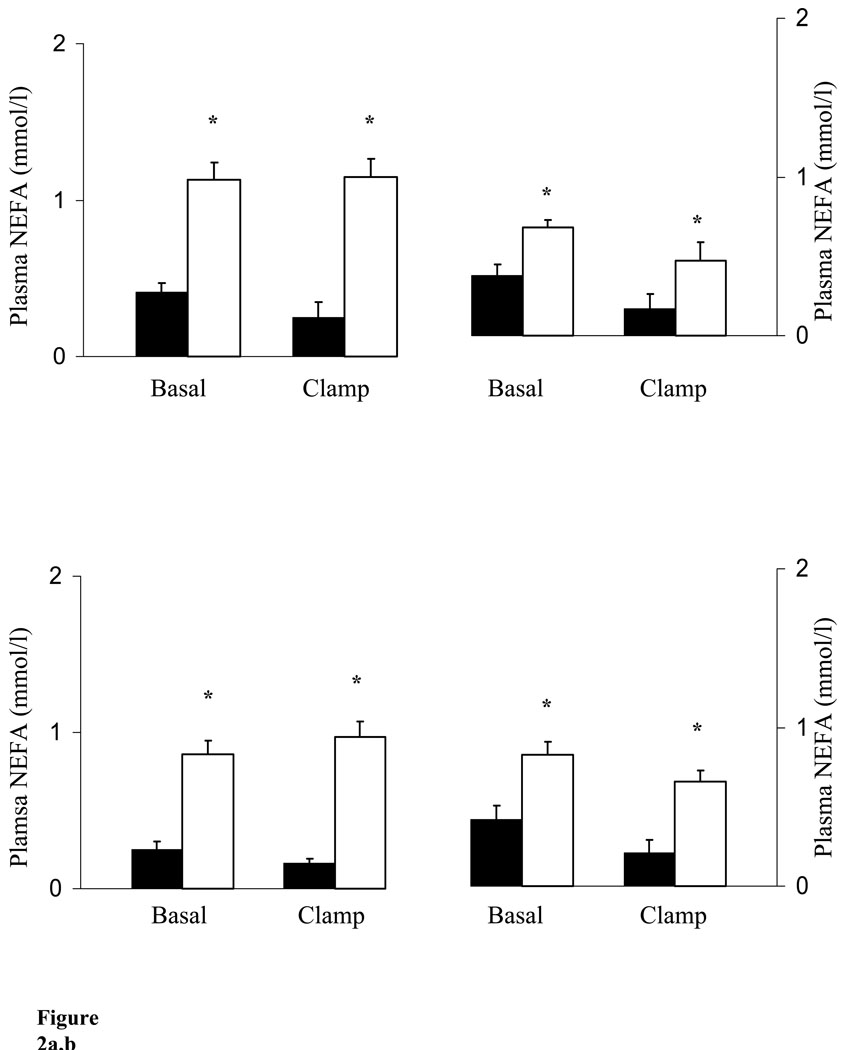
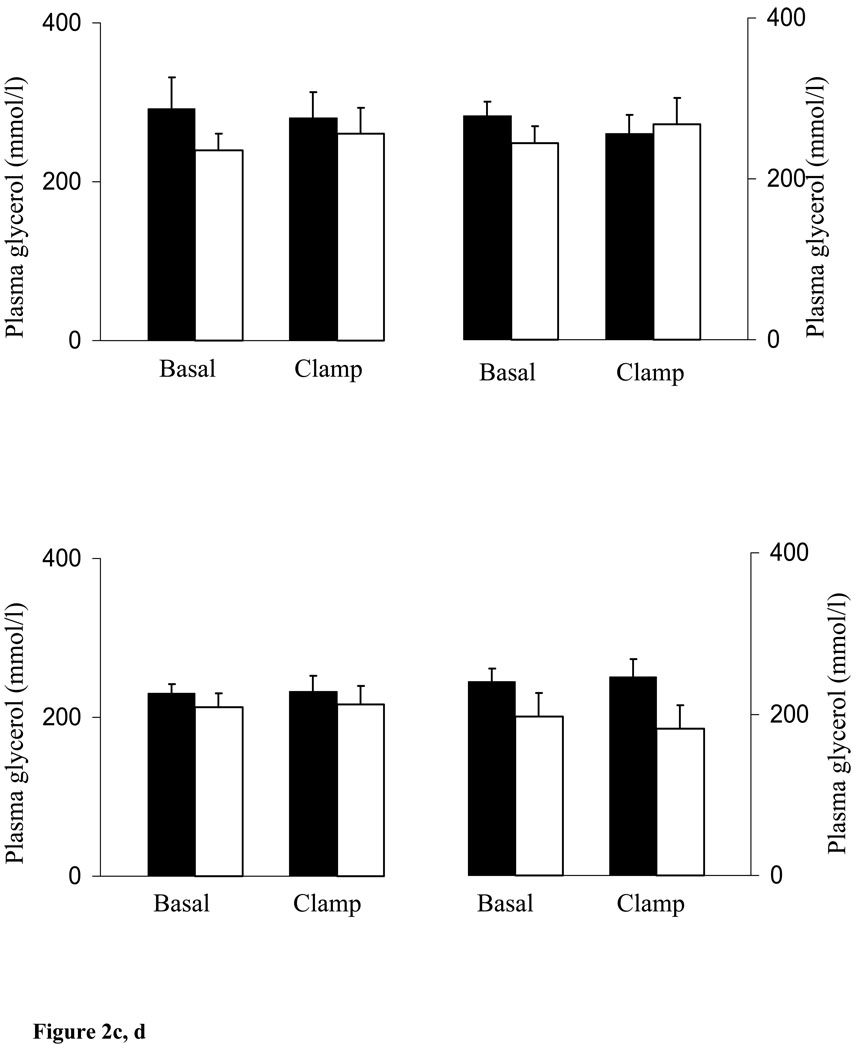
Plasma NEFA (a, b) and glycerol (c, d) concentrations during infusion of Intralipid and heparin (white bars) or glycerol (black bars) before (basal) and during (clamp) a hyperinsulinaemic–euglycaemic clamp. Studies were performed before (left panels) and after (right panels) 4 months of treatment with pioglitazone (a, c) or metformin (b, d). *p<0.05 vs glycerol study day
Fig. 2
Fig. 2
Plasma NEFA (a, b) and glycerol (c, d) concentrations during infusion of Intralipid and heparin (white bars) or glycerol (black bars) before (basal) and during (clamp) a hyperinsulinaemic–euglycaemic clamp. Studies were performed before (left panels) and after (right panels) 4 months of treatment with pioglitazone (a, c) or metformin (b, d). *p<0.05 vs glycerol study day
Fig. 3
Fig. 3
Rates of glucose disappearance (Rd) before (basal) and during (clamp) a hyperinsulinaemic–euglycaemic clamp during infusion of Intralipid and heparin (white bars) or glycerol (black bars). Studies were performed before (left panels) and after (right panels) 4 months of treatment with pioglitazone (a) or metformin (b). *p<0.05, **p<0.01 vs glycerol study day; p<0.01, p<0.001
Fig. 4
Fig. 4
Rates of endogenous glucose production (Ra) before (basal) and during (clamp) a hyperinsulinaemic–euglycaemic clamp during infusion of Intralipid and heparin (white bars) or glycerol (black bars). Studies were performed before (left panels) and after (right panels) 4 months of treatment with pioglitazone (a) or metformin (b). *p< 0.05, **p<0.01 vs glycerol study day; p<0.05, p<0.01
Fig. 5
Fig. 5
Rates of gluconeogenesis (GN) before (basal) and during (clamp) a hyperinsulinaemic–euglycaemic clamp during infusion of Intralipid and heparin (white bars) or glycerol (black bars). Studies were performed before (left panels) and after (right panels) 4 months of treatment with pioglitazone (a) or metformin (b). *p<0.05, **p<0.01 vs glycerol study day; p<0.05, p<0.01
Fig. 6
Fig. 6
Rates of glycogenolysis (GL) before (basal) and during (clamp) a hyperinsulinaemic–euglycaemic clamp during infusion of Intralipid and heparin (white bars) or glycerol (black bars). Studies were performed before (left panels) and after (right panels) 4 months of treatment with pioglitazone (a) or metformin (b). *p<0.05 vs glycerol study day; p<0.05

References

    1. Kerpichnikov D, McFarlane SI, Sowers JR. Metformin: an update. Ann Intern Med. 2002;137:25–33. - PubMed
    1. Nathan DM. Initial management of glycemia in type 2 diabetes mellitus. N Engl J Med. 2002;347:1342–1349. - PubMed
    1. Inzucchi SE. Oral antihyperglycemic therapy for type 2 diabetes: scientific review. JAMA. 2002;287:360–372. - PubMed
    1. Ye J-M, Dzamko N, Cleasby ME, et al. Direct demonstration of lipid sequestration as a mechanism by which rosiglitazone prevents fatty-acid-induced insulin resistance in the rat: comparison with metformin. Diabetologia. 2004;47:1306–1313. - PubMed
    1. Cleasby ME, Dzamko N, Hegarty BD, Cooney GJ, Kraegen EW, Ye J-M. Metformin prevents the development of acute lipid-induced insulin resistance in the rat through altered hepatic signaling mechanisms. Diabetes. 2004;53:3258. - PubMed

Publication types

MeSH terms