


Laboratory maintenance and cultivation of bacteroides species
- PMID: 18770533
- PMCID: PMC3836205
- DOI: 10.1002/9780471729259.mc13c01s9
Laboratory maintenance and cultivation of bacteroides species
Abstract
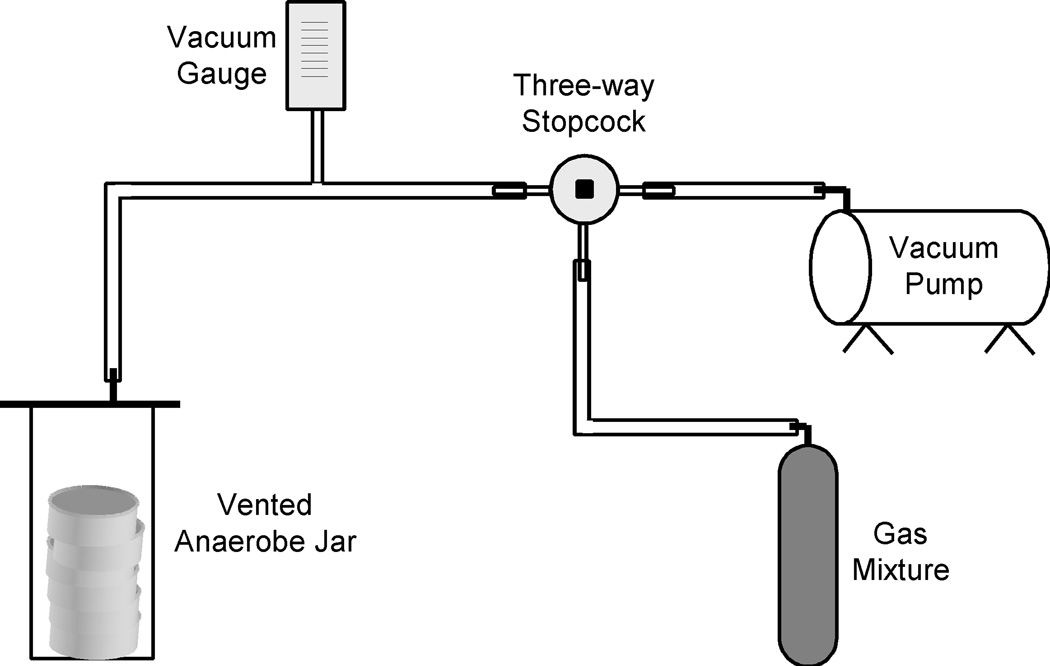
Bacteroides species are Gram-negative, obligate anaerobic bacteria. They are the predominant indigenous bacterial species in the human intestinal tract, where they play an important role in the normal physiology of the host, but they can also be significant opportunistic pathogens. The fact that these are obligate anaerobes is the prevailing feature that affects the methodology used for their cultivation. Several techniques are described for anaerobic culturing; the anaerobic glove box and anaerobic jars are the two techniques most adaptable to a range of research needs. Straightforward methods are presented for propagation on solid media and in broth cultures, and for the long-term storage and maintenance of stock cultures. The Bacteroides species are saccharolytic, which is the second feature of their physiology that impacts cultivation methodology. Several flexible media formulations, including a defined minimal media, are provided that allow the researcher to choose the carbon source best suited for his or her work.
Figures
References
-
- Baughn AD, Malamy MH. The strict anaerobe Bacteroides fragilis grows in and benefits from nanomolar concentrations of oxygen. Nature. 2004;427:441–444. - PubMed
-
- Breznak JA, Costilow RN. Physiochemical factors in Growth. In: Gerhards P, Murray RGE, Wood WA, Krieg NR, editors. Methods for General and Molecular Bacteriology. Washington DC: American Society for Microbiology; 1994. pp. 137–154.
-
- Bryant MP. Commentary on the Hungate technique for culture of anaerobic bacteria. Am. J. Clin. Nutr. 1972;25:1324–1328. - PubMed
Publication types
MeSH terms
Substances
Grants and funding
LinkOut - more resources
Full Text Sources
