. 2008 Sep 5;31(5):650-9.
doi: 10.1016/j.molcel.2008.06.020.

Bypassing Sir2 and O-acetyl-ADP-ribose in transcriptional silencing

Affiliations

Bypassing Sir2 and O-acetyl-ADP-ribose in transcriptional silencing

Chia-Ching Chou et al. Mol Cell. .

Abstract

The yeast Sir2/3/4 complex forms a heterochromatin-like structure that represses transcription. The proteins nucleate at silencers and spread distally, utilizing the Sir2 NAD(+)-dependent histone deacetylase activity and the affinity of Sir3/4 for deacetylated histone tails. A by-product of the Sir2 reaction, O-acetyl-ADP-ribose (OAADPr), is thought to aid spreading by binding one of the Sir proteins. We developed a protein chimera approach to reexamine the contributions of Sir2. We show that a Sir3 chimera-bearing Hos3, an unrelated NAD(+)-independent histone deacetylase, substitutes for Sir2 in silencing. Sir3-Hos3 operates within the Sir pathway, spreading while deacetylating histones. Moreover, the chimera represses HM loci in strains lacking all five OAADPr-producing deacetylases, indicating that OAADPr is not necessary for silencing. Repression by a Hos3 hybrid bearing the targeting motifs of Sir2 shows that targeting doesn't require the Sir2 reaction. Together, these data demonstrate that protein deacetylation is the only essential function of Sir2 in creating silenced chromatin.


Figures
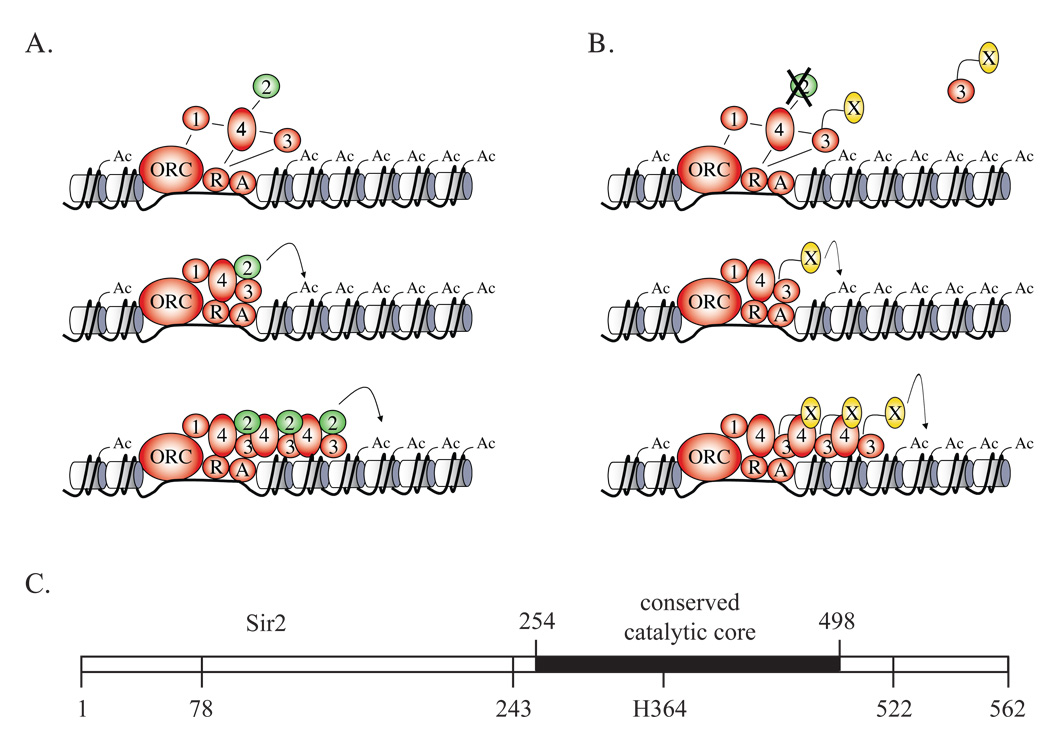
Figure 1
Figure 1. Experimental Strategy
A) Nucleation and spreading of silencing proteins (adapted from Rusché et al., 2002 with permission). Nucleation (top panel) occurs when the Sir2/3/4 complex associates with silencer-bound factors. Lines between the Sir proteins (numbered) and silencer-bound factors (R = Rap1, A = Abf1) depict the network of protein-protein interactions (see references in (Rusché et al., 2003). Removal of acetyl groups (Ac) from histone tails by Sir2 facilitates binding of additional Sir2/3/4 complexes. Interactions between individual Sir2/3/4 complexes may also facilitate spreading. B) Nucleation and spreading of silencing proteins by tethering Sir3 to a heterologous deacetylase (labeled X). C) The domain structure of Sir2 and the locations of truncation endpoints used in this study. Histidine H364 is required for enzymatic activity (Imai et al., 2000). The truncation point at position 243 corresponds to the N-terminus of Sir2-Af1, a Sir2 family member whose structure has been solved (Min et al., 2001). Amino acids 1–77 are omitted in the LexA-Sir278–562 chimera.
Figure 2
Figure 2. Silencing by Sir3-Sir2243–562
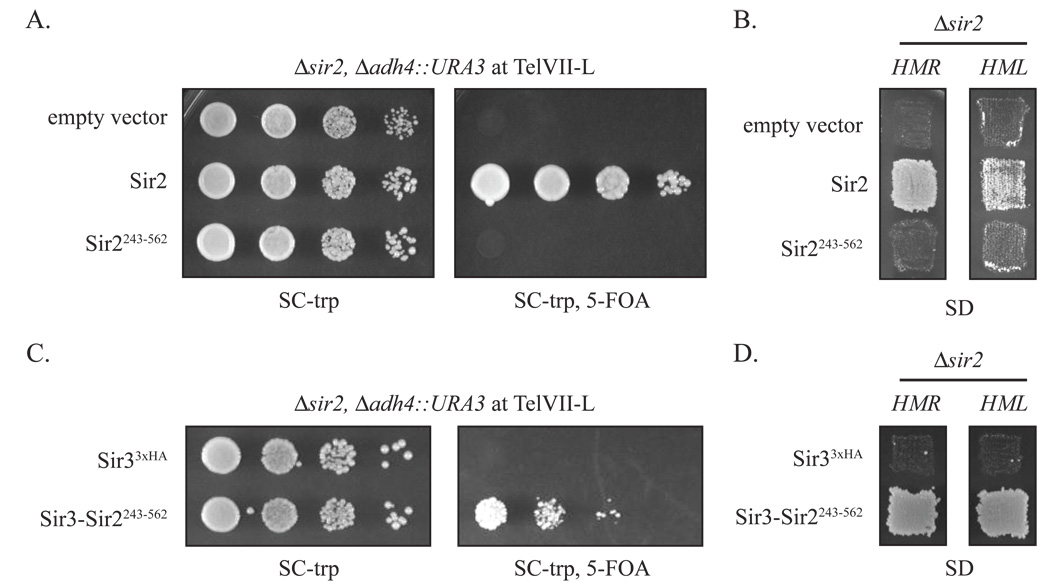
A) Sir2243–562 does not support telomeric silencing. Repression of a URA3 reporter at Tel-VIIL was measured by growth on 5-FOA in strain CCC1 (MATα Δsir2 Δadh4::URA3) transformed with empty vector (pRS414), a full length Sir2 expression vector (pCC7) or a vector expressing Sir2243–562 (pCC8). SC-trp plates provided loading and growth controls. B) Sir2243–562 does not support mating-type silencing. HMR silencing in strain CCC1 and HML silencing in strain GCY16 (MATa Δsir2) were measured by growth on SD plates after patch mating to tester strains K125 (MATa) and K126 (MATα), respectively. The same plasmids as in (A) were used. C) Silencing of a telomeric URA3 reporter gene by Sir3-Sir2243–562. Strain CCC1 was transformed with plasmids that express Sir33xHA (pSIR3-HA TRP1) or Sir3-Sir2243–562 (pCC4). D) Silencing of the mating-type loci by Sir3-Sir2243–562. Strains CCC1 and GCY16 were transformed with plasmids described in (A) and patch mated to K125 and K126, respectively.
Figure 3
Figure 3. Silencing by Sir3-Hos32–549
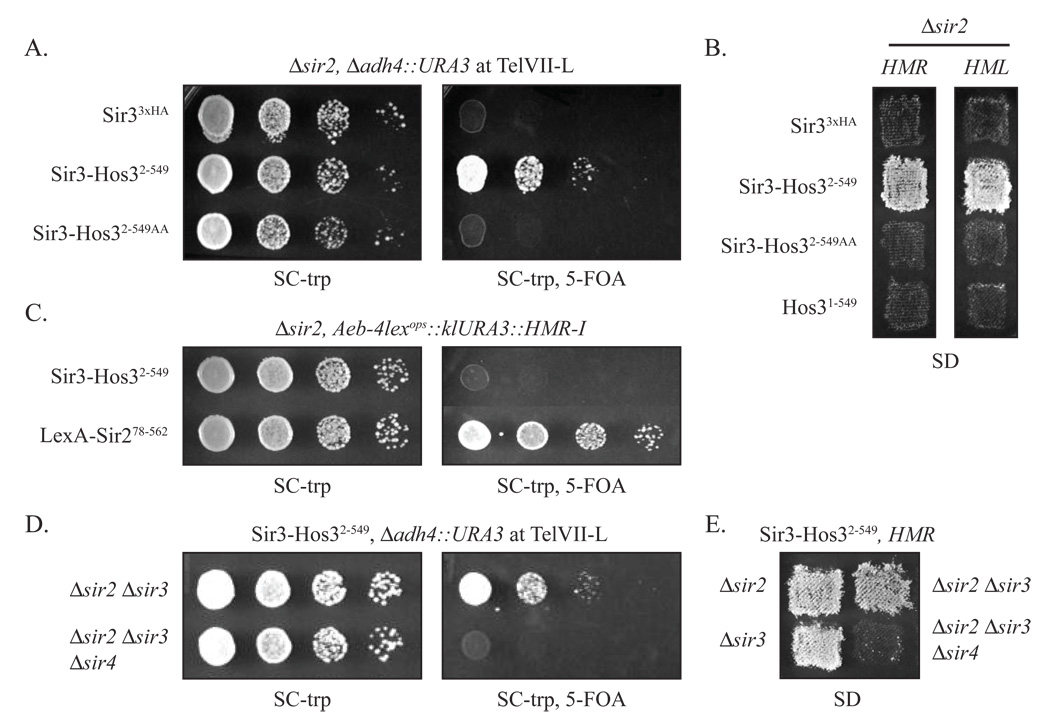
A) Silencing of a telomeric URA3 gene by Sir3-Hos32–549. Strain CCC1 (MATα Δsir2 Δadh4::URA3) was transformed with plasmids that express either Sir33xHA (pSIR3-HA TRP1) , Sir3-Hos32–549 (pCC10) or Sir3-Hos32–549AA (pCC11). B) Silencing of HMR by Sir3-Hos32–549. Strains CCC1 and GCY16 (MATa Δsir2) expressing Sir33xHA (pSIR3-HA TRP1), Sir3-Hos32–549 (pCC10), Sir3-Hos32–549AA (pCC11) or Hos31–549 (pCC21) were patch mated to K125 (MATa) and K126 (MATα), respectively. C) HMR silencing by Sir3-Hos32–549 requires the HMR-E silencer. Strain CCC44 (Aeb-4lexops::klURA3::HMR-I Δsir2) with a mutant HMR-E silencer (designated Aeb-4lexops) was transformed with plasmids expressing either Sir3-Hos32–549 (pCC10) or LexA-Sir278–562 (pGLC117) and then spotted on media containing 5-FOA. D) Telomeric silencing by Sir3-Hos32–549 requires Sir4. Strains CCC12 (MATα Δsir2 Δsir3 Δadh4::URA3) and CCC21 (MATα Δsir2 Δsir3 Δsir4 Δadh4::URA3) were transformed with a plasmid expressing Sir3-Hos32–549 (pCC10). E) Silencing of HMR by Sir3-Hos32–549 requires Sir4. Strains CCC1, CCC11 (MATα Δsir3), CCC12 and CCC21 expressing Sir3-Hos32–549 were patch mated with K125.
Figure 4
Figure 4. Quantitative measurements of silencing by Sir3-Hos32–549
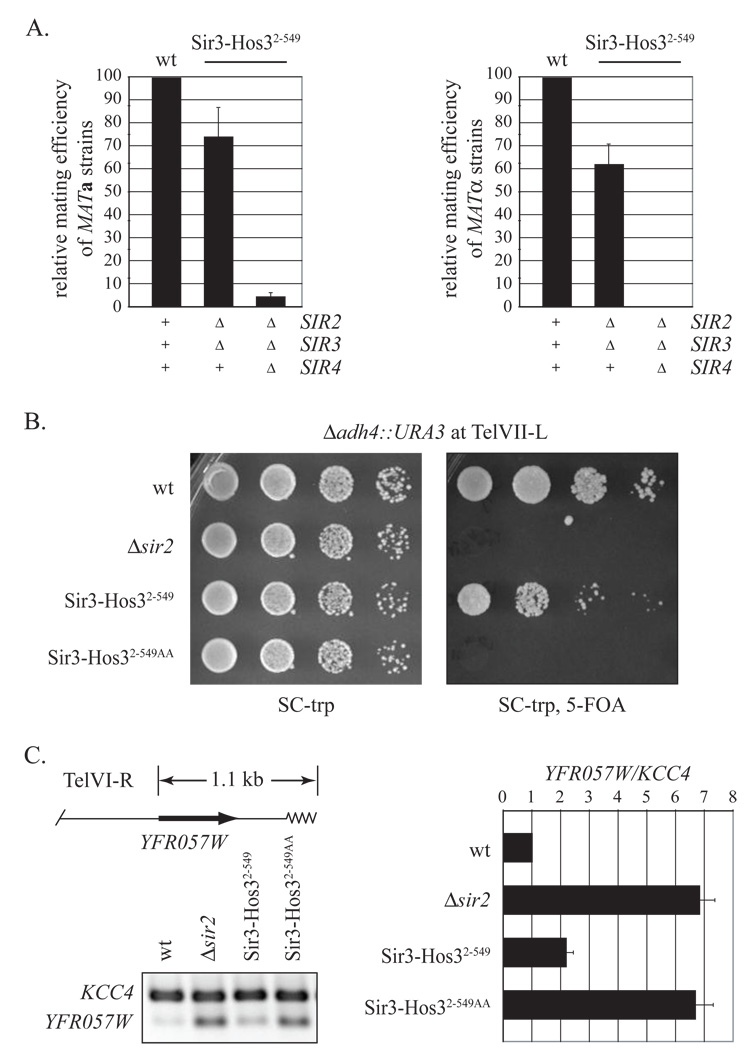
A) Quantitative mating assays. Strains GCY16 (MATa Δsir2) and CCC1 (MATα Δsir2 Δadh4::URA3) bearing plasmid-borne SIR2 (pCC7) served as wild-type standards to compare the mating of the following strains expressing Sir3-Hos32–549 (pCC10): CCC8 (MATa Δsir2 Δsir3), CCC20 (MATa Δsir2 Δsir3 Δsir4), CCC12 (MATα Δsir2 Δsir3 Δadh4::URA3), and CCC21 (MATα Δsir2 Δsir3 Δsir4 Δadh4::URA3). Strains K125 (MATa) and K126 (MATα) were used as mating testers. Reported values represent the mean and standard deviation of three independent trials. Mating of strain CCC21 with Sir3-Hos32–549 was ≤ 0.1%. B) Silencing of telomeric URA3. Strain CCC1 (MATα Δsir2 Δadh4::URA3) expressing SIR2 (pCC7) and strain CCC12 (MATα Δsir2 Δsir3 Δadh4::URA3) expressing Sir33xHA (pSIR3-HA TRP1) served as respective wild-type and Δsir2 controls to compare telomeric URA3 silencing in strain CCC12 expressing Sir3-Hos32–549 (pCC10) or Sir3-Hos32–549AA (pCC11). C) Silencing of a native telomeric gene. Multiplex RT-PCR was performed on RNA extracts from the strains described in (B). Primer sets to YFR057W, which resides within 1.1 kb of the right end of chromosome VI, and KCC4, which serves as an internal silencing-independent control are listed in Table S3. The YFR057W/KCC4 ratios for each strain were normalized to the wild-type control. Reported values represent the mean and standard deviation of three independent trials.
Figure 5
Figure 5. Sir3-Hos32–549 binds and deacetylates histones throughout the silenced domain
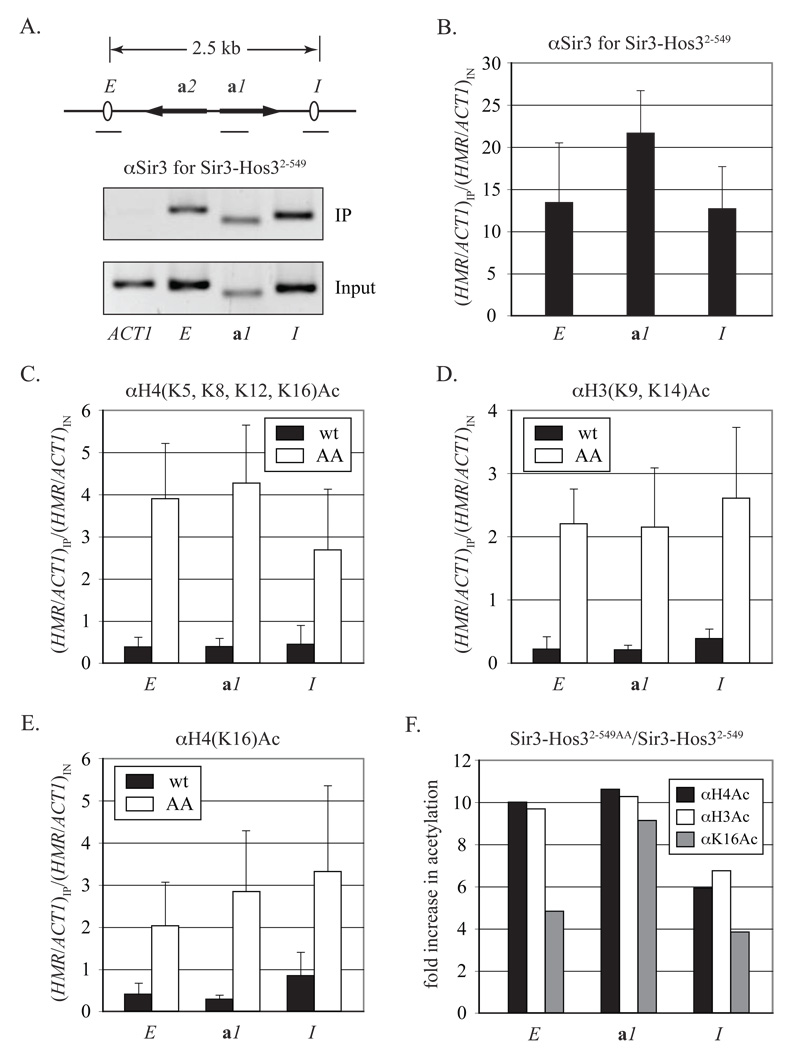
A) A map of HMR showing the sites examined by ChIP (see PCR primers #17–24 in Table S3) and gels of a representative experiment with Sir3 antibody (αSir3). ACT1 served as a silent chromatin-free control. Experiments were performed with strain CCC12 (MATα Δsir2 Δsir3) expressing either Sir-Hos32–549 (from plasmid pCC10 and labeled wt) or Sir3-Hos32–549AA (from plasmid pCC11 and labeled AA). Reported values represent the mean and standard deviation of at least three independent trials. B) Quantitation of Sir3 ChIP for the wt Sir3-Hos32–549 chimera. C) Quantitation of the H4(K5, K8, K12, K16)Ac ChIP. D) Quantitation of the H3(K9, K14)Ac ChIP. E) Quantitation of the H4K16Ac ChIP. F) Fold increase in acetylation in figures 5C–E by replacing Sir3-Hos32–549 with Sir3-Hos32–549AA. Black αH4Ac = αH4(K5, K8, K12, K16)Ac; white αH3Ac = αH3(K9, K14)Ac, grey αK16Ac = αH4K16Ac.
Figure 6
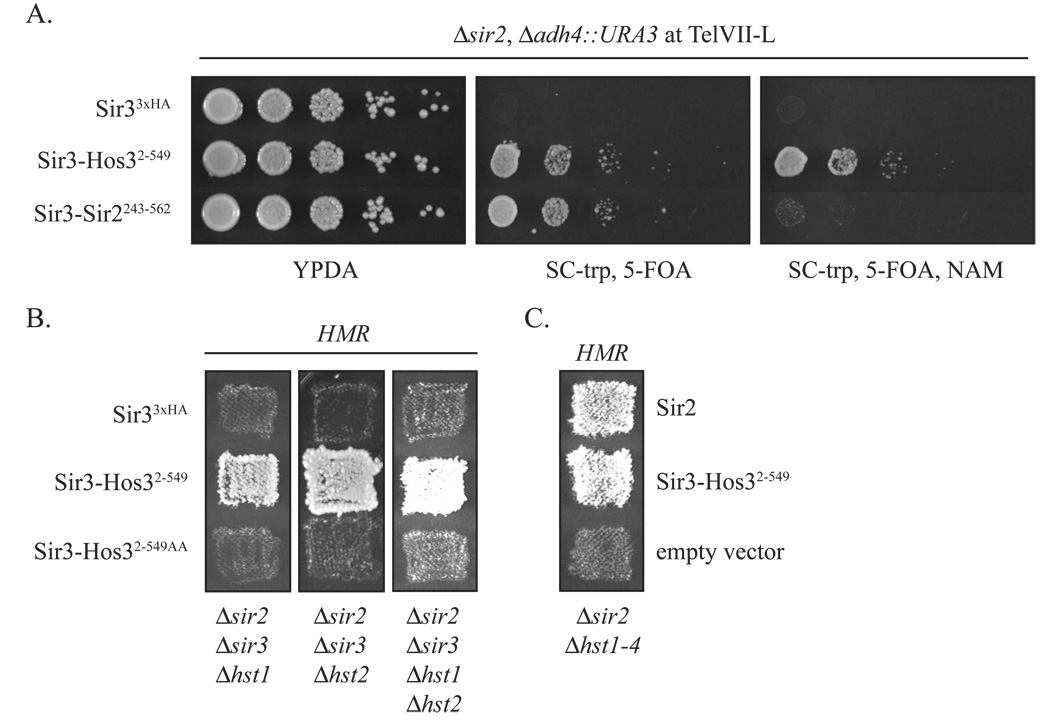
Figure 6. Silencing by Sir3-Hos32–549 is nicotinamide resistant and does not require any sirtuins
A) Sir3-Hos32–549 produces nicotinamide-resistant silencing. Strain CCC12 (MATα Δsir3 Δsir2 adh4::URA3) bearing plasmids expressing Sir33xHA (pSIR3-HA TRP1), Sir3-Hos32–549 (pCC10) and Sir3-Sir2243–562 (pCC4) was spotted on SC-trp plates containing 5-FOA and 5 mM nicotinamide (NAM), SC-trp plates containing 5-FOA alone and YPDA plates as a loading control. B) Silencing by Sir3-Hos32–549 without Hst1 and/or Hst2. Strains CCC46 (MATα Δsir2 Δsir3 Δhst1), CCC37 (MATα Δsir2 Δsir3 Δhst2) and CCC50 (MATα Δsir2 Δsir3 Δhst1 Δhst2) expressing Sir33xHA (pSIR3-HA TRP1), Sir3-Hos32–549 (pCC10) or Sir3-Hos32–549AA (pCC11) were patch mated to K125 (MATa). C) Silencing by Sir3-Hos32–549 in a strain lacking all sirtuins. Strain YCB496 (MATα Δsir2 Δhst1 Δhst2 Δhst3 Δhst4) expressing Sir2 (pCC32), Sir3-Hos32–549 (pCC31) or empty vector (pRS412) was patch mated to K125 (MATa).
Figure 7
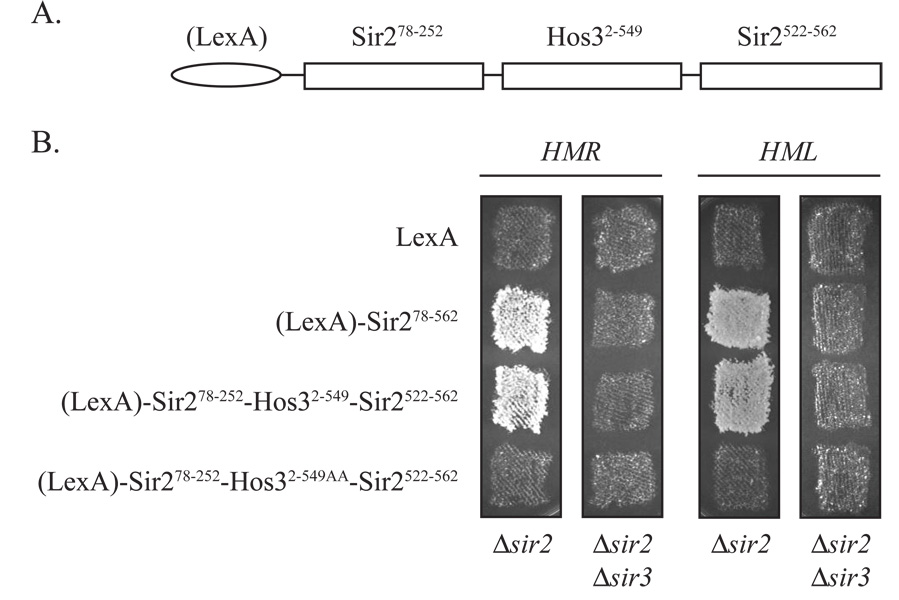
Figure 7. Silencing of the mating-type loci by a Sir2-Hos3 chimera
A) A map of the Sir2-Hos3 hybrid protein. LexA is appended to the N-terminus of all Sir2 chimeras used here but the bacterial protein was subsequently removed and found not to be relevant (data not shown). B) Patch mating assays with Sir278–252-Hos32–549-Sir2522–562. Strains CCC1 (MATα Δsir2), CCC12 (MATα Δsir2 Δsir3), GCY16 (MATa Δsir2) and CCC8 (MATa Δsir2 Δsir3) expressing LexA (pBTM116), LexA-Sir278–562 (pGLC117), LexA-Sir278–252-Hos32–549-Sir2522–562 (pCC29), or LexA-Sir278–252-Hos32–549AA-Sir2522–562 (pCC30) were patch mated to either K125 (MATa) and K126 (MATα).

References

    1. Ahn SH, Diaz RL, Grunstein M, Allis CD. Histone H2B deacetylation at lysine 11 is required for yeast apoptosis induced by phosphorylation of H2B at serine 10. Mol. Cell. 2006;24:211–220. - PubMed
    1. Bitterman KJ, Anderson RM, Cohen HY, Latorre-Esteves M, Sinclair DA. Inhibition of silencing and accelerated aging by nicotinamide, a putative negative regulator of yeast Sir2 and human SirT1. J. Biol. Chem. 2002;277:45099–45107. - PubMed
    1. Borra MT, O'Neill FJ, Jackson MD, Marshall B, Verdin E, Foltz KR, Denu JM. Conserved enzymatic production and biological effect of O-acetyl-ADP-ribose by silent information regulator 2-like NAD+-dependent deacetylases. J. Biol. Chem. 2002;277:12632–12641. - PubMed
    1. Brand AH, Breeden L, Abraham J, Sternglanz R, Nasmyth K. Characterization of a 'silencer' in yeast: a DNA sequence with properties opposite those of a transcriptional enhancer. Cell. 1985;41:41–48. - PubMed
    1. Carmen AA, Griffin PR, Calaycay JR, Rundlett SE, Suka Y, Grunstein M. Yeast Hos3 forms a novel trichostatin A-insensitive homodimer with intrinsic histone deacetylase activity. Proc. Natl. Acad. Sci. USA. 1999;96:12356–12361. - PMC - PubMed

Publication types

MeSH terms

LinkOut - more resources