


New insights into NF-kappaB regulation and function
- PMID: 18775672
- PMCID: PMC5751948
- DOI: 10.1016/j.it.2008.07.003
New insights into NF-kappaB regulation and function
Abstract
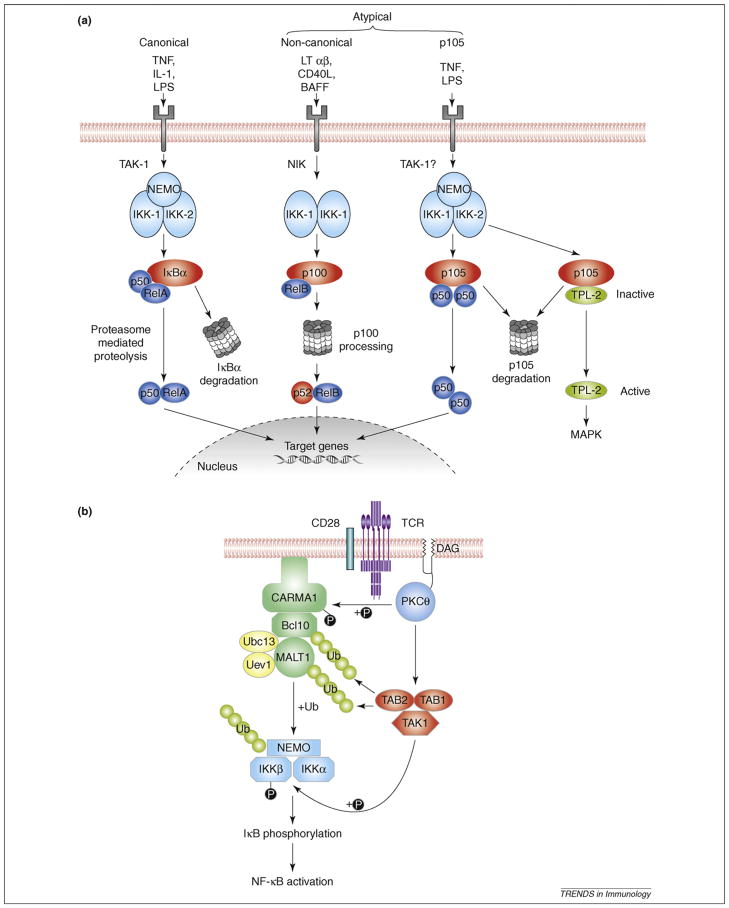
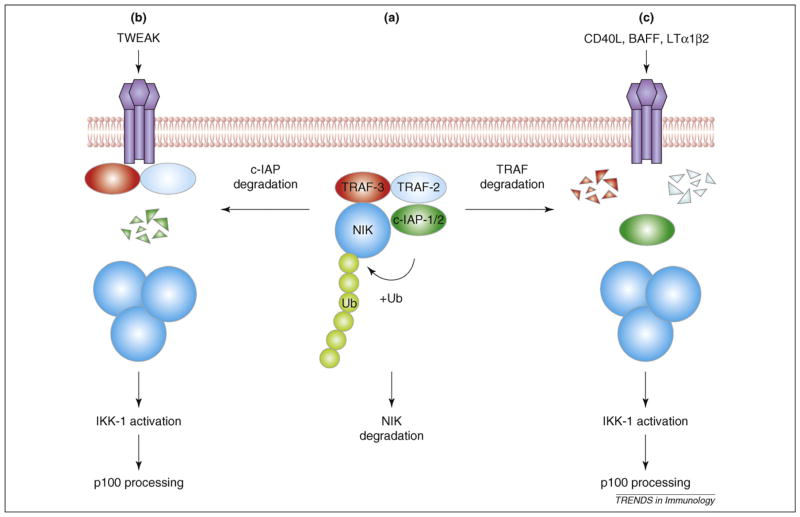
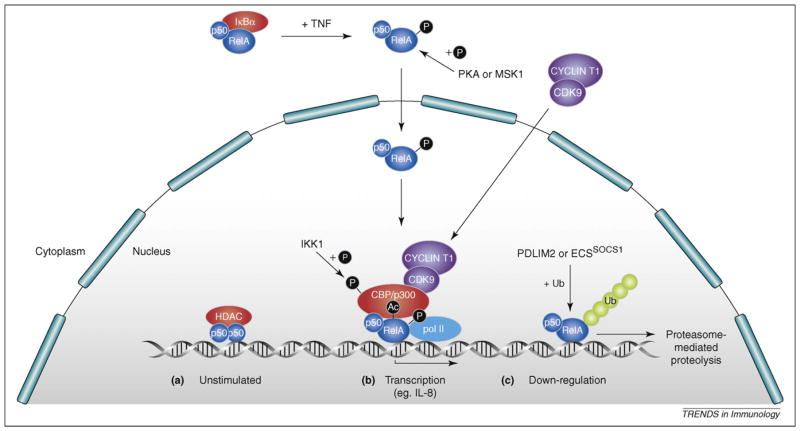
NF-kappaB (nuclear factor-kappaB) transcription factors have multiple critical roles in the regulation of immune responses. In unstimulated cells, NF-kappaB proteins are sequestered in the cytoplasm by IkappaB inhibitory proteins. Various immune stimuli induce the IkappaB kinase (IKK) to phosphorylate IkappaBs, triggering their ubiquitination and proteasomal degradation, which permits nuclear translocation of associated NF-kappaB subunits and activation of NF-kappaB target genes. Recent studies have highlighted the importance of dynamic ubiquitination-deubiquitination events in regulating this canonical NF-kappaB signaling pathway. Ubiquitination additionally plays critical roles in activation of the noncanonical pathway that regulates NF-kappaB via signal-induced processing of NF-kappaB2 p100. New research has also identified several novel regulatory proteins that control the transcriptional activity of nuclear NF-kappaB.
Figures
References
Publication types
MeSH terms
Substances
Grants and funding
LinkOut - more resources
Full Text Sources
