


Sirolimus is associated with veno-occlusive disease of the liver after myeloablative allogeneic stem cell transplantation
- PMID: 18776081
- PMCID: PMC2597119
- DOI: 10.1182/blood-2008-07-169342
Sirolimus is associated with veno-occlusive disease of the liver after myeloablative allogeneic stem cell transplantation
Abstract
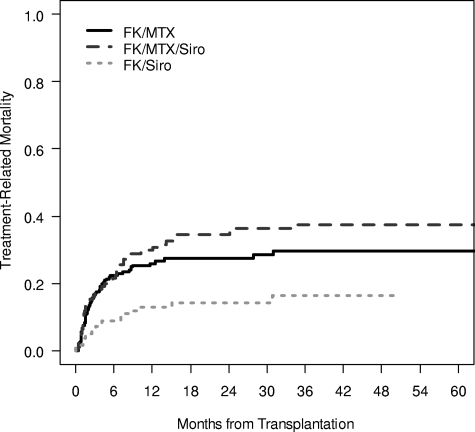
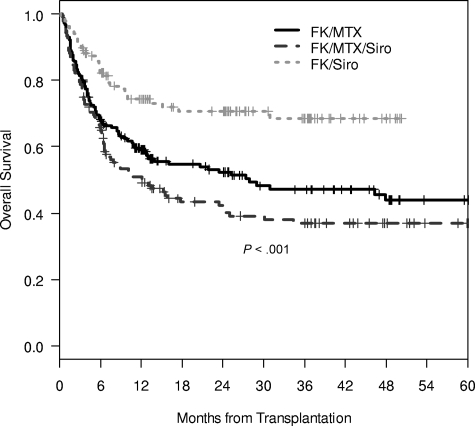
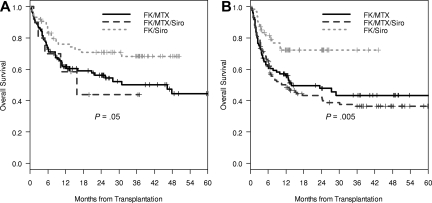
Sirolimus is an effective agent used in graft-versus-host disease (GVHD) prophylaxis after allogeneic transplantation. It also has antiproliferative effects on vascular endothelium when used to coat coronary artery stents. We noted an excess of veno-occlusive disease (VOD) in a clinical trial, and retrospectively reviewed the records of 488 patients to determine the association between sirolimus and VOD. When used with cyclophosphamide/total body irradiation (Cy/TBI) conditioning, sirolimus is associated with an increased incidence of VOD (OR 2.35, P = .005). The concomitant use of methotrexate further increased this rate (OR 3.23, P < .001), while sirolimus without methotrexate was not associated with an increased risk of VOD (OR 1.55, P = .33). Mortality after VOD diagnosis was unaffected, and overall treatment-related mortality was lowest when sirolimus was used without methotrexate. Similar findings were noted in matched, related, and unrelated as well as mismatched donor subgroups. When used with busulfan-based conditioning, sirolimus use was associated with an even higher rate of VOD (OR 8.8, P = .008). Our findings suggest that sirolimus use is associated with VOD after TBI-based transplantation when used with methotrexate after transplantation. Sirolimus-based GVHD prophylaxis without methotrexate is associated with the greatest overall survival. Myeloablative doses of busulfan should not be used with sirolimus-based immunosuppression.
Figures
References
-
- MacDonald AS. Rapamycin in combination with cyclosporine or tacrolimus in liver, pancreas, and kidney transplantation. Transplant Proc. 2003;35:201S–208S. - PubMed
-
- Trotter JF. Sirolimus in liver transplantation. Transplant Proc. 2003;35:S193–S200. - PubMed
-
- Ciancio G, Burke GW, Gaynor JJ, et al. A randomized long-term trial of tacrolimus/sirolimus versus tacrolimus/mycophenolate mofetil versus cyclosporine (NEORAL)/sirolimus in renal transplantation, II: survival, function, and protocol compliance at 1 year. Transplantation. 2004;77:252–258. - PubMed
-
- Johnson RW. Sirolimus (Rapamune) in renal transplantation. Curr Opin Nephrol Hypertens. 2002;11:603–607. - PubMed
-
- Antin JH, Kim HT, Cutler C, et al. Sirolimus, tacrolimus, and low-dose methotrexate for graft-versus-host disease prophylaxis in mismatched related donor or unrelated donor transplantation. Blood. 2003;102:1601–1605. - PubMed
Publication types
MeSH terms
Substances
Grants and funding
LinkOut - more resources
Full Text Sources
Medical
