


Melanin as a virulence factor of Paracoccidioides brasiliensis and other dimorphic pathogenic fungi: a minireview
- PMID: 18777637
- PMCID: PMC2586806
- DOI: 10.1007/s11046-007-9061-4
Melanin as a virulence factor of Paracoccidioides brasiliensis and other dimorphic pathogenic fungi: a minireview
Abstract
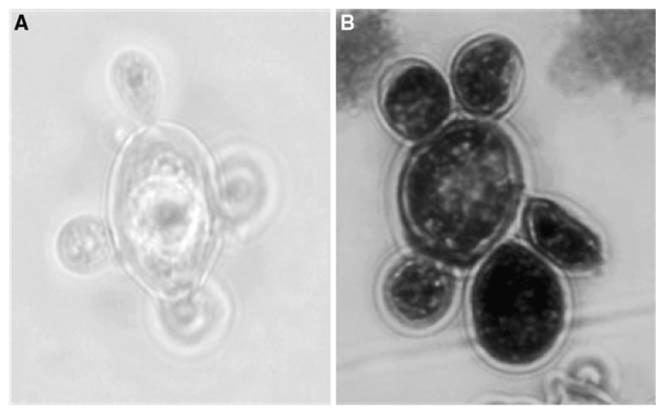
Melanin pigments are substances produced by a broad variety of pathogenic microorganisms, including bacteria, fungi, and helminths. Microbes predominantly produce melanin pigment via tyrosinases, laccases, catecholases, and the polyketide synthase pathway. In fungi, melanin is deposited in the cell wall and cytoplasm, and melanin particles ("ghosts") can be isolated from these fungi that have the same size and shape of the original cells. Melanin has been reported in several human pathogenic dimorphic fungi including Paracoccidioides brasiliensis, Sporothrix schenckii, Histoplasma capsulatum, Blastomyces dermatitidis, and Coccidioides posadasii. Melanization appears to contribute to virulence by reducing the susceptibility of melanized fungi to host defense mechanisms and antifungal drugs.
Figures
References
-
- Piattelli M, Fattorusso E, Nicolaus RA, Magno S. The structure of melanins and melanogenesis. V Ustilago melanin Tetrahedron. 1965;21:3229–36. - PubMed
-
- Hamilton AJ, Gomez BL. Melanins in fungal pathogens. J Med Microbiol. 2002;51:189–91. - PubMed
-
- Sanchez-Ferrer A, Rodrigues-Lopez JN, Garcia-Canova F, Garcia-Carmona F. Tyrosinase: a comprehensive review of its mechanism. Biochem Biophys Acta. 1995;1247:1–11. - PubMed
-
- Wheelr MH, Bell AA. Melanins and their importance in pathogenic fungi. Curr Top Med Mycol. 1988;2:338–87. - PubMed
Publication types
MeSH terms
Substances
Grants and funding
LinkOut - more resources
Full Text Sources
Medical
