


Corrective osteotomy for deformity of the distal radius using a volar locking plate
- PMID: 18780123
- PMCID: PMC2528980
- DOI: 10.1007/s11552-007-9066-y
Corrective osteotomy for deformity of the distal radius using a volar locking plate
Abstract
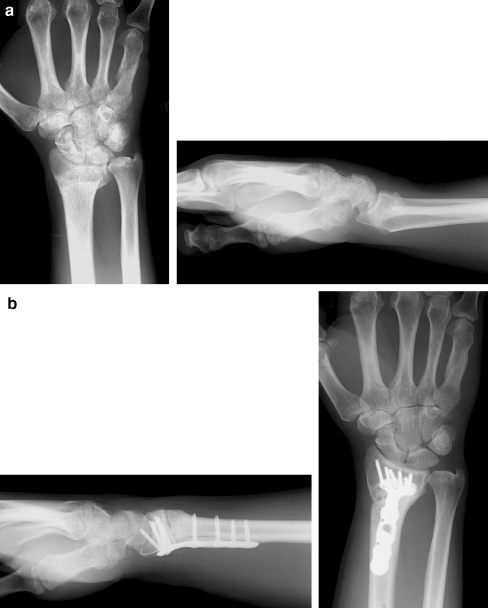
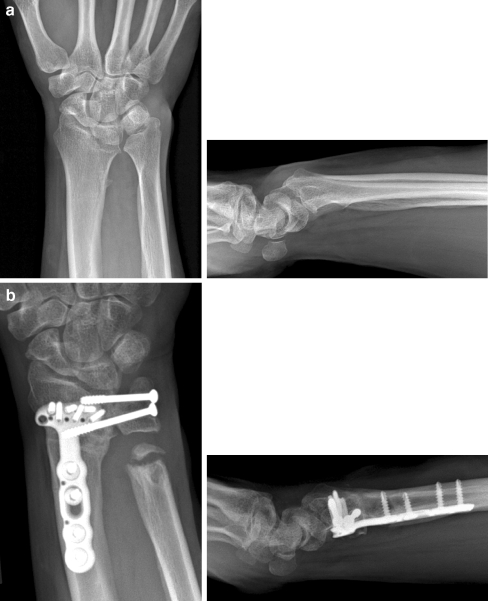
Dorsally angulated malunions of the distal radius have historically been corrected with an opening wedge osteotomy fixed with a dorsal plate. Volar locking plates may facilitate a less morbid approach to corrective osteotomies of the wrist. Eight consecutive patients with an average age of 40 years (range, 15-52 years) underwent correction of a distal radius deformity through a volar approach. Clinical follow-up averaged 17.4 months (range, 7-41 months). Preoperative radiographs revealed an average of 24 degrees of dorsal tilt in patients with dorsal deformity. Postoperatively, their average measurement was <3 degrees of volar tilt. Patients were initially ulnar-positive with an average of 4 mm ulnar-positive variance (range, 2-7 mm). This corrected to less than 1 mm postoperatively. Postoperative disabilities of the arm, shoulder, and hand (DASH), SF-12, and Mayo Wrist scores averaged 10.8, 40.5, and 82.5, respectively. There were no nonunions, and no plates required removal. Distal radius deformity can be effectively addressed through a volar approach with the use of a locking plate.
Figures
References
-
- Adams BD. Effects of radial deformity on distal radioulnar joint mechanics. J Hand Surg (Am) 1993;18(3):492–8. - PubMed
-
- Bacorn RW, Kurtzke JF. Colles’ fracture; a study of two thousand cases from the New York State Workmen’s Compensation Board. J Bone Jt Surg Am 1953;35-A(3):643–58. - PubMed
-
- Bushnell BD, Bynum DK. Malunion of the distal radius. J Am Acad Orthop Surg 2007;15(1):27–40. - PubMed
-
- Cohen MS, Turner TM, Urban RM. Effects of implant material and plate design on tendon function and morphology. Clin Orthop Relat Res 2006;445:81–90. - PubMed
LinkOut - more resources
Full Text Sources
