Review
doi: 10.2174/138161208785740054.
Role of cannabinoids and endocannabinoids in cerebral ischemia
Affiliations
- PMID: 18781985
- PMCID: PMC2581413
- DOI: 10.2174/138161208785740054
Item in Clipboard
Review
Role of cannabinoids and endocannabinoids in cerebral ischemia
Curr Pharm Des.
2008.
Abstract
The human costs of stroke are very large and growing; it is the third largest cause of death in the United States and survivors are often faced with loss of ability to function independently. There is a large need for therapeutic approaches that act to protect neurons from the injury produced by ischemia and reperfusion. The goal of this review is to introduce and discuss the available data that endogenous cannabinoid signaling is altered during ischemia and that it contributes to the consequences of ischemia-induced injury. Overall, the available data suggest that inhibition of CB1 receptor activation together with increased CB2 receptor activation produces beneficial effects.
Figures
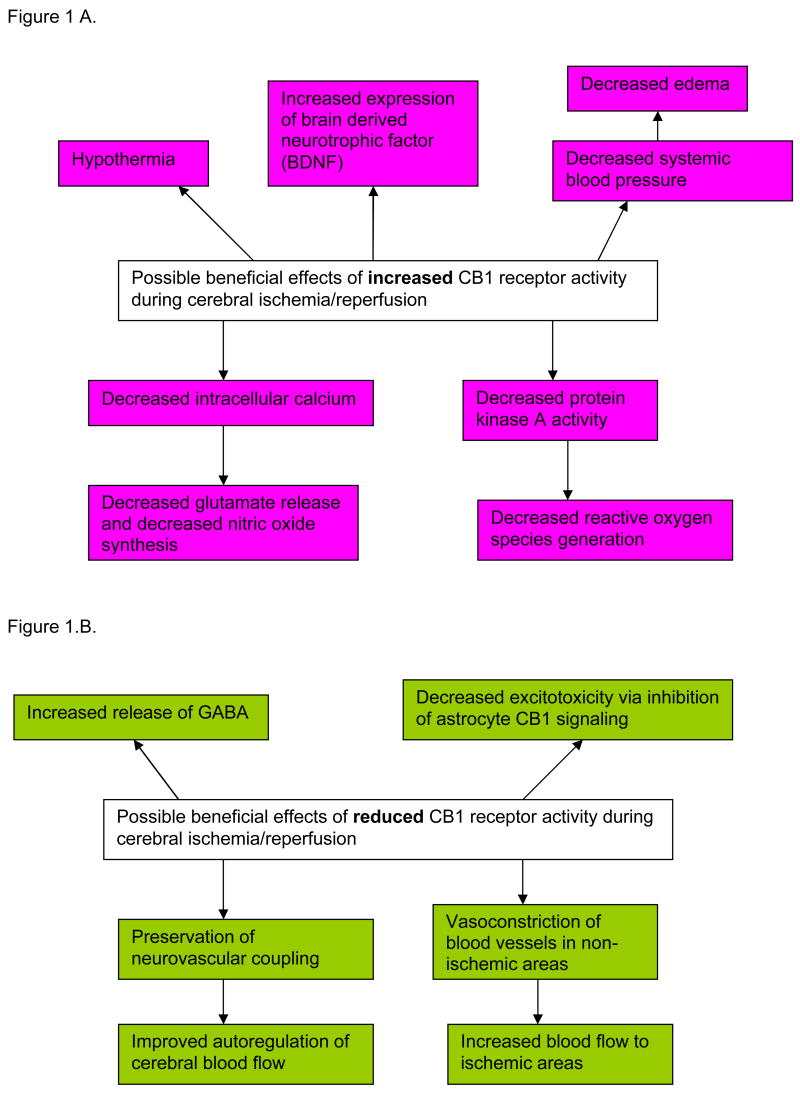
Summary of the possible mechanisms involved in the neuroprotective effects of cannabinoid receptor activation or inhibition. See text for details and supporting citations.
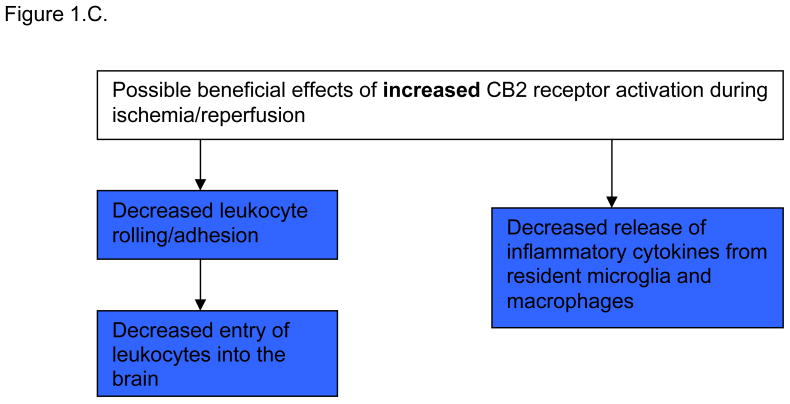
Summary of the possible mechanisms involved in the neuroprotective effects of cannabinoid receptor activation or inhibition. See text for details and supporting citations.
References
-
- Lipton P. Ischemic cell death in brain neurons. Physiol Rev. 1999;79:1431–568. - PubMed
-
- Mehta SL, Manhas N, Raghubir R. Molecular targets in cerebral ischemia for developing novel therapeutics. Brain Res Rev. 2007;54:34–66. - PubMed
-
- Albers GW, Goldberg MP, Choi DW. N-methyl-D-aspartate antagonists: ready for clinical trial in brain ischemia? Ann Neurol. 1989;25:398–403. - PubMed
-
- Natarajan V, Reddy PV, Schmid PC, Schmid HHO. On the biosynthesis and metabolism of n-acylethanolamine phospholipids in infarcted dog heart. Biochim Biophys Acta. 1981;664:445–8. - PubMed
-
- Schmid PC, Krebsbach RJ, Perry SR, Dettmer TM, Maasson JL, Schmid HH. Occurrence and postmortem generation of anandamide and other long-chain N-acylethanolamines in mammalian brain. FEBS Lett. 1995;375:143–7. - PubMed
Publication types
MeSH terms
Substances
Grants and funding
LinkOut - more resources
Full Text Sources
Other Literature Sources