


Development of an O(6)-alkylguanine-DNA alkyltransferase assay based on covalent transfer of the benzyl moiety from [benzene-3H]O(6)-benzylguanine to the protein
- PMID: 18783719
- PMCID: PMC2773450
- DOI: 10.1016/j.ab.2008.08.009
Development of an O(6)-alkylguanine-DNA alkyltransferase assay based on covalent transfer of the benzyl moiety from [benzene-3H]O(6)-benzylguanine to the protein
Abstract
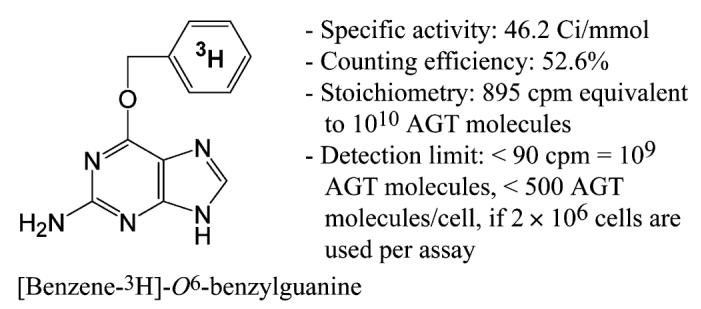
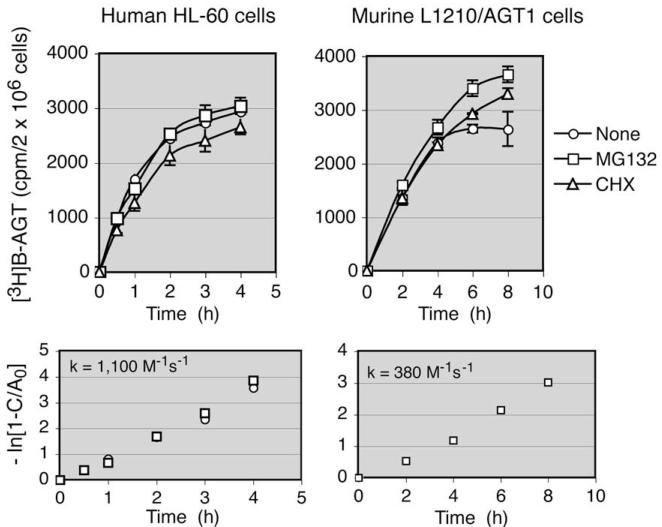
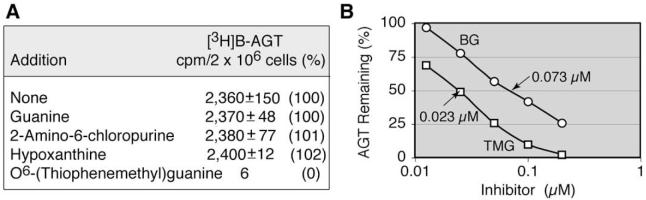
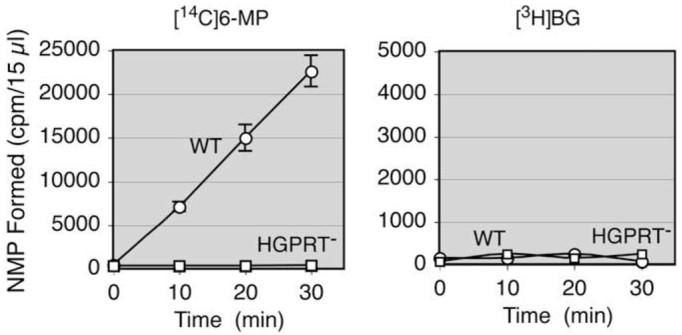
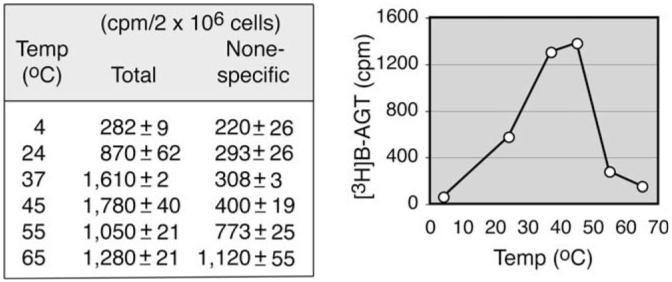
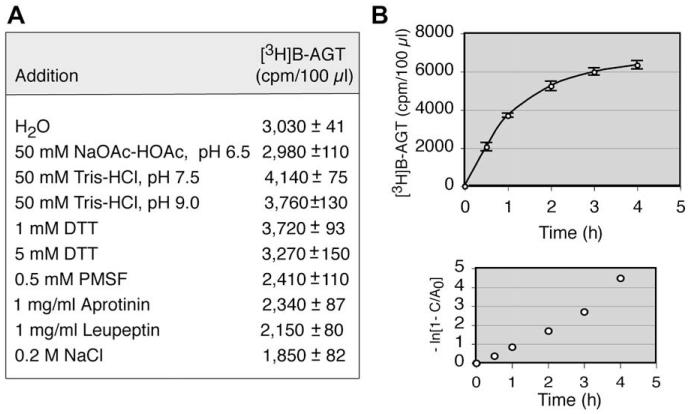
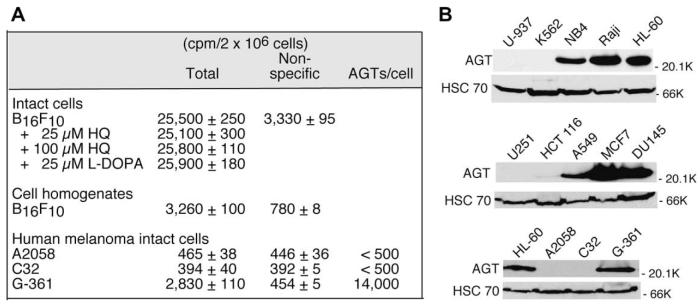
Although it is known that (i) O(6)-alkylguanine-DNA alkyltransferase (AGT) confers tumor cell resistance to guanine O(6)-targeting drugs such as cloretazine, carmustine, and temozolomide and that (ii) AGT levels in tumors are highly variable, measurement of AGT activity in tumors before treatment is not a routine clinical practice. This derives in part from the lack of a reliable clinical AGT assay; therefore, a simple AGT assay was devised based on transfer of radioactive benzyl residues from [benzene-3H]O(6)-benzylguanine ([3H]BG) to AGT. The assay involves incubation of intact cells or cell homogenates with [3H]BG and measurement of radioactivity in a 70% methanol precipitable fraction. Approximately 85% of AGT in intact cells was recovered in cell homogenates. Accuracy of the AGT assay was confirmed by examination of AGT levels by Western blot analysis with the exception of false-positive results in melanin-containing cells due to [3H]BG binding to melanin. Second-order kinetic constants for human and murine AGT were 1100 and 380 M(-1)s(-1), respectively. AGT levels in various human cell lines ranged from less than 500 molecules/cell (detection limit) to 45,000 molecules/cell. Rodent cell lines frequently lacked AGT expression, and AGT levels in rodent cells were much lower than in human cells.
Figures
References
-
- Shyam K, Penketh PG, Loomis RH, Rose WC, Sartorelli AC. Antitumor 2-(aminocarbonyl)-1,2-bis(methylsulfonyl)-1-(2-chloroethyl)hydrazines. J. Med. Chem. 1996;39:796–801. - PubMed
-
- Ludlum DB. The chloroethylnitrosoureas: sensitivity and resistance to cancer chemotherapy at the molecular level. Cancer Invest. 1997;15:588–598. - PubMed
-
- Newlands ES, Stevens MF, Wedge SR, Wheelhouse RT, Brock C. Temozolomide:a review of its discovery, chemical properties, pre-clinical development, and clinical trials. Cancer Treat. Rev. 1997;23:35–61. - PubMed
-
- Ludlum DB. DNA alkylation by the haloethylnitrosoureas: nature of modifications produced and their enzymatic repair or removal. Mutat. Res. 1990;233:117–126. - PubMed
-
- Penketh PG, Shyam K, Sartorelli AC. Comparison of DNA lesions produced by tumor-inhibitory 1,2-bis(sulfonyl)hydrazines and chloroethylnitrosoureas. Biochem. Pharmacol. 2000;59:283–291. - PubMed
Publication types
MeSH terms
Substances
Grants and funding
LinkOut - more resources
Full Text Sources
Research Materials
Miscellaneous
