


Imbalance of neocortical excitation and inhibition and altered UP states reflect network hyperexcitability in the mouse model of fragile X syndrome
- PMID: 18784272
- PMCID: PMC2585391
- DOI: 10.1152/jn.90752.2008
Imbalance of neocortical excitation and inhibition and altered UP states reflect network hyperexcitability in the mouse model of fragile X syndrome
Abstract
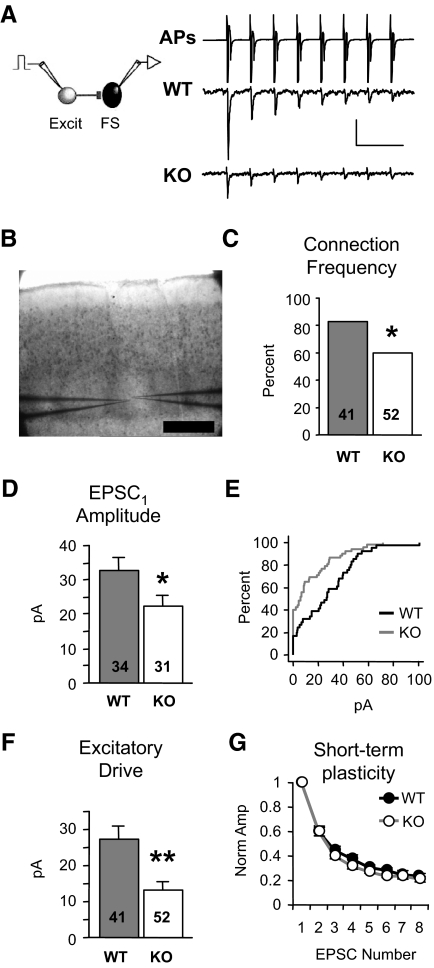
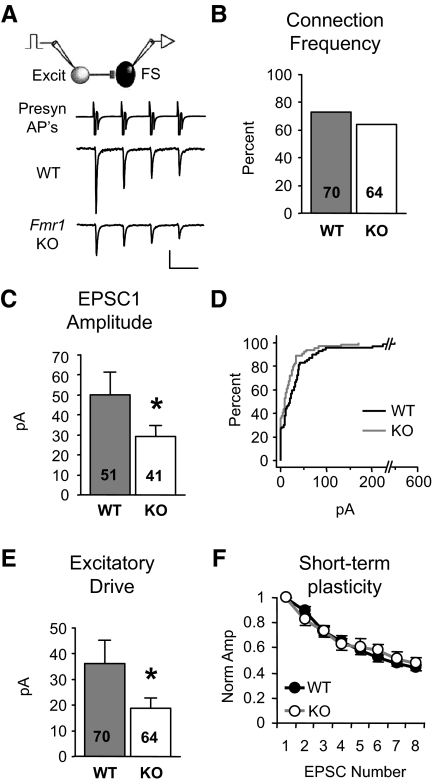
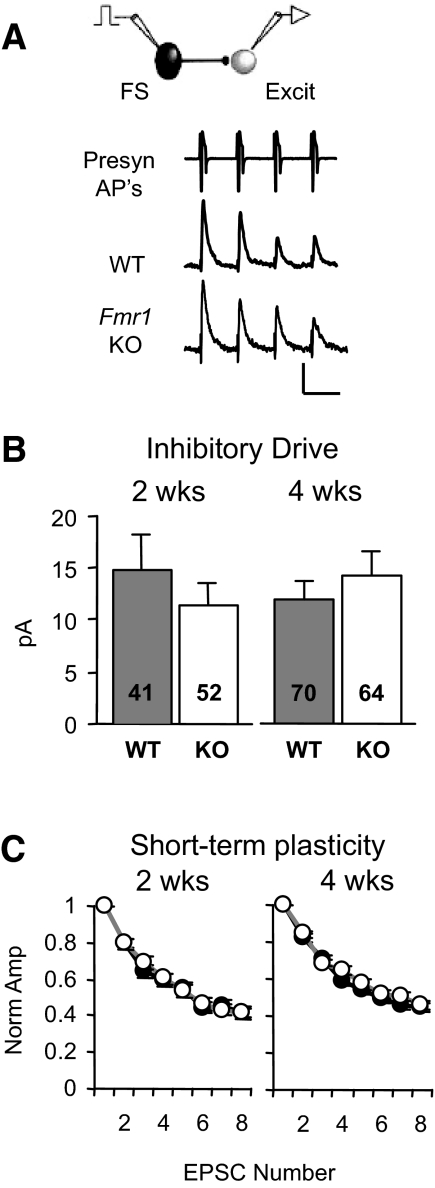
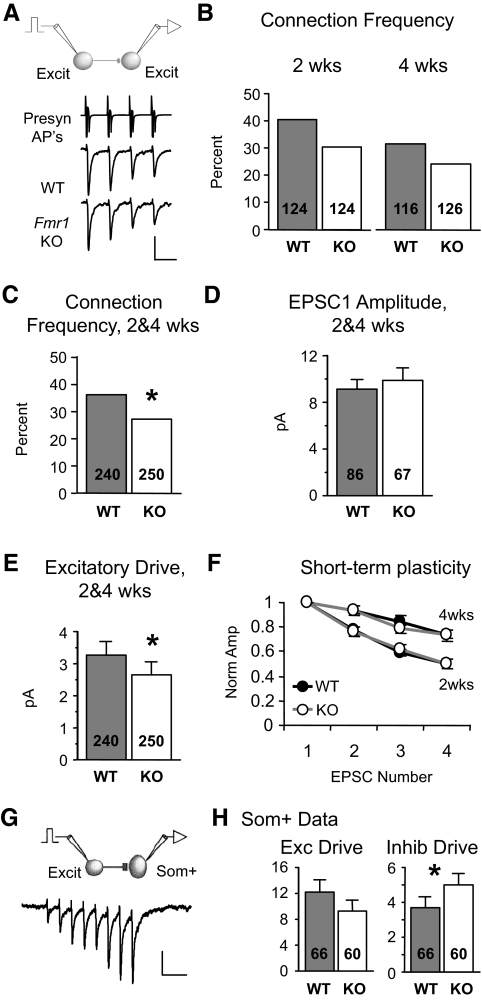
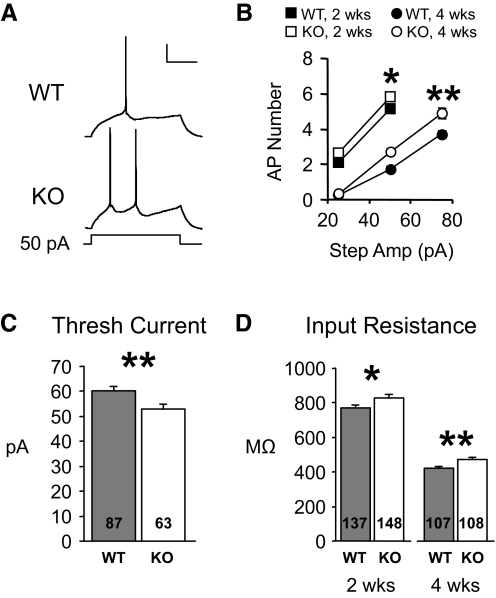
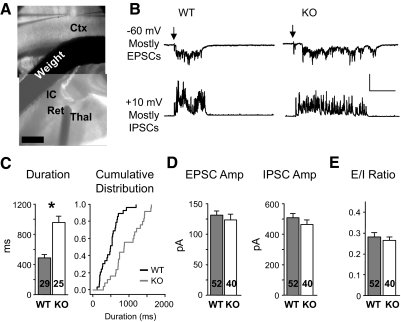
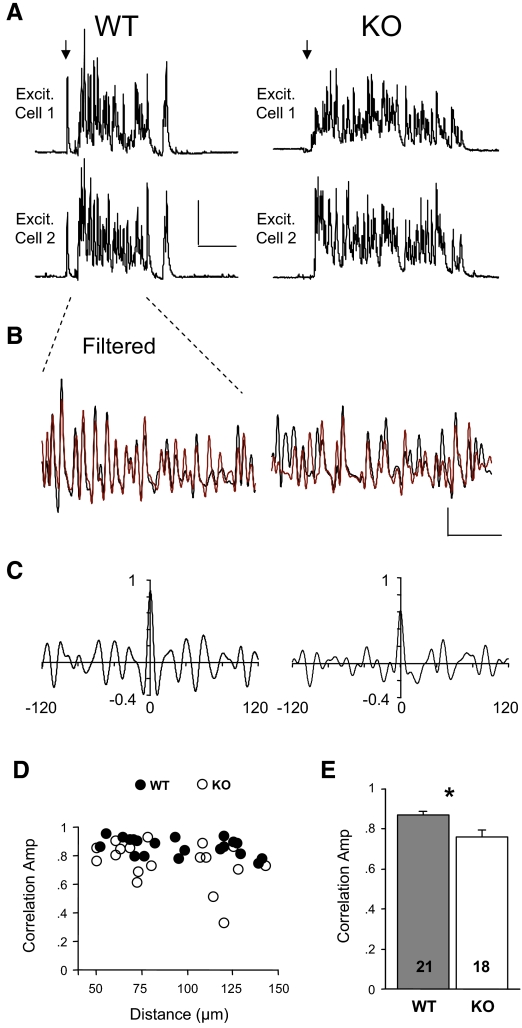
Despite the pronounced neurological deficits associated with mental retardation and autism, it is unknown if altered neocortical circuit function occurs in these prevalent disorders. Here we demonstrate specific alterations in local synaptic connections, membrane excitability, and circuit activity of defined neuron types in sensory neocortex of the mouse model of Fragile X Syndrome-the Fmr1 knockout (KO). Overall, these alterations result in hyperexcitability of neocortical circuits in the Fmr1 KO. Specifically, we observe a substantial deficit in local excitatory drive ( approximately 50%) targeting fast-spiking (FS) inhibitory neurons in layer 4 of somatosensory, barrel cortex. This persists until at least 4 wk of age suggesting it may be permanent. In contrast, monosynaptic GABAergic synaptic transmission was unaffected. Overall, these changes indicate that local feedback inhibition in neocortical layer 4 is severely impaired in the Fmr1 KO mouse. An increase in the intrinsic membrane excitability of excitatory neurons may further contribute to hyperexcitability of cortical networks. In support of this idea, persistent neocortical circuit activity, or UP states, elicited by thalamic stimulation was longer in duration in the Fmr1 KO mouse. In addition, network inhibition during the UP state was less synchronous, including a 14% decrease in synchrony in the gamma frequency range (30-80 Hz). These circuit changes may be involved in sensory stimulus hypersensitivity, epilepsy, and cognitive impairment associated with Fragile X and autism.
Figures
References
-
- Agmon A, Connors BW. Thalamocortical responses of mouse somatosensory (barrel) cortex in vitro. Neuroscience 41: 365–379, 1991. - PubMed
-
- Bakker DB Fmr1 knockout mice: a model to study fragile X mental retardation. The Dutch-Belgian Fragile X Consortium. Cell 78: 23–33, 1994. - PubMed
-
- Berry-Kravis E Epilepsy in fragile X syndrome. Dev Med Child Neurol 44: 724–728, 2002. - PubMed
-
- Braun K, Segal M. FMRP involvement in formation of synapses among cultured hippocampal neurons. Cereb Cortex 10: 1045–1052, 2000. - PubMed
-
- Brennan FX, Albeck DS, Paylor R. Fmr1 knockout mice are impaired in a leverpress escape/avoidance task. Genes Brain Behav 5: 467–471, 2006. - PubMed
Publication types
MeSH terms
Substances
Grants and funding
LinkOut - more resources
Full Text Sources
Other Literature Sources
Medical
Research Materials
