


Review
doi: 10.1097/QAD.0b013e3283060ea4.
A new strategy to understand how HIV infects women: identification of a window of vulnerability during the menstrual cycle
- PMID: 18784454
- PMCID: PMC2647143
- DOI: 10.1097/QAD.0b013e3283060ea4
Item in Clipboard
Review
A new strategy to understand how HIV infects women: identification of a window of vulnerability during the menstrual cycle
AIDS.
.
No abstract available
Figures
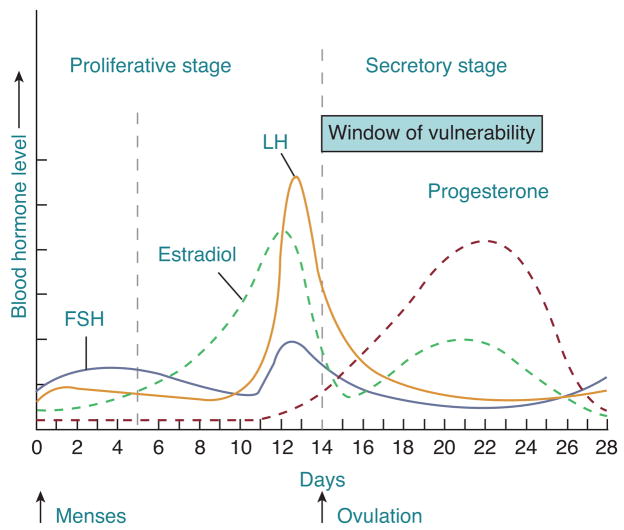
Indicated on days 14–23 is the suggested window of vulnerability to HIV infection. FSH, follicle-stimulating hormone; LH, luteinizing hormone.
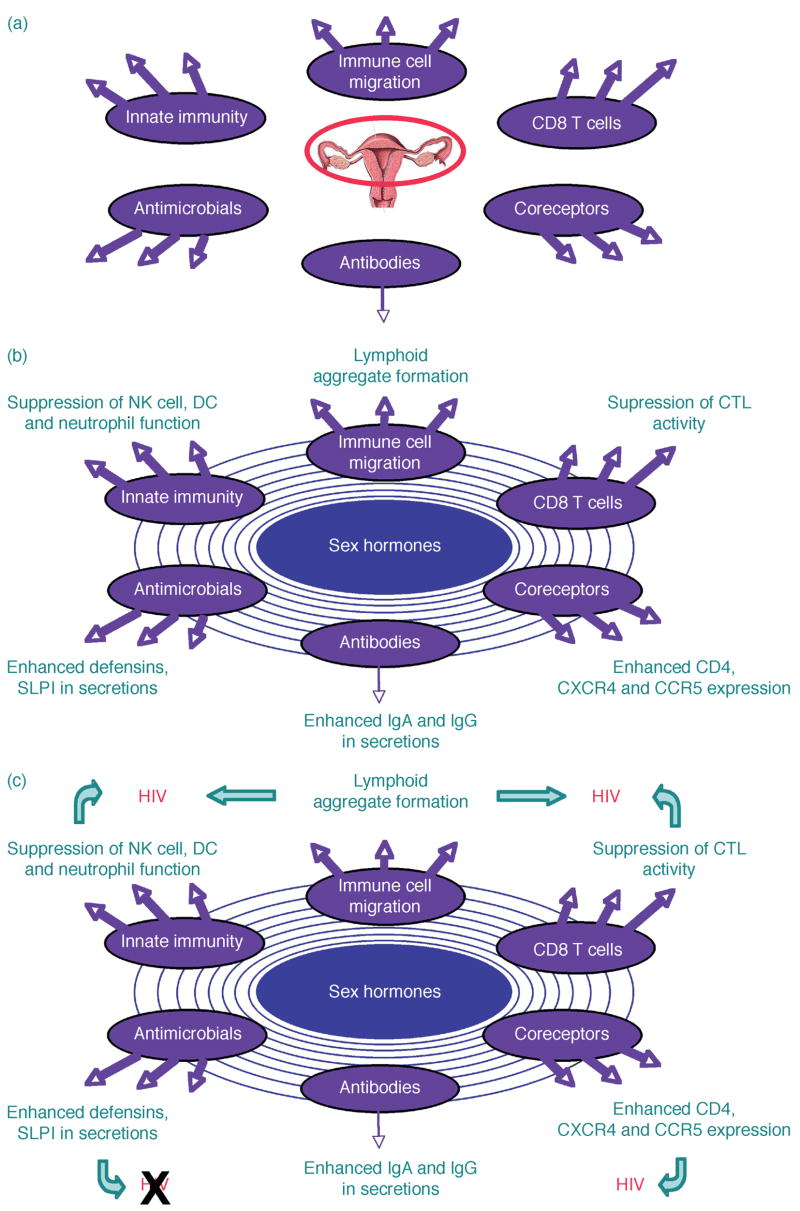
(a, top) Depicts key immunological mechanisms present in the Fallopian tubes, uterus and endocervix that are essential for successful reproduction. These directly or indirectly impact pathogens that enter the upper female reproductive tract (FRT) and threaten reproductive health. (b, middle) Indicates that these immune mechanisms are under hormonal control. The expanding concentric rings represent estradiol released at mid-cycle along with progesterone released during the secretory stage of the menstrual cycle. (c, bottom) Depicts our hypothesis that estradiol and/or progesterone generally suppress immune protection, resulting in a window of potential HIV infectivity. CTL, cytotoxic T lymphocyte; SLPI, secretory leukocyte protease inhibitor.
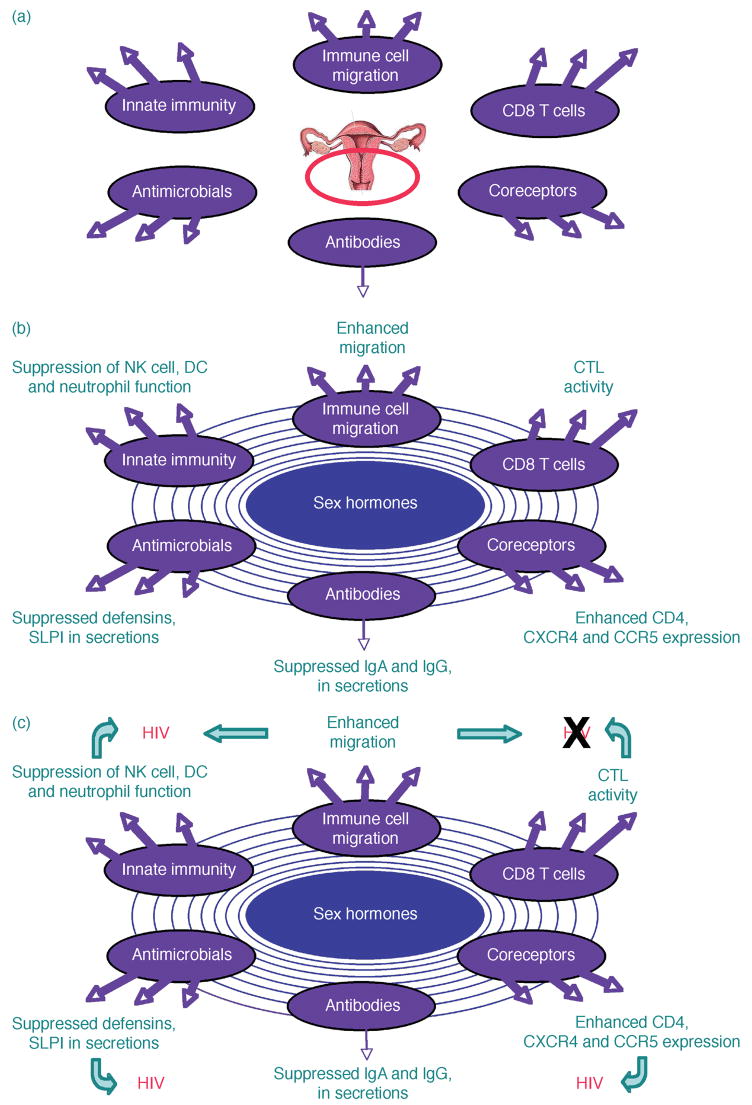
Panels a, b and c are described in detail in Fig. 2 and the text.
References
-
- UNAIDS 2007. AIDS epidemic update JUNPoHAUaWHOW. Geneva, Switzerland: UNAIDS; 2007.
-
- Cohen J. Promising prevention interventions perform poorly in trials. Science. 2007;317:440. - PubMed
-
- Cohen J. AIDS research. Promising AIDS vaccine’s failure leaves field reeling. Science. 2007;318:28–29. - PubMed
-
- Editorial team. Phase III anti-HIV microbicide trial in Africa and India stopped as preliminary results show gel may increase risk of infection. Euro Surveill. 2007;12:1–2. E070208.070206 [Epub ahead of print] - PubMed
Publication types
MeSH terms
Substances
Grants and funding
LinkOut - more resources
Full Text Sources
Medical
