


Comparative mycotoxin profiles of Gibberella zeae populations from barley, wheat, potatoes, and sugar beets
- PMID: 18791024
- PMCID: PMC2576685
- DOI: 10.1128/AEM.01580-08
Comparative mycotoxin profiles of Gibberella zeae populations from barley, wheat, potatoes, and sugar beets
Abstract
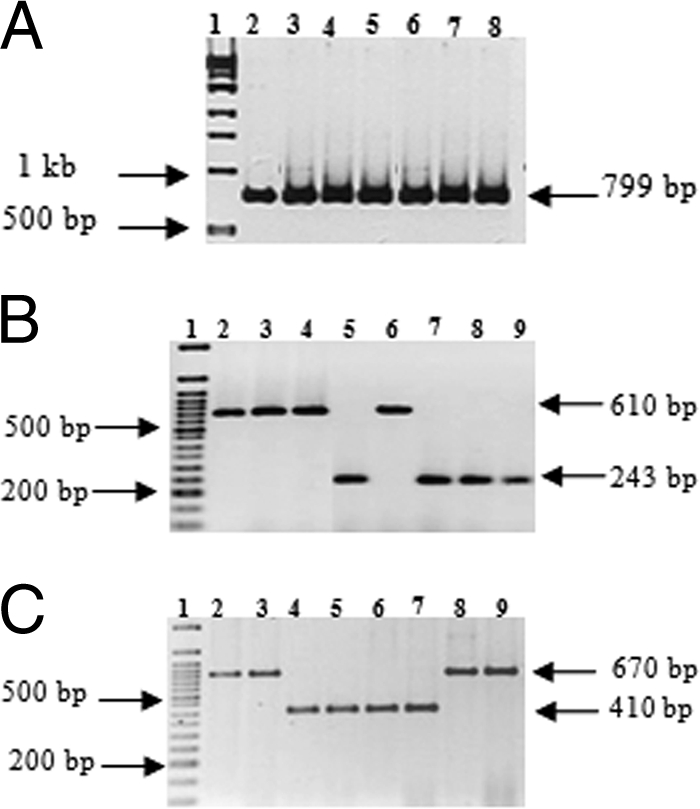
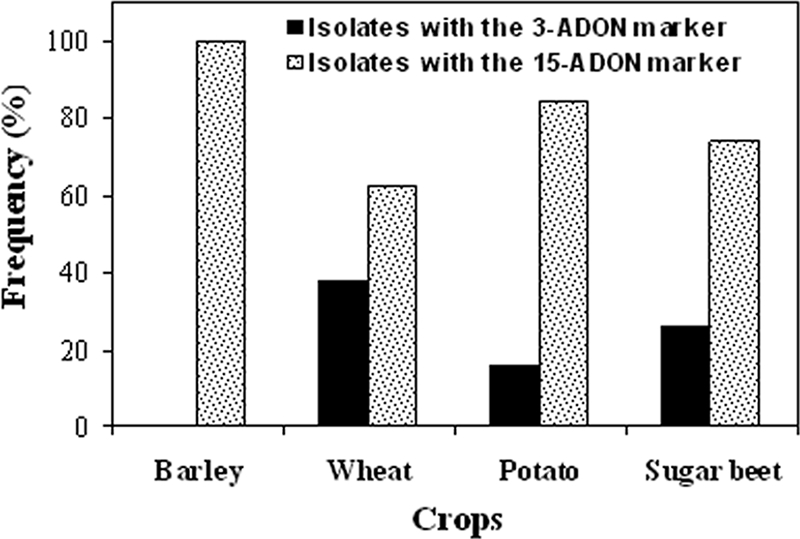
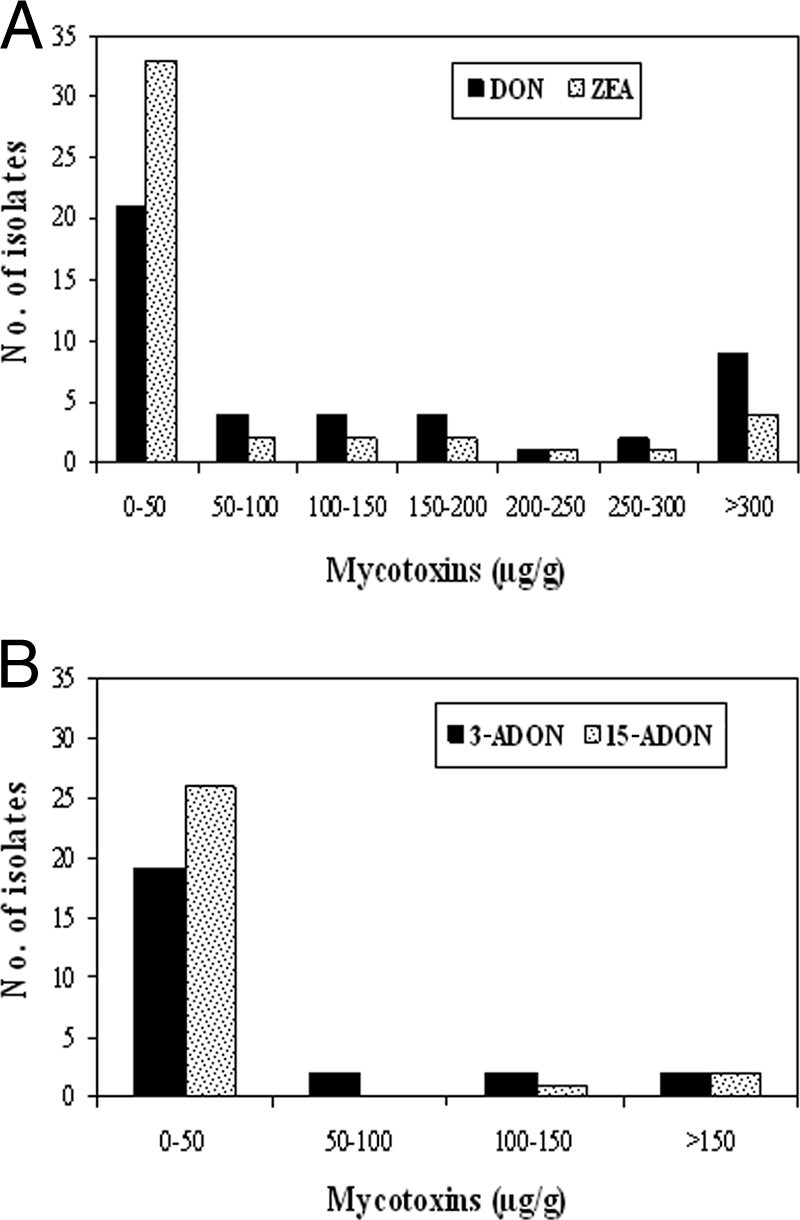
Gibberella zeae is one of the most devastating pathogens of barley and wheat in the United States. The fungus also infects noncereal crops, such as potatoes and sugar beets, and the genetic relationships among barley, wheat, potato, and sugar beet isolates indicate high levels of similarity. However, little is known about the toxigenic potential of G. zeae isolates from potatoes and sugar beets. A total of 336 isolates of G. zeae from barley, wheat, potatoes, and sugar beets were collected and analyzed by TRI (trichothecene biosynthesis gene)-based PCR assays. To verify the TRI-based PCR detection of genetic markers by chemical analysis, 45 representative isolates were grown in rice cultures for 28 days and 15 trichothecenes and 2 zearalenone (ZEA) analogs were quantified using gas chromatography-mass spectrometry. TRI-based PCR assays revealed that all isolates had the deoxynivalenol (DON) marker. The frequencies of isolates with the 15-acetyl-deoxynivalenol (15-ADON) marker were higher than those of isolates with the 3-acetyl-deoxynivalenol (3-ADON) marker among isolates from all four crops. Fusarium head blight (FHB)-resistant wheat cultivars had little or no influence on the diversity of isolates associated with the 3-ADON and 15-ADON markers. However, the frequency of isolates with the 3-ADON marker among isolates from the Langdon, ND, sampling site was higher than those among isolates from the Carrington and Minot, ND, sites. In chemical analyses, DON, 3-ADON, 15-ADON, b-ZEA, and ZEA were detected. All isolates produced DON (1 to 782 microg/g) and ZEA (1 to 623 microg/g). These findings may be useful for monitoring mycotoxin contamination and for formulating FHB management strategies for these crops.
Figures
References
-
- Ali, S., V. V. Rivera, and G. A. Secor. 2005. First report of Fusarium graminearum causing dry rot of potato in North Dakota. Plant Dis. 89:105. - PubMed
-
- Blaney, B. J., and R. L. Dodman. 2002. Production of zearalenone, deoxynivalenol, nivalenol, and acetylated derivatives by Australian isolates of Fusarium graminearum and F. pseudograminearum in relation to source and culturing conditions. Aust. J. Agric. Res. 53:1317-1326.
-
- Brown, D. W., S. P. McCormick, N. J. Alexander, R. H. Proctor, and A. E. Desjardins. 2001. A genetic and biochemical approach to study trichothecene diversity in Fusarium sporotrichoides and Fusarium graminearum. Fungal Genet. Biol. 32:121-133. - PubMed
-
- Burlakoti, R. R., S. Ali, G. A. Secor, S. M. Neate, M. P. McMullen, and T. B. Adhikari. 2008. Genetic relationships among populations of Gibberella zeae from barley, wheat, potato and sugar beet in the upper Midwest of the United States. Phytopathology 98:969-976. - PubMed
Publication types
MeSH terms
Substances
LinkOut - more resources
Full Text Sources
