


Review
doi: 10.1016/j.gtc.2008.06.011.
Dyssynergic defecation and biofeedback therapy
Affiliations
- PMID: 18793997
- PMCID: PMC2575098
- DOI: 10.1016/j.gtc.2008.06.011
Item in Clipboard
Review
Dyssynergic defecation and biofeedback therapy
Gastroenterol Clin North Am.
2008 Sep.
Abstract
Constipation caused by dyssynergic defecation is common and affects up to one half of patients with this disorder. It is possible to diagnose this problem through history, prospective stool diaries, and anorectal physiologic tests. Randomized controlled trials have now established that biofeedback therapy is not only efficacious but superior to other modalities and that the symptom improvement is caused by a change in underlying pathophysiology. Development of user friendly approaches to biofeedback therapy and use of home biofeedback programs will significantly enhance the adoption of this treatment by gastroenterologists and colorectal surgeons.
Figures
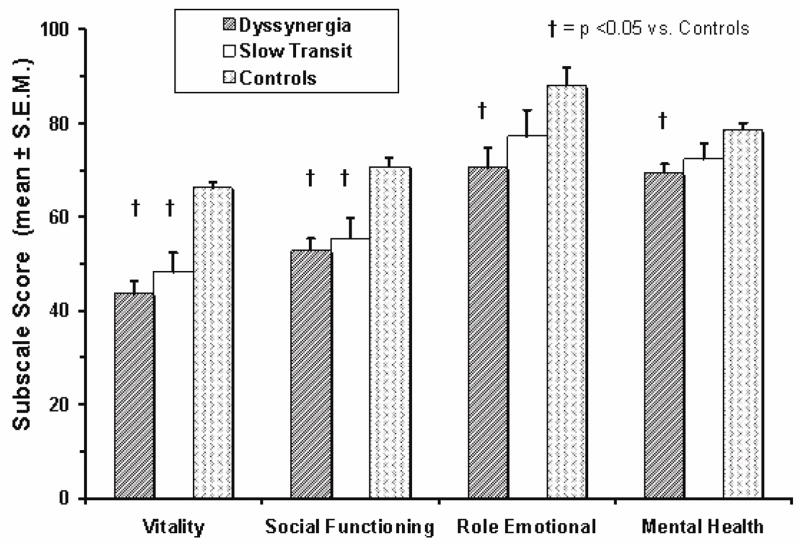
Impact of chronic constipation on quality of life in patients with dyssynergic defecation, slow transit constipation and healthy controls. (Ref. 22).
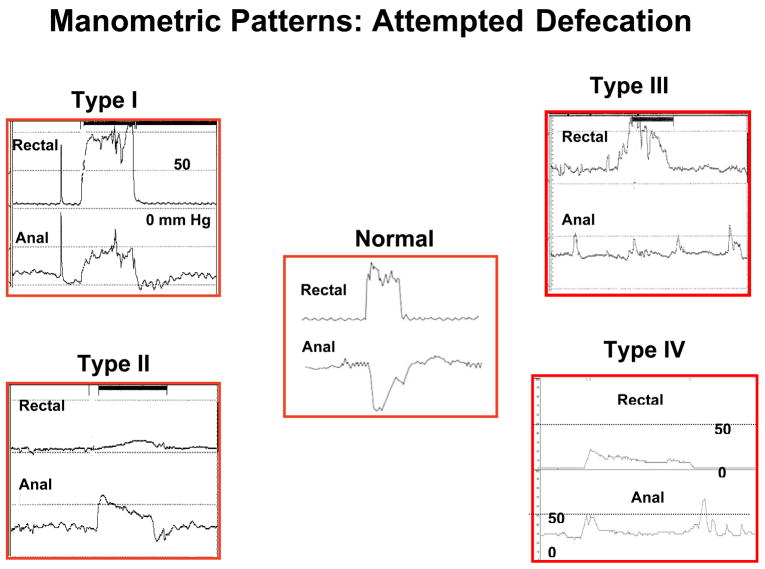
This series reveals manometric patterns that are commonly seen during attempted defecation in a normal healthy individual (central panel) and in patients with dyssynergic defecation. They were obtained after placing a multisensor solid state manometry catheter into the rectum: changes from a single sensor in the rectum and one from the anal canal are shown. In the center panel, it can be seen that the subject can generate a good pushing force (increase in intra rectal pressure) and simultaneously relax the anal sphincterl. This is a normal pattern of defecation. In contrast, patients with dyssynergic defecation exhibit one of four abnormal patterns of defecation. In type I dyssenergia, the subject can generate an adequate propulsive force (rise in intra rectal pressure ≥40 mmHg) along with paradoxical increase in anal sphincter pressure. In type II dyssynergia, the subject is unable to generate an adequate propulsive force; additionally there is paradoxical anal contraction. In type III dyssynergia, the subject can generate an adequate propulsive force but there is either absent relaxation (a flat line) or incomplete (≤20%) relaxation of anal sphincter. In type IV dyssynergia, the subject is unable to generate an adequate propulsive force together with an absent or incomplete relaxation of anal sphincter.
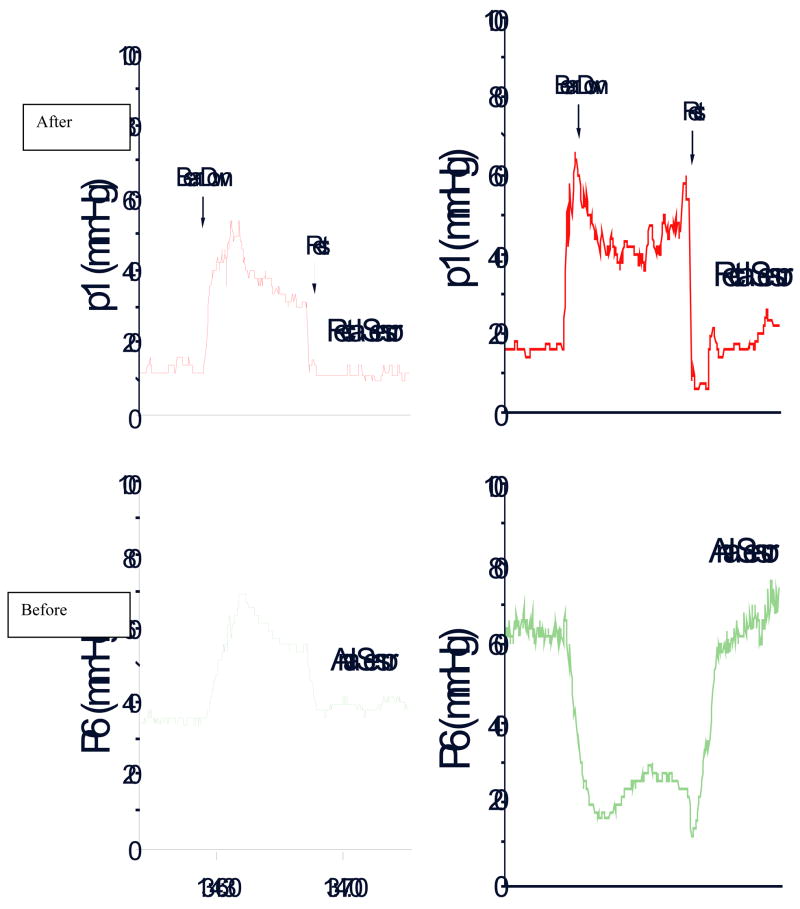
The rectal and anal pressure changes, and manometric patterns in a patient with constipation and dyssynergic defecation, before and after biofeedback therapy.
References
-
- Rao SSC, Welcher K, Leistikow J. Obstructive Defecation. A failure of rectoanal coordination. Am J Gastroenterol. 1998;93:1042–50. - PubMed
-
- Rao SSC. Dyssynergic Defecation. Gastroenterol Clin North Am. 2001;30:97–114. - PubMed
-
- Preston DM, Lennard-Jones J. Anismus in chronic constipation. Dig Dis Sci. 1985;30:413–18. - PubMed
-
- Whitehead WE, Wald A, Diamant N, et al. Functional Disorders of the Anorectum. International Working Party Consensus Rome Criteria II. 1999:483–501.
Publication types
MeSH terms
Grants and funding
LinkOut - more resources
Full Text Sources
Other Literature Sources
Medical
