


Long-term platinum retention after treatment with cisplatin and oxaliplatin
- PMID: 18796166
- PMCID: PMC2559818
- DOI: 10.1186/1472-6904-8-7
Long-term platinum retention after treatment with cisplatin and oxaliplatin
Abstract
Background: The aim of this study was to evaluate long-term platinum retention in patients treated with cisplatin and oxaliplatin.
Methods: 45 patients, treated 8-75 months before participating in this study, were included. Platinum levels in plasma and plasma ultrafiltrate (pUF) were determined. In addition, the reactivity of platinum species in pUF was evaluated. Relationships between platinum retention and possible determinants were evaluated.
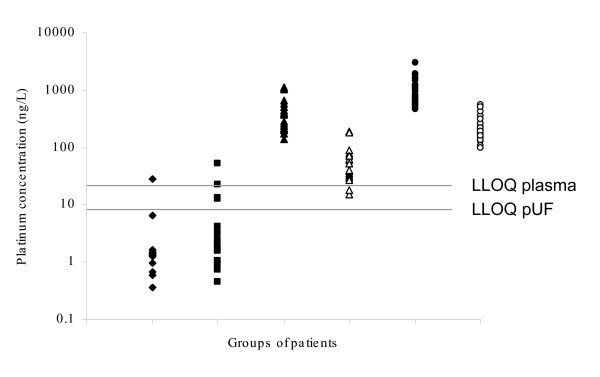
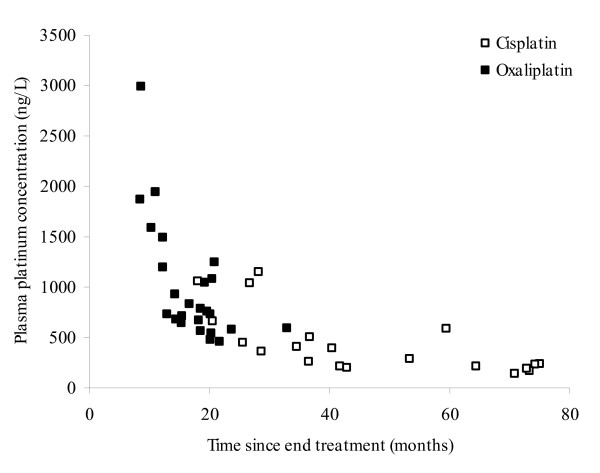
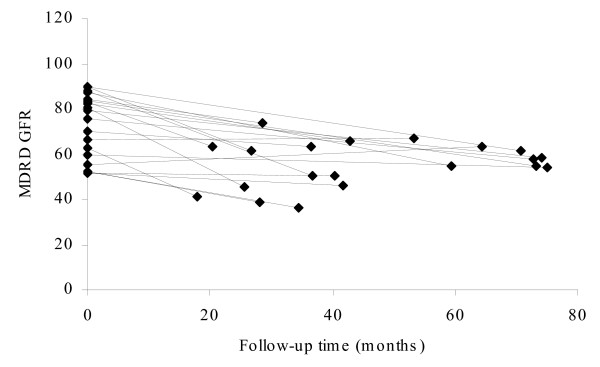
Results: Platinum plasma concentrations ranged between 142-2.99 x 10(3) ng/L. Up to 24% of plasma platinum was recovered in pUF. No platinum-DNA adducts in peripheral blood mononuclear cells (PBMCs) could be detected. Ex vivo incubation of DNA with pUF of patients revealed that up to 10% of the reactivity of platinum species was retained. Protein binding proceeded during sample storage. Sodium thiosulfate (STS) appeared to release platinum from the plasma proteins. Platinum levels were related to time, dose, STS co-administration, and glomerular filtration rates (GFR).
Conclusion: Our data suggest that plasma platinum levels are related to time, age, dose, GFR, and STS use. Platinum in plasma, probably, represent platinum eliminated from regenerating tissue. Platinum species in pUF were partly present in a reactive form. The effects of the reactivity on long-term consequences of Pt-containing chemotherapy, however, remains to be established.
Figures

References
-
- Bokemeyer C, Berger CC, Kuczyk MA, Schmoll HJ. Evaluation of long-term toxicity after chemotherapy for testicular cancer. J Clin Oncol. 1996;14:2923–2932. - PubMed
Publication types
MeSH terms
Substances
LinkOut - more resources
Full Text Sources
Research Materials
Miscellaneous
