


Dietary resistant starch upregulates total GLP-1 and PYY in a sustained day-long manner through fermentation in rodents
- PMID: 18796545
- PMCID: PMC2584810
- DOI: 10.1152/ajpendo.90637.2008
Dietary resistant starch upregulates total GLP-1 and PYY in a sustained day-long manner through fermentation in rodents
Abstract
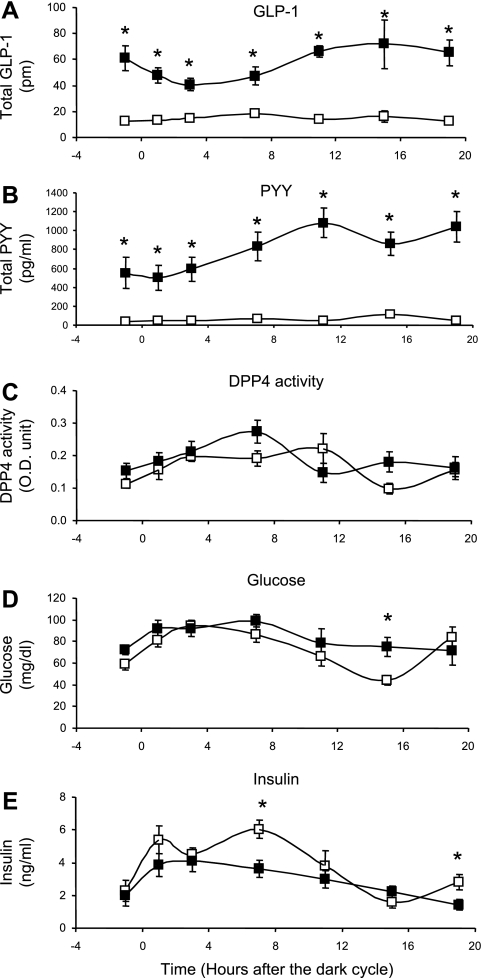
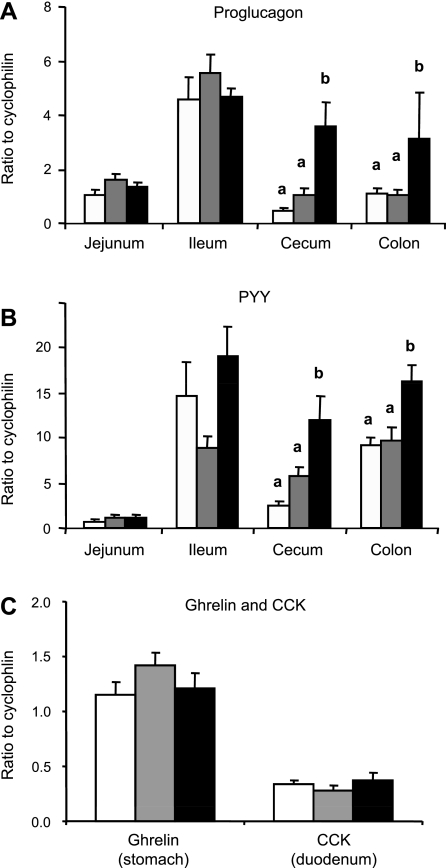
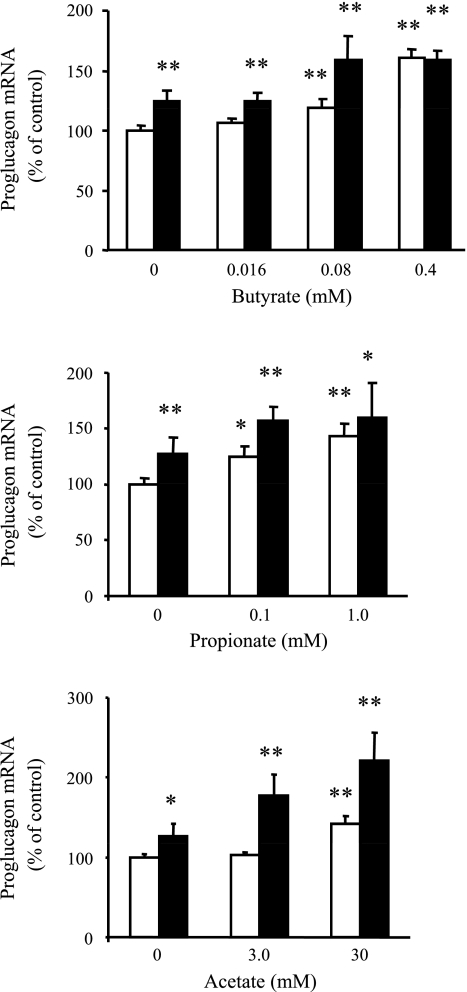
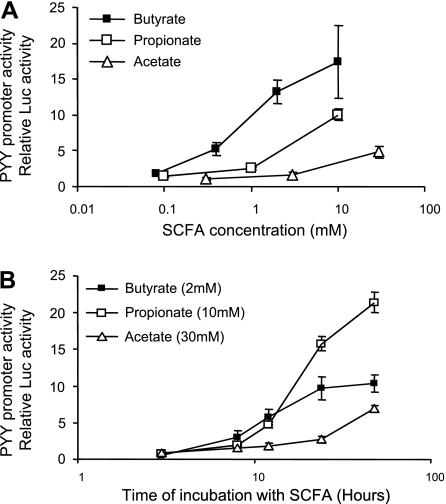
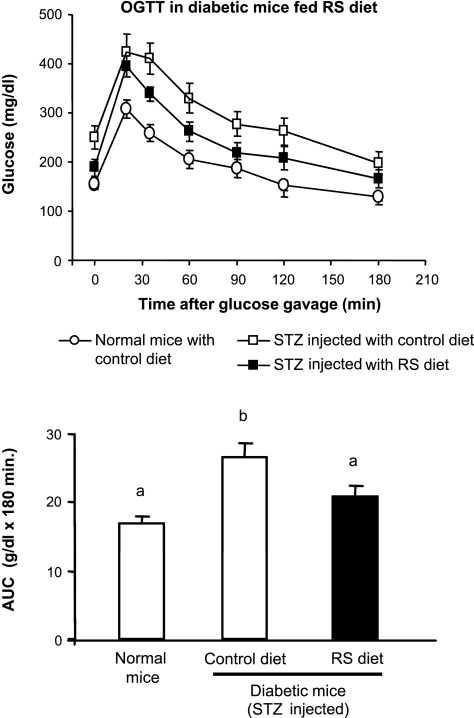
Glucagon-like peptide-1 (GLP-1) and peptide YY (PYY) are anti-diabetes/obesity hormones secreted from the gut after meal ingestion. We have shown that dietary-resistant starch (RS) increased GLP-1 and PYY secretion, but the mechanism remains unknown. RS is a fermentable fiber that lowers the glycemic index of the diet and liberates short-chain fatty acids (SCFAs) through fermentation in the gut. This study investigates the two possible mechanisms by which RS stimulates GLP-1 and PYY secretion: the effect of a meal or glycemic index, and the effect of fermentation. Because GLP-1 and PYY secretions are stimulated by nutrient availability in the gut, the timing of blood sample collections could influence the outcome when two diets with different glycemic indexes are compared. Thus we examined GLP-1 and PYY plasma levels at various time points over a 24-h period in RS-fed rats. In addition, we tested proglucagon (a precursor to GLP-1) and PYY gene expression patterns in specific areas of the gut of RS-fed rats and in an enteroendocrine cell line following exposure to SCFAs in vitro. Our findings are as follows. 1) RS stimulates GLP-1 and PYY secretion in a substantial day-long manner, independent of meal effect or changes in dietary glycemia. 2) Fermentation and the liberation of SCFAs in the lower gut are associated with increased proglucagon and PYY gene expression. 3) Glucose tolerance, an indicator of increased active forms of GLP-1 and PYY, was improved in RS-fed diabetic mice. We conclude that fermentation of RS is most likely the primary mechanism for increased endogenous secretions of total GLP-1 and PYY in rodents. Thus any factor that affects fermentation should be considered when dietary fermentable fiber is used to stimulate GLP-1 and PYY secretion.
Figures
References
-
- Abbott CR, Monteiro M, Small CJ, Sajedi A, Smith KL, Parkinson JR, Ghatei MA, Bloom SR. The inhibitory effects of peripheral administration of peptide YY(3-36) and glucagon-like peptide-1 on food intake are attenuated by ablation of the vagal-brainstem-hypothalamic pathway. Brain Res 1044: 127–131, 2005. - PubMed
-
- Abbott CR, Small CJ, Sajedi A, Smith KL, Parkinson JR, Broadhead LL, Ghatei MA, Bloom SR. The importance of acclimatisation and habituation to experimental conditions when investigating the anorectic effects of gastrointestinal hormones in the rat. Int J Obes (Lond) 30: 288–292, 2006. - PubMed
-
- Baggio LL, Drucker DJ. Biology of incretins: GLP-1 and GIP. Gastroenterology 132: 2131–2157, 2007. - PubMed
-
- Brennan CS Dietary fibre, glycaemic response, diabetes. Mol Nutr Food Res 49: 560–570, 2005. - PubMed
-
- Brubaker PL The glucagon-like peptides: pleiotropic regulators of nutrient homeostasis. Ann NY Acad Sci 1070: 10–26, 2006. - PubMed
Publication types
MeSH terms
Substances
Grants and funding
LinkOut - more resources
Full Text Sources
Other Literature Sources
Medical
