. 2008 Sep 16;6(9):e227.
doi: 10.1371/journal.pbio.0060227.

Identification of COUP-TFII orphan nuclear receptor as a retinoic acid-activated receptor

Affiliations

Identification of COUP-TFII orphan nuclear receptor as a retinoic acid-activated receptor

Schoen W Kruse et al. PLoS Biol. .

Abstract

The chicken ovalbumin upstream promoter-transcription factors (COUP-TFI and II) make up the most conserved subfamily of nuclear receptors that play key roles in angiogenesis, neuronal development, organogenesis, cell fate determination, and metabolic homeostasis. Although the biological functions of COUP-TFs have been studied extensively, little is known of their structural features or aspects of ligand regulation. Here we report the ligand-free 1.48 A crystal structure of the human COUP-TFII ligand-binding domain. The structure reveals an autorepressed conformation of the receptor, where helix alpha10 is bent into the ligand-binding pocket and the activation function-2 helix is folded into the cofactor binding site, thus preventing the recruitment of coactivators. In contrast, in multiple cell lines, COUP-TFII exhibits constitutive transcriptional activity, which can be further potentiated by nuclear receptor coactivators. Mutations designed to disrupt cofactor binding, dimerization, and ligand binding, substantially reduce the COUP-TFII transcriptional activity. Importantly, retinoid acids are able to promote COUP-TFII to recruit coactivators and activate a COUP-TF reporter construct. Although the concentration needed is higher than the physiological levels of retinoic acids, these findings demonstrate that COUP-TFII is a ligand-regulated nuclear receptor, in which ligands activate the receptor by releasing it from the autorepressed conformation.


Conflict of interest statement

Competing interests. The authors have declared that no competing interests exist.

Figures

Figure 1
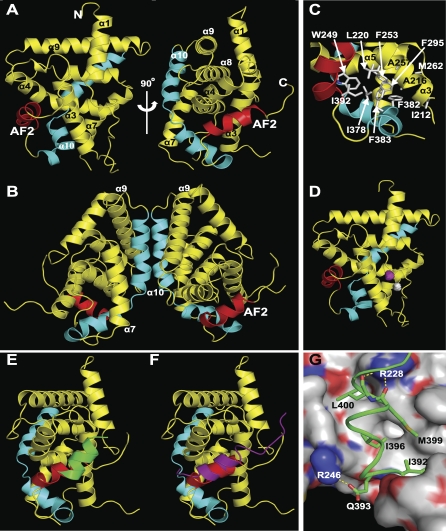
Figure 1. Crystal Structure of the Ligand-Free COUP-TFII LBD
(A) Front and side views of the COUP-TFII LBD monomer with its AF2 helix colored in red. (B) Organization of the COUP-TFII LBD dimer, showing that its dimer interface is formed predominantly by helix α10 (cyan). (C) The packing of the ligand-binding pocket within the bottom half of the COUP-TFII LBD. (D) Space-filling diagram shows two small cavities in COUP-TFII colored with magenta (18 Å3) and white (12 Å3). (E and F) Overlay of the COUP-TFII LBD structure with the SRC-1 LXXLL motif (green in E) from the RXR structure or with the SMRT corepressor motif (magenta in F) from the antagonist bound PPARα structure. (G) Hydrogen bonds (yellow dashed lines) and hydrophobic interactions of the COUP-TFII AF2 helix (green) within the cofactor binding site.
Figure 2
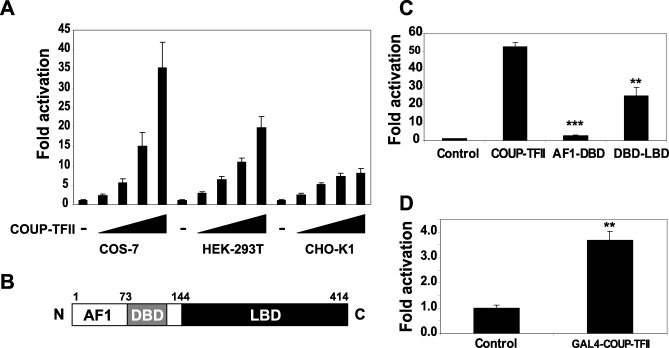
Figure 2. COUP-TFII Acts as an Activator of Transcription in Multiple Cell Lines
(A) Activation of the NGFI-A promoter reporter construct with increasing concentrations of COUP-TFII (0ng, 50ng, 100ng, 150ng, and 200 ng of the expression vector, respectively, for each cell line). (B) Domain structure of COUP-TFII. (C) Effects of the COUP-TFII deletion mutants on activation of the NGFI-A promoter-driven reporter. The AF1-DBD construct activates ∼2-fold above empty vector control. (D) Activation by the GAL4-DBD-COUP-TFII-LBD. The fold activation is the relative fly luciferase activity of the NGFI-A promoter induced by COUP-TFII versus the control vector without COUP-TFII. All data are normalized to the activity of Renilla luciferase that was used as transfection control. For statistical analysis, the fold induction was compared with full-length COUP-TFII or GAL4-DBD in (C) and (D), respectively.
Figure 3
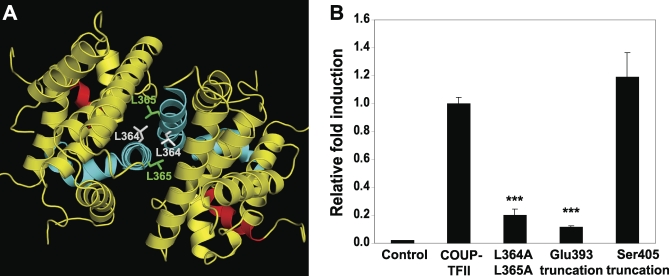
Figure 3. COUP-TFII Activation Is Dependent on the Formation of a Functional Dimer and the Presence of AF2
(A) Top view of the COUP-TFII dimer showing the close packing of L364 (gray) and L365 (green) from helices α10 (cyan) in the dimer interface. (B) Effects of the L364A/L365A double mutant and the AF2 deletion mutant on COUP-TFII activation of the NGFI-A promoter. For easy comparison, the relative fold of activation by the wild-type receptor is set to 1. The statistical analysis for the fold induction of the mutants was compared with wild type COUP-TFII.
Figure 4
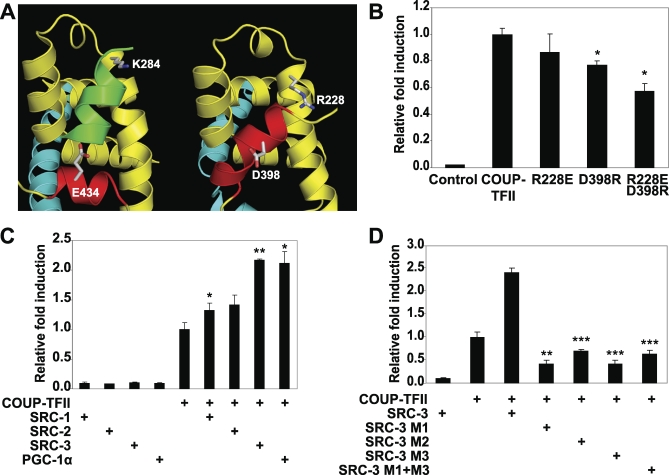
Figure 4. Coactivators Bind to COUP-TFII via a Charge Clamp and Enhance Activation
(A) Comparison of the RXRα charge clamp (K284 and E434 in the left) with that of COUP-TFII (right). The SRC-1 LXXLL motif is shown in green. (B) Effects of the charge clamp mutations on COUP-TFII activation. The relative fold of activation by the wild-type receptor is set to 1 in (B), (C), and (D). The statistical analysis for the fold induction of the mutants was compared with wild-type COUP-TFII. (C) Effects of coactivators on COUP-TFII activation. The statistical analysis for the fold induction by coactivators was compared with the wild-type COUP-TFII in the absence of additional coactivators. (D) Effects of mutations in the three conserved SRC-3 LXXLL coactivator binding motifs (M1-M3) to LXXAA on the SRC-3-mediated enhancement of COUP-TFII induction. For statistical analysis, the fold induction was compared with COUP-TFII in (B) and (C) and COUP-TFII and SRC-3 cotransfection in (D). The statistical analysis for the fold induction by mutated coactivators was compared with that of wild type SRC-3.
Figure 5
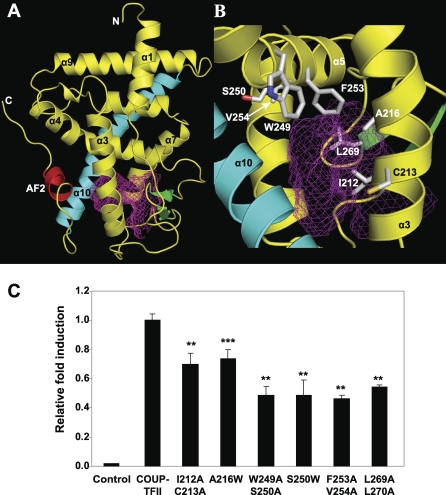
Figure 5. An Intact Pocket Is Important for COUP-TFII Activation
(A) An active model of COUP-TFII. This model is based on the agonist-bound RXR structure with its helix α10 (cyan) extended and AF2 (red) in the active conformation. One cavity (magenta) with size of 659 Å3 is found in this conformation. (B) The potential ligand binding pocket (magenta mesh) in the active model of the COUP-TFII LBD and its surrounding residues. (C) Effects of pocket residue mutations on COUP-TFII activation. The relative fold of activation by the wild-type receptor is set to 1. The statistical analysis for the fold induction of the mutants was compared with wild-type COUP-TFII.
Figure 6
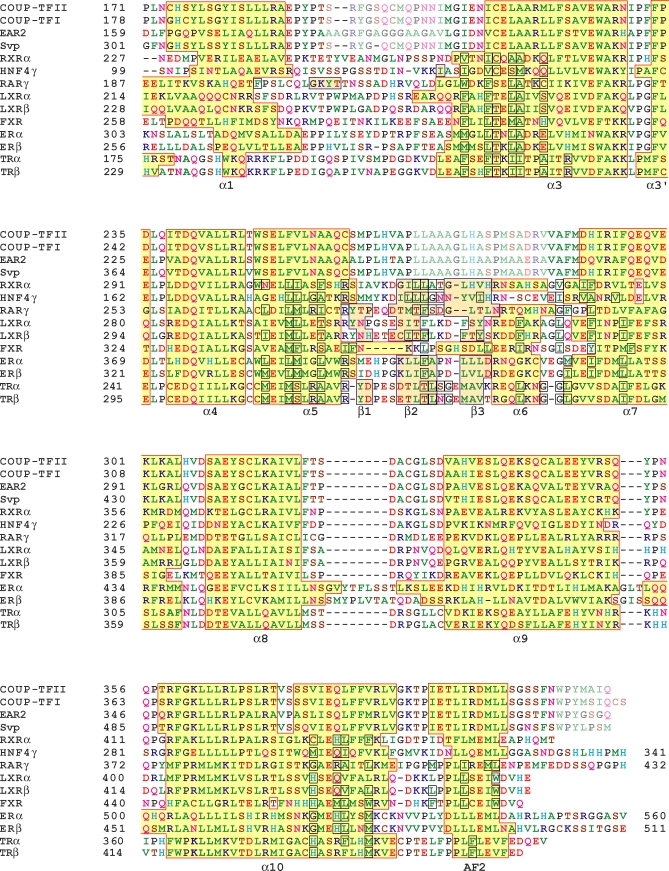
Figure 6. Conserved Positions of the Ligand Pocket Residues in NRs
Structure-based sequence alignment of various NR LBDs shows that ligand pocket residues (boxed by black squares) are conserved in their relative positions within the context of their secondary structural elements (labeled underneath) of NRs. All sequences are from human proteins except Seven-up, a COUP-TF-like orphan receptor from D. melanogaster. The Protein Databank (PDB; http://www.rcsb.org/pdb/home/home.do) codes for the ligand/receptor complexes is: 1fmr for 9cRA-bound RXRα [28], 1lv4 for HNF4γ [61], 2lbd for RARγ [62], 1uhl for LXRα [63], 1pld for LXRβ [64], 1ot7 for FXR [65], 1l2i for ERα [21], 1qkm for ERβ [66], 2h79 for TRα[67], and 1q4x for TRβ [68,69].
Figure 7
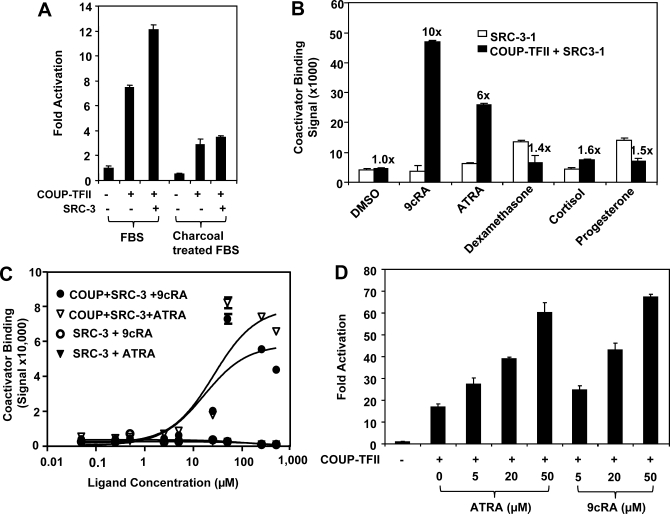
Figure 7. COUP-TFII Is Activated by Retinoid Acids
(A) Effects of charcoal-treated FBS on COUP-TFII activation in the presence or absence of SRC-3 coactivator. The basal activity of the NGFI-A reporter construct in the presence of FBS and absence of COUP-TFII and SRC-3 is set as 1. (B) Addition of 50 μM of 9cRA or ATRA to promote COUP-TFII binding to SRC-3–1 coactivator motif where the addition of steroids (50 μM) has little effect. (C) Concentration-response curves of 9cRA and ATRA, which show the binding affinity (EC50) of 9cRA and ATRA is 17 μM and 26 μM, respectively. (D) Effects of ATRA and 9cRA on COUP-TFII activation of the NGFI-A promoter in COS-7 cells.

References

    1. Beato M, Herrlich P, Schutz G. Steroid hormone receptors: many actors in search of a plot. Cell. 1995;83:851–857. - PubMed
    1. Mangelsdorf DJ, Evans RM. The RXR heterodimers and orphan receptors. Cell. 1995;83:841–850. - PubMed
    1. Kliewer SA, Lehmann JM, Willson TM. Orphan nuclear receptors: shifting endocrinology into reverse. Science. 1999;284:757–760. - PubMed
    1. Tsai SY, Tsai MJ. Chick ovalbumin upstream promoter-transcription factors (COUP-TFs): coming of age. Endocr Rev. 1997;18:229–240. - PubMed
    1. Germain P, Staels B, Dacquet C, Spedding M, Laudet V. Overview of nomenclature of nuclear receptors. Pharmacol Rev. 2006;58:685–704. - PubMed

Publication types

MeSH terms