


Significance of serrated polyps of the colon
- PMID: 18799125
- PMCID: PMC3437745
- DOI: 10.1007/s11894-008-0090-z
Significance of serrated polyps of the colon
Abstract
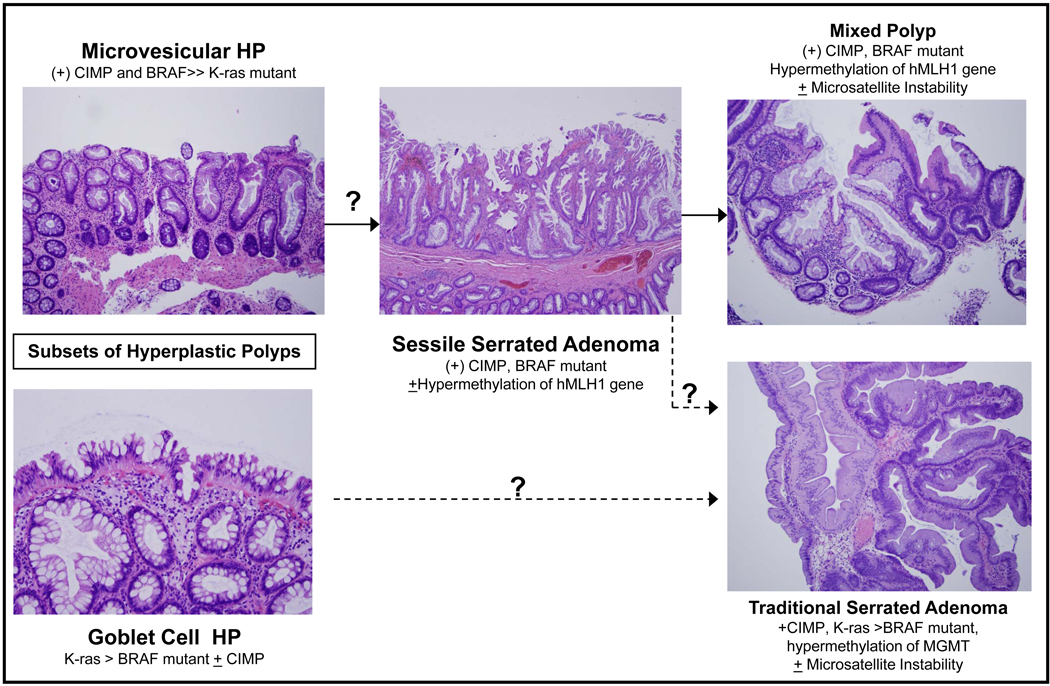
The fundamental view that colon adenocarcinomas arise only from conventional adenomas has been challenged by the now recognized hyperplastic polyp-serrated adenoma-adenocarcinoma pathway. This article describes the history of the serrated adenoma (both the traditional serrated adenoma and the sessile serrated adenoma) as well as the histology and endoscopic appearance of these lesions in comparison with hyperplastic polyps and mixed polyps. Although the exact pathway is the subject of ongoing research, compelling histologic associations and molecular phenotypes that define the model of the serrated polyp-carcinoma sequence, including microsatellite instability, BRAF/KRAS mutations, and CpG island methylator phenotype, provide strong evidence that this is a genuine pathway. Management of serrated neoplasia of the colon includes careful colonoscopy, complete removal of colonic polyps, sampling fields of diminutive polyps of the rectosigmoid, and basing surveillance on histology of removed polyps.
Figures
References
-
- Goldman H, Ming S, Hickcock D. Nature and significance of hyperplastic polyps of the human colon. Arch Pathol. 1970;89:349–354. - PubMed
-
- Hawkins N, Bariol C, Ward R. The serrated neoplasia pathway. Pathology. 2002;34:548–555. - PubMed
-
- Riddell R, Petras R, Williams G, et al. Tumors of the intestines. Armed Forces Institute of Pathology. 2003
-
- Cooper H, Patchefsky A, Marks G. Adenomatous and carcinomatous changes within hyperplastic colonic epithelium. Dis Colon Rectum. 1979;22:152–156. - PubMed
-
- Martínez M, McPherson R, Levin B, et al. A case-control study of dietary intake and other lifestyle risk factors for hyperplastic polyps. Gastroenterology. 1997;113:423–429. - PubMed
Publication types
MeSH terms
Grants and funding
LinkOut - more resources
Full Text Sources
Medical
Research Materials
Miscellaneous