


In vivo and T cell cross-reactivity between walnut, cashew and peanut
- PMID: 18802355
- PMCID: PMC7065401
- DOI: 10.1159/000155741
In vivo and T cell cross-reactivity between walnut, cashew and peanut
Abstract
Background: Examination of IgE cross-reactivity among nuts has been limited to in vitro experiments. Cross-reactivity studies of nuts at the T cell level are difficult to interpret because of the inability to determine which cellular responses are from a true sensitization and which are due to cross-reactivity. Using a mouse model in which the sensitizing nuts are controlled may provide novel methods to investigate in vivo and T cell cross-reactivity.
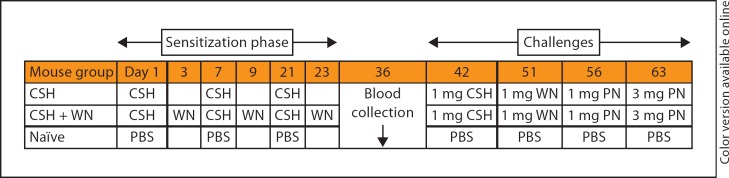
Methods: C3H/HeJ mice were sensitized by intraperitoneal injection of cashew alone (monosensitized mice), or cashew plus walnut, utilizing alum as an adjuvant. Both groups underwent challenges to cashew, walnut and peanut, with subsequent monitoring of anaphylactic reactions. Anaphylactic antibodies were quantified by ELISA, and protein allergens were identified by Western blotting. Cellular responses were studied via splenocyte proliferation assay and measurement of secreted cytokines.
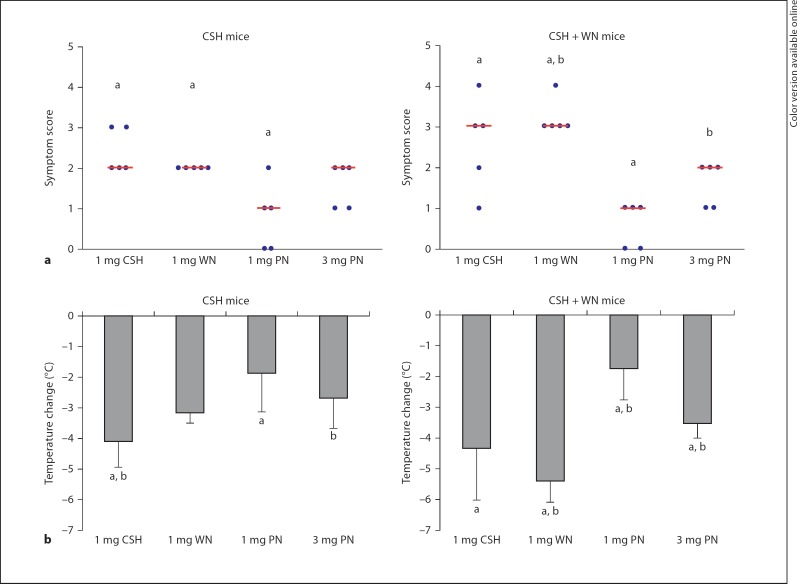
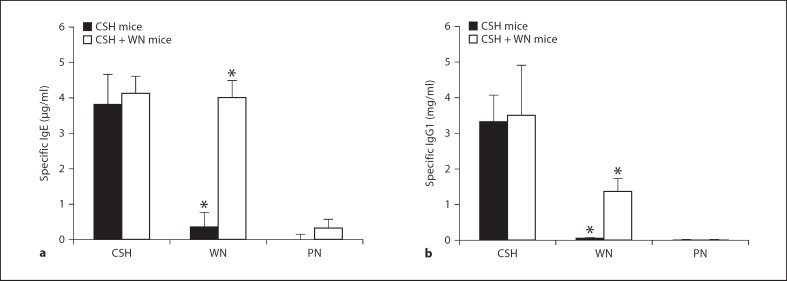
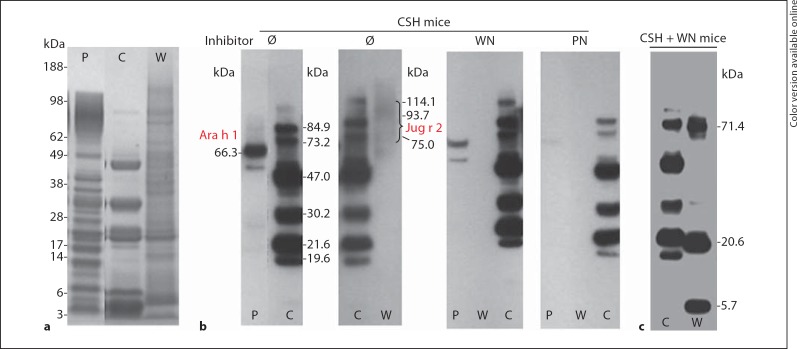
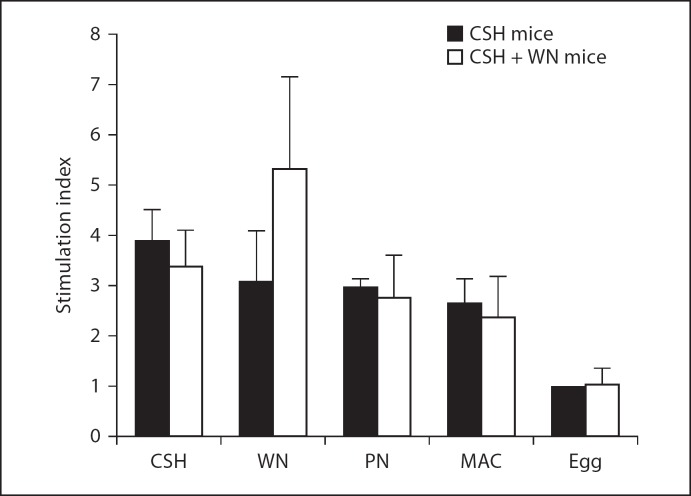
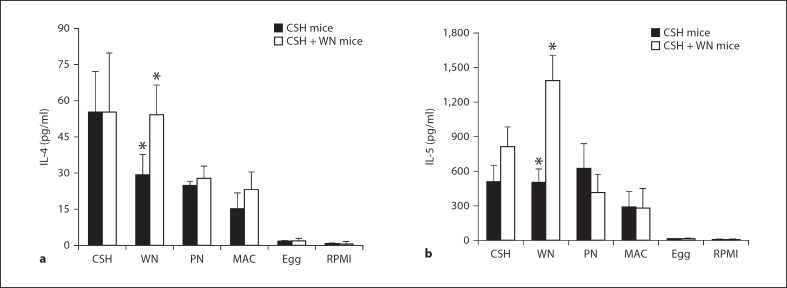
Results: The monosensitized mice reacted to cashew and walnut during challenges, with significantly weaker reactions induced on challenge with peanut. Cross-reactive IgE to walnut and peanut were detected by ELISA, and the cross-reactive allergens were identified as vicilin proteins. In cellular assays, splenocytes from the monosensitized mice proliferated and produced IL-4 and IL-5 in response to cashew, walnut and peanut. The cashew- plus walnut-sensitized mice experienced stronger clinical reactions to walnut, recognized additional walnut allergens and secreted significantly more IL-4 and IL-5 in walnut-stimulated splenocyte assays compared to the monosensitized mice.
Conclusions: Cross-reactivity in vivo was found between cashew and walnut, while cross-reactivity among cashew, walnut and peanut was demonstrated at the T cell level.
Copyright 2008 S. Karger AG, Basel.
Figures
References
-
- Lee LA, Burks AW. Food allergies: prevalence, molecular characterization, and treatment/prevention strategies. Annu Rev Nutr. 2006;26:539–565. - PubMed
-
- Fleischer DM, Conover-Walker MK, Matsui EC, Wood RA. The natural history of tree nut allergy. J Allergy Clin Immunol. 2005;116:1087–1093. - PubMed
-
- Skolnick HS, Conover-Walker MK, Koerner CB, Sampson HA, Burks W., Wood RA. The natural history of peanut allergy. J Allergy Clin Immunol. 2001;107:367–374. - PubMed
-
- Sicherer SH, Munoz-Furlong A., Sampson HA. Prevalence of peanut and tree nut allergy in the United States determined by means of a random digit dial telephone survey: a 5-year follow-up study. J Allergy Clin Immunol. 2003;112:1203–1207. - PubMed
-
- Bock SA, Munoz-Furlong A., Sampson HA. Fatalities due to anaphylactic reactions to foods. J Allergy Clin Immunol. 2001;107:191–193. - PubMed
Publication types
MeSH terms
Substances
Grants and funding
LinkOut - more resources
Full Text Sources
Medical
