Interleukin-17A mediates acquired immunity to pneumococcal colonization
- PMID: 18802458
- PMCID: PMC2528945
- DOI: 10.1371/journal.ppat.1000159
Interleukin-17A mediates acquired immunity to pneumococcal colonization
Abstract
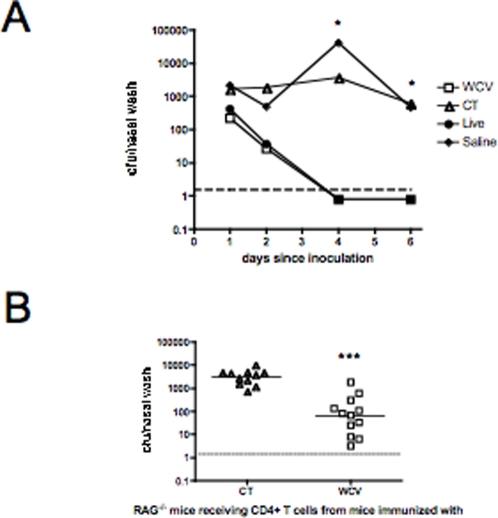
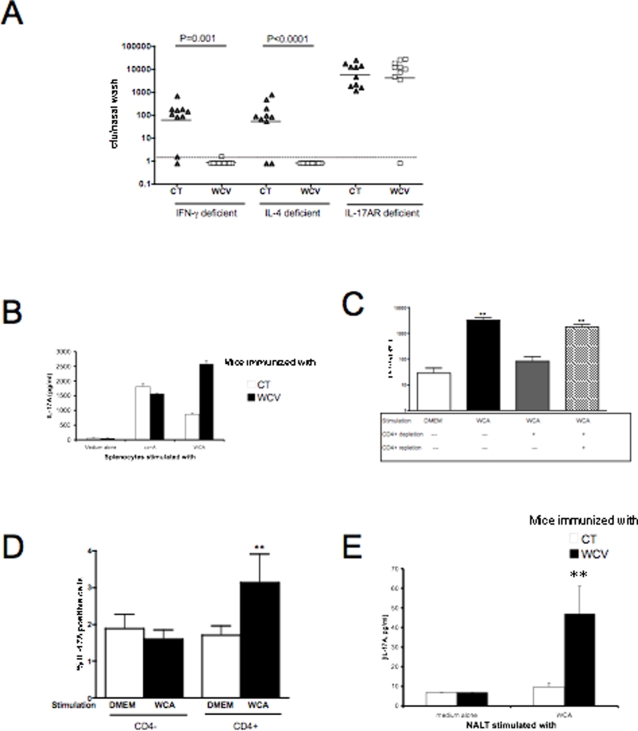
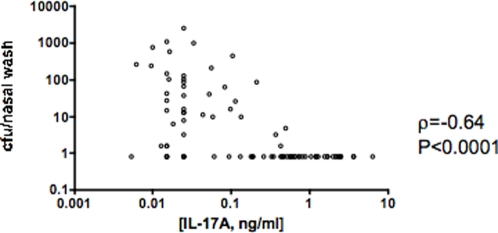
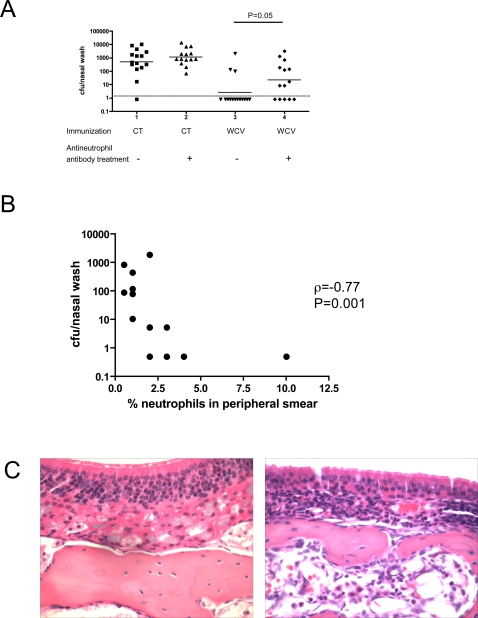
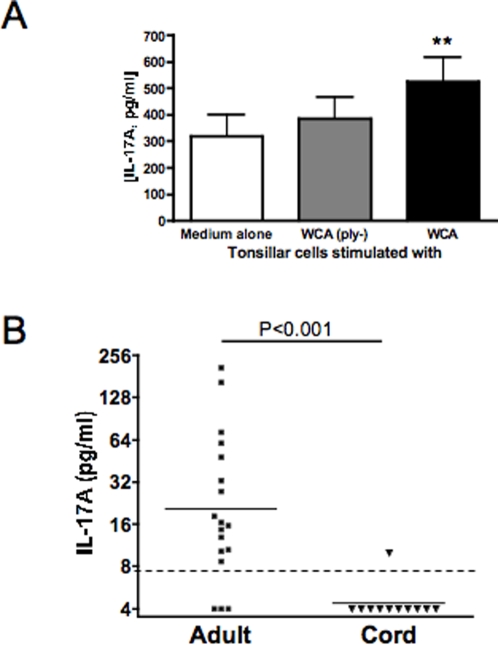
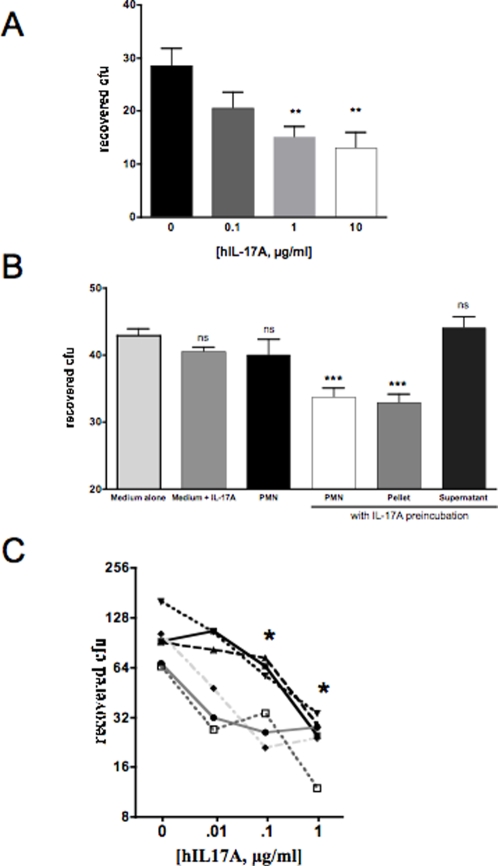
Although anticapsular antibodies confer serotype-specific immunity to pneumococci, children increase their ability to clear colonization before these antibodies appear, suggesting involvement of other mechanisms. We previously reported that intranasal immunization of mice with pneumococci confers CD4+ T cell-dependent, antibody- and serotype-independent protection against colonization. Here we show that this immunity, rather than preventing initiation of carriage, accelerates clearance over several days, accompanied by neutrophilic infiltration of the nasopharyngeal mucosa. Adoptive transfer of immune CD4+ T cells was sufficient to confer immunity to naïve RAG1(-/-) mice. A critical role of interleukin (IL)-17A was demonstrated: mice lacking interferon-gamma or IL-4 were protected, but not mice lacking IL-17A receptor or mice with neutrophil depletion. In vitro expression of IL-17A in response to pneumococci was assayed: lymphoid tissue from vaccinated mice expressed significantly more IL-17A than controls, and IL-17A expression from peripheral blood samples from immunized mice predicted protection in vivo. IL-17A was elicited by pneumococcal stimulation of tonsillar cells of children or adult blood but not cord blood. IL-17A increased pneumococcal killing by human neutrophils both in the absence and in the presence of antibodies and complement. We conclude that IL-17A mediates pneumococcal immunity in mice and probably in humans; its elicitation in vitro could help in the development of candidate pneumococcal vaccines.
Conflict of interest statement
The authors have declared that no competing interests exist.
Figures
References
-
- Lord F, Heffron R. Pneumonia and Serum Therapy. London: Commonwealth Fund; 1938.
-
- Black S, Shinefield H, Fireman B, Lewis E, Ray P, et al. Efficacy, safety and immunogenicity of heptavalent pneumococcal conjugate vaccine in children. Northern California Kaiser Permanente Vaccine Study Center Group [In Process Citation]. Pediatr Infect Dis J. 2000;19:187–195. - PubMed
-
- Dagan R, Givon-Lavi N, Zamir O, Sikuler-Cohen M, Guy L, et al. Reduction of nasopharyngeal carriage of Streptococcus pneumoniae after administration of a 9-valent pneumococcal conjugate vaccine to toddlers attending day care centers. J Infect Dis. 2002;185:927–936. - PubMed
-
- Goldblatt D, Hussain M, Andrews N, Ashton L, Virta C, et al. Antibody responses to nasopharyngeal carriage of Streptococcus pneumoniae in adults: a longitudinal household study. J Infect Dis. 2005;192:387–393. - PubMed
-
- Weinberger DM, Dagan R, Givon-Lavi N, Regev-Yochay G, Malley R, et al. Epidemiologic Evidence for Serotype-Specific Acquired Immunity to Pneumococcal Carriage. J Infect Dis. 2008;197:1511–1518. - PubMed
Publication types
MeSH terms
Substances
Grants and funding
LinkOut - more resources
Full Text Sources
Other Literature Sources
Molecular Biology Databases
Research Materials