


Prenatal maternal diet affects asthma risk in offspring
- PMID: 18802486
- PMCID: PMC2542856
- DOI: 10.1172/JCI37171
Prenatal maternal diet affects asthma risk in offspring
Abstract
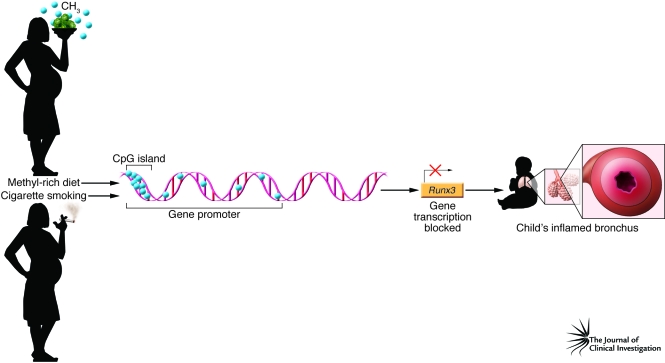
Recently, epigenetic-mediated mechanisms - which involve heritable changes in gene expression in the absence of alterations in DNA sequences - have been proposed as contributing to asthma. In this issue of the JCI, Hollingsworth and colleagues report on the effect of prenatal maternal dietary intake of methyl donors on the risk of allergic airway disease in offspring in mice and show that these effects involve epigenetic regulation (see the related article beginning on page 3462). Supplementation of the maternal diet with methyl donors was associated with greater airway allergic inflammation and IgE production in F1 and, to some extent, F2 progeny. Site-specific differences in DNA methylation and reduced transcriptional activity were detected. If these findings are confirmed, a new paradigm for asthma pathogenesis may be emerging.
Figures
Comment on
-
In utero supplementation with methyl donors enhances allergic airway disease in mice.J Clin Invest. 2008 Oct;118(10):3462-9. doi: 10.1172/JCI34378. J Clin Invest. 2008. Retraction in: J Clin Invest. 2016 May 2;126(5):2012. doi: 10.1172/JCI87742. PMID: 18802477 Free PMC article. Retracted.
References
-
- Herz U., et al. Prenatal sensitization in a mouse model. Am. J. Respir. Crit. Care Med. 2000;162:S62–S65. - PubMed
-
- Magnusson L., Olesen A., Wennborg H., Olsen J. Wheezing, asthma, hayfever, and atopic eczema in childhood following exposure to tobacco smoke in fetal life. Clin. Exp. Allergy. 2005;35:1550–1556. - PubMed
