


Hedgehog signaling in biliary fibrosis
- PMID: 18802487
- PMCID: PMC2542857
- DOI: 10.1172/JCI37189
Hedgehog signaling in biliary fibrosis
Abstract
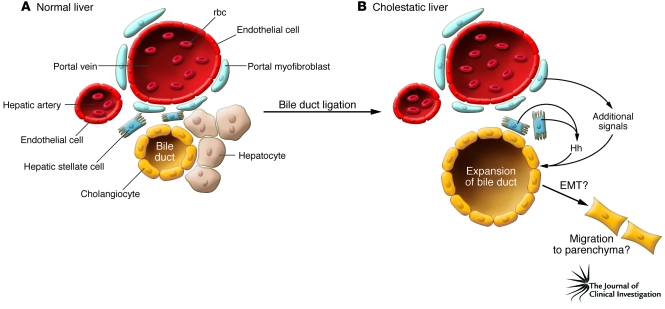
Congenital and acquired diseases of the biliary tree, or cholangiopathies, represent a significant source of morbidity and mortality in both children and adults. In late stages of the disease, cholangiocytes can no longer proliferate, resulting in loss of bile ducts, increased fibrosis, and ultimately cirrhosis and liver failure. Epithelial-mesenchymal transition has been proposed as a potential mechanism underlying both cholangiocyte proliferation and fibrogenesis in biliary diseases. In this issue of the JCI, using a myofibroblast-cholangiocyte coculture system and genetically modified mice, Omenetti and colleagues present evidence supporting the importance of paracrine hedgehog signaling between the two cell types and increased expression of mesenchymal markers in cholangiocytes (see the related article beginning on page 3331). These findings set the stage for future studies to further investigate the contribution of hedgehog signaling in both cholangiocyte repair and fibrogenesis in biliary diseases.
Figures
Comment on
-
Hedgehog signaling regulates epithelial-mesenchymal transition during biliary fibrosis in rodents and humans.J Clin Invest. 2008 Oct;118(10):3331-42. doi: 10.1172/JCI35875. J Clin Invest. 2008. PMID: 18802480 Free PMC article.
References
Publication types
MeSH terms
Substances
LinkOut - more resources
Full Text Sources
Other Literature Sources
