


The evolutionarily conserved arrangement of domains in SRC family kinases is important for substrate recognition
- PMID: 18803405
- PMCID: PMC2841526
- DOI: 10.1021/bi800930e
The evolutionarily conserved arrangement of domains in SRC family kinases is important for substrate recognition
Abstract
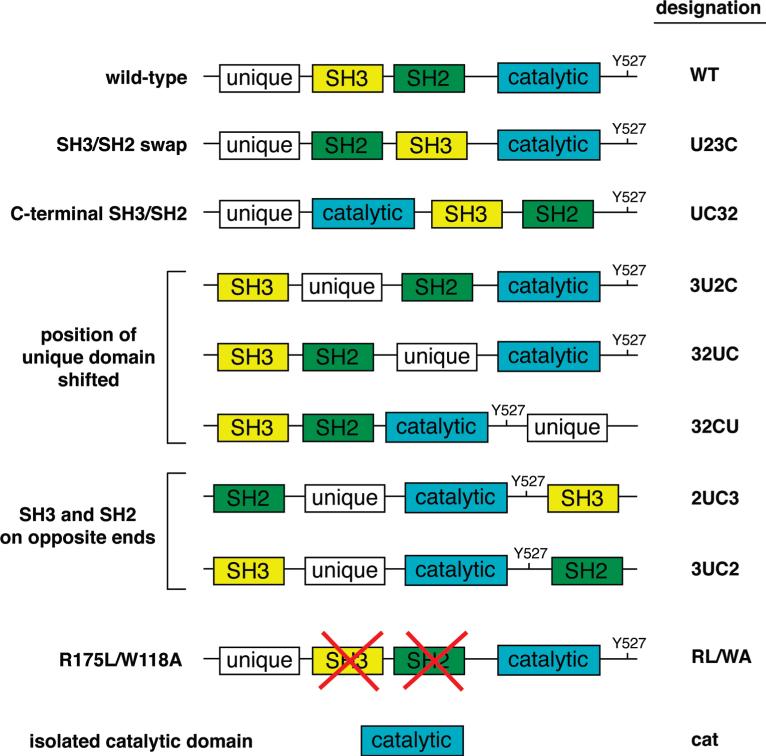
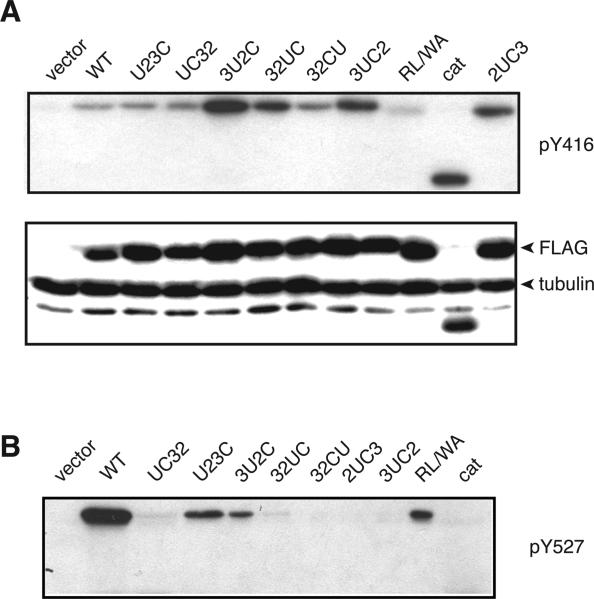
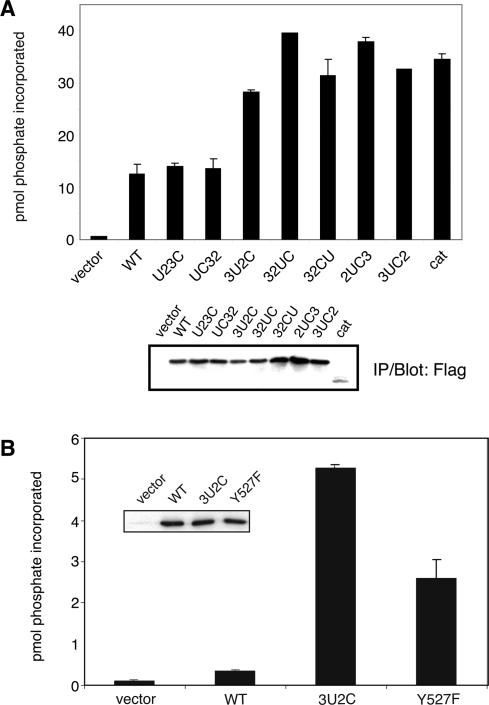
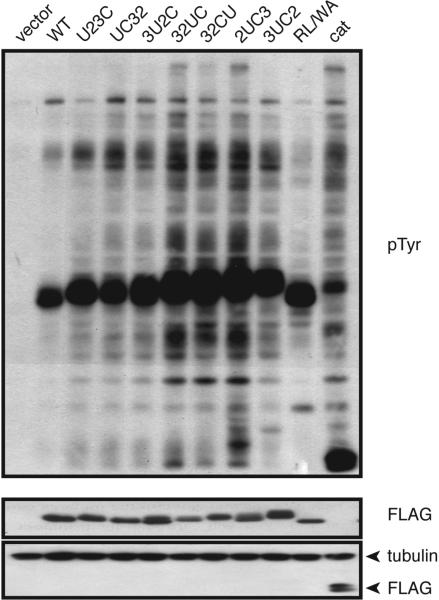
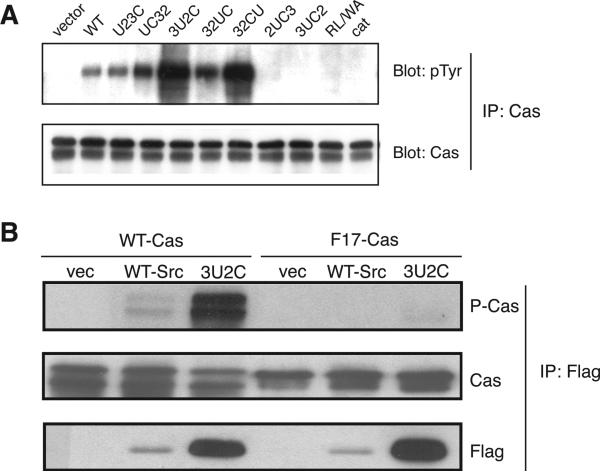
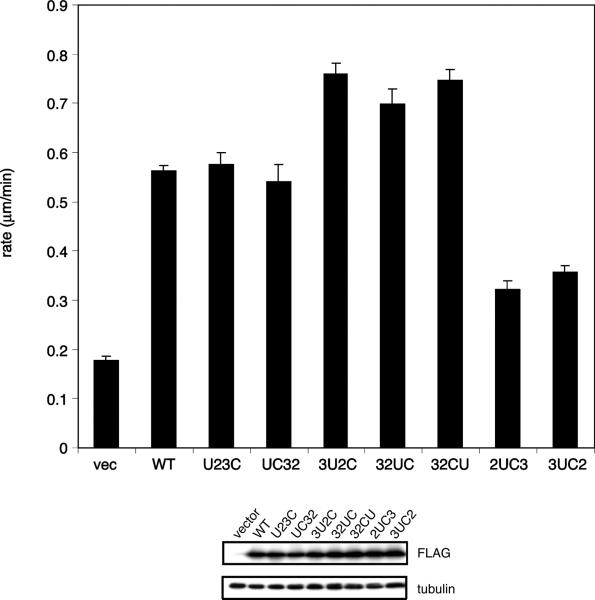
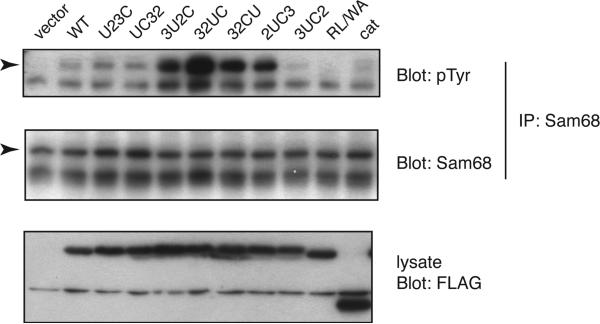
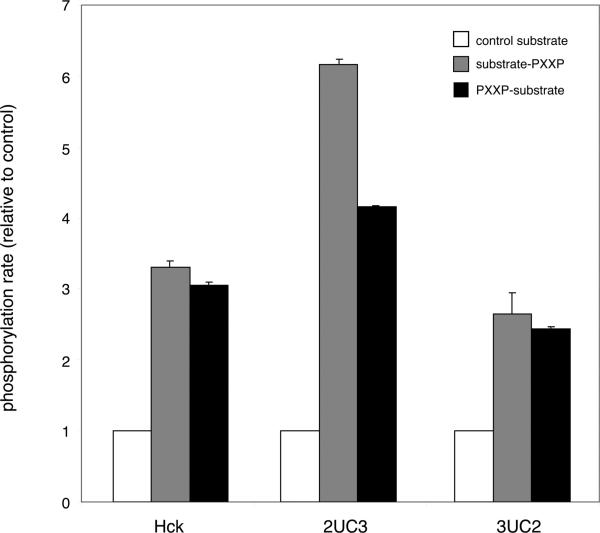
The SH3-SH2-kinase domain arrangement in nonreceptor tyrosine kinases has been conserved throughout evolution. For Src family kinases, the relative positions of the domains are important for enzyme regulation; they permit the assembly of Src kinases into autoinhibited conformations. The SH3 and SH2 domains of Src family kinases have an additional role in determining the substrate specificity of the kinase. We addressed the question of whether the domain arrangement of Src family kinases has a role in substrate specificity by producing mutants with alternative arrangements. Our results suggest that changes in the positions of domains can lead to specific changes in the phosphorylation of Sam68 and Cas by Src. Phosphorylation of Cas by several mutants triggers downstream signaling leading to cell migration. The placement of the SH2 domain with respect to the catalytic domain of Src appears to be especially important for proper substrate recognition, while the placement of the SH3 domain is more flexible. The results suggest that the involvement of the SH3 and SH2 domains in substrate recognition is one reason for the strict conservation of the SH3-SH2-kinase architecture.
Figures
References
-
- Robinson DR, Wu YM, Lin SF. The protein tyrosine kinase family of the human genome. Oncogene. 2000;19:5548–5557. - PubMed
-
- Brown MT, Cooper JA. Regulation, substrates and functions of src. Biochim. Biophys. Acta. 1996;1287:121–149. - PubMed
-
- Shiu SH, Li WH. Origins, lineage-specific expansions, and multiple losses of tyrosine kinases in eukaryotes. Mol. Biol. Evol. 2004;21:828–840. - PubMed
-
- Hubbard SR, Till JH. Protein Tyrosine Kinase Structure and Function. Annu. Rev. Biochem. 2000;69:373–398. - PubMed
-
- Manning G, Whyte DB, Martinez R, Hunter T, Sudarsanam S. The protein kinase complement of the human genome. Science. 2002;298:1912–1934. - PubMed
Publication types
MeSH terms
Substances
Grants and funding
LinkOut - more resources
Full Text Sources
Miscellaneous
