


Stress management effects on perceived stress and cervical neoplasia in low-income HIV-infected women
- PMID: 18805249
- PMCID: PMC2610810
- DOI: 10.1016/j.jpsychores.2008.06.002
Stress management effects on perceived stress and cervical neoplasia in low-income HIV-infected women
Erratum in
- J Psychosom Res. 2009 Nov;67(5):463
Abstract
Objective: Risk for developing cervical neoplastic disease is greatly increased in women infected with oncogenic sexually transmitted human papillomaviruses (HPVs) and who have lowered cellular immunity due to coinfection with human immunodeficiency virus (HIV) infection. The majority of these individuals are low-income minority women. Factors associated with promotion of HPV to cervical neoplasia in HIV-infected populations include degree of immunosuppression as well as behavioral factors such as tobacco smoking and psychological stress. This study examined the effects of a cognitive behavioral stress management (CBSM) intervention on life stress and cervical neoplasia in HIV+ minority women.
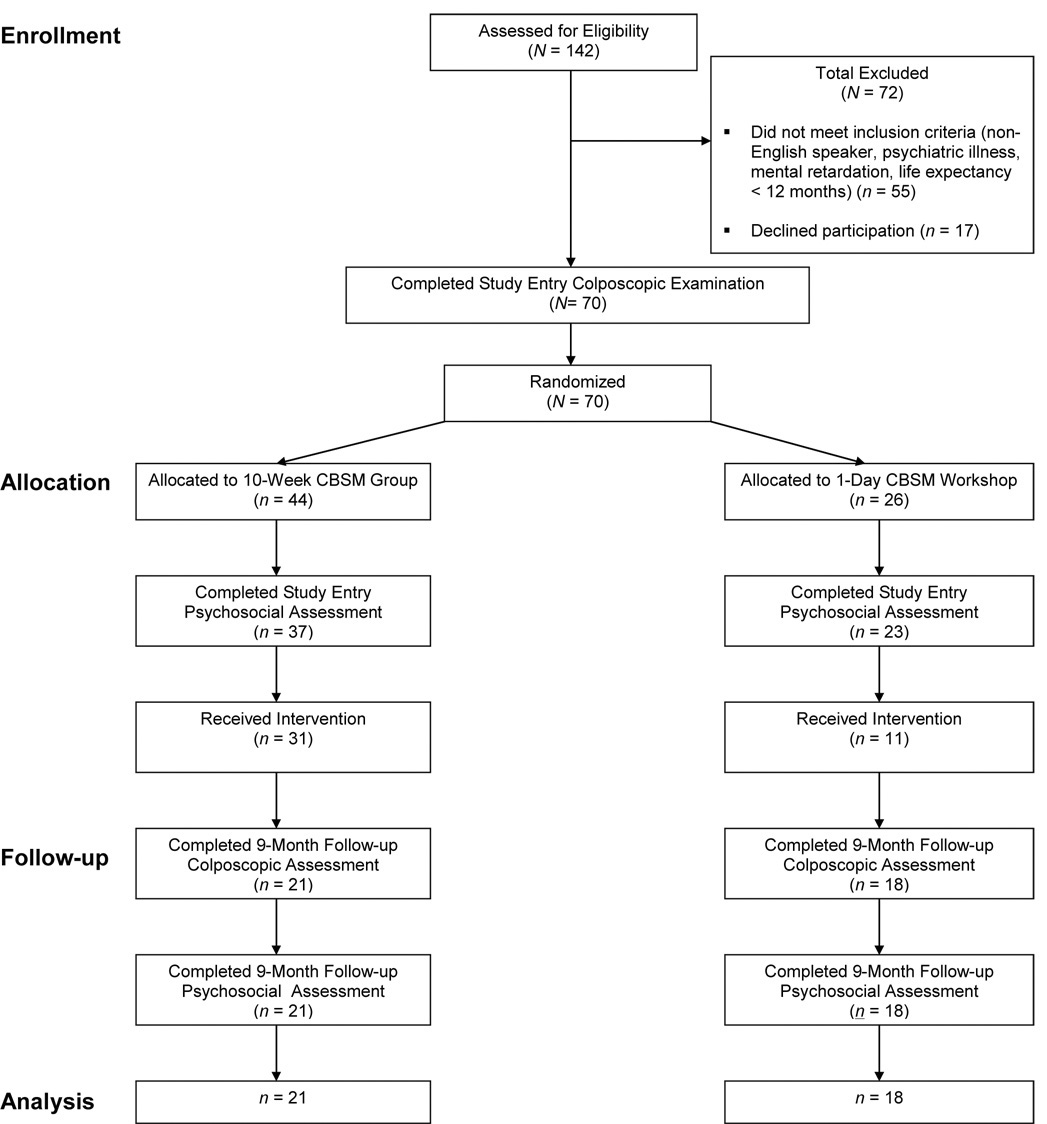
Methods: Participants were 39 HIV+ African-American, Caribbean, and Hispanic women with a recent history of an abnormal Papanicolaou smear. Participants underwent colposcopic examination, psychosocial interview, and peripheral venous blood draw at study entry and 9 months after being randomly assigned to either a 10-week CBSM group intervention (n=21) or a 1-day CBSM workshop (n=18).
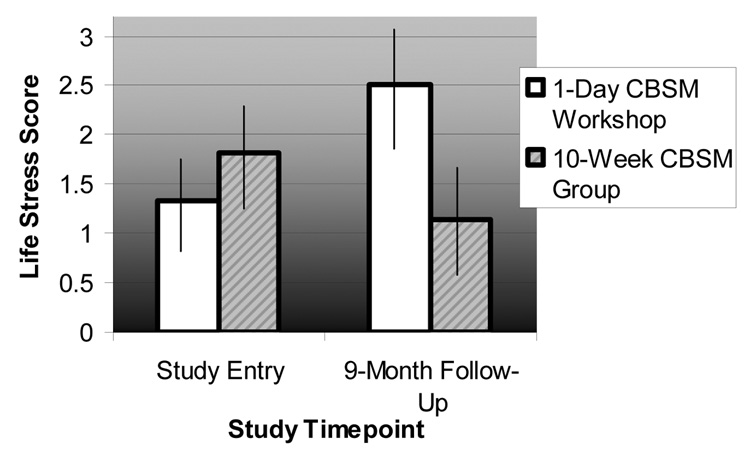
Results: Women assigned to the 10-week group-based CBSM intervention reported decreased perceived life stress and had significantly lower odds of cervical neoplasia over a 9-month follow-up. CBSM effects on life stress and neoplasia appeared independent of presence of neoplasia at study entry, HPV type, CD4+CD3+ cell count, HIV viral load, and substance use. Furthermore, CBSM intervention effects on cervical neoplasia were especially pronounced among women with residual life stress at follow-up.
Conclusion: These findings suggest that stress management decreases perceived life stress and may decrease the odds of cervical neoplasia in women with HIV and a history of abnormal Papanicolaou smears. Although preliminary, these findings suggest the utility of stress management as a cancer prevention strategy in this high-risk population.
Figures
References
-
- American Cancer Society. Cancer facts and figures 2006. Atlanta, GA: American Cancer Society; 2006.
-
- Munoz N, Bosch FX, de Sanjose S, Herrero R, Castellsague X, Shah KV, Snijders PJ, Meijer CJ. Epidemiologic Classification of Human Papillomavirus Types Associated With Cervical Cancer. N.Engl.J.Med. 2003 Feb 6;348(6):518–527. - PubMed
-
- Bosch FX, de Sanjose S. Chapter 1: Human Papillomavirus and Cervical Cancer--Burden and Assessment of Causality. J.Natl.Cancer Inst.Monogr. 2003;31:3–13. - PubMed
-
- Schmiedeskamp MR, Kockler DR. Human Papillomavirus Vaccines. Ann.Pharmacother. 2006;40(7):1344–1352. - PubMed
-
- Palefsky JM, Holly EA. Chapter 6: Immunosuppression and Co-Infection With HIV. J.Natl.Cancer Inst.Monogr. 2003;(31):41–46. - PubMed
Publication types
MeSH terms
Substances
Grants and funding
LinkOut - more resources
Full Text Sources
Medical
Research Materials
