


Protective action of doxycycline against diabetic cardiomyopathy in rats
- PMID: 18806806
- PMCID: PMC2607202
- DOI: 10.1038/bjp.2008.373
Protective action of doxycycline against diabetic cardiomyopathy in rats
Abstract
Background and purpose: Reactive oxygen and nitrogen species play an important role in the development of diabetic cardiomyopathy. They can activate matrix metalloproteinases (MMPs), and MMP-2 in particular is known to mediate early consequences of oxidative stress injury in the heart. Therefore, we investigated the role of MMP-2 and the effect of the MMP inhibitor doxycycline on the changes of heart function caused by diabetes.
Experimental approach: Using streptozotocin-induced diabetic rats, we evaluated the effect of doxycycline on both mechanical and electrical function of isolated hearts, papillary muscle and cardiomyocytes.
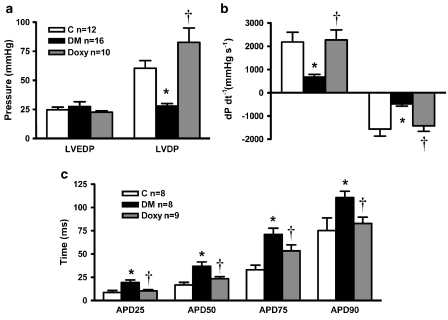
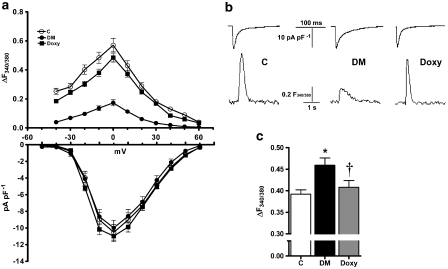
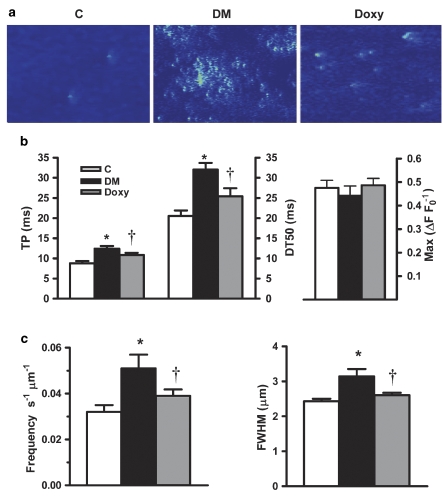
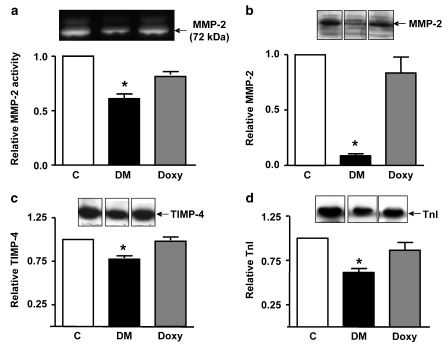
Key results: Doxycycline abolished the diabetes-induced depression in left ventricular developed pressure and the rates of changes in developed pressure in isolated hearts and normalized the prolongation of the action potential in papillary muscles. In cardiomyocytes isolated from doxycycline-treated diabetic rats, the altered kinetic parameters of Ca(2+) transients, depressed Ca(2+) loading of sarcoplasmic reticulum and basal intracellular Ca(2+) level, and the spatio-temporal properties of Ca(2+) sparks were significantly restored. Gelatin zymography and western blot data indicated that the diabetes-induced alterations in MMP-2 activity and protein level, level of tissue inhibitor of matrix metalloproteinase-4 and loss of troponin I were restored to control levels with doxycycline.
Conclusions and implications: Our data suggest that these beneficial effects of doxycycline on the mechanical, electrical and biochemical properties of the diabetic rat heart appear, at least in part, to be related to inhibition of MMP activity, implying a role for MMPs in the development of diabetic cardiomyopathy.
Figures
References
-
- Akamatsu H, Asada M, Komura J, Asada Y, Niwa Y. Effect of doxycycline on the generation of reactive oxygen species: a possible mechanism of action of acne therapy with doxycycline. Acta Derm Venereol. 1992;72:178–179. - PubMed
-
- Alfonso-Jaume MA, Bergman MR, Mahimkar R, Cheng S, Jin ZQ, Karliner JS, et al. Cardiac ischemia-reperfusion injury induces matrix metalloproteinase-2 expression through the AP-1 components FosB and JunB. Am J Physiol Heart Circ Physiol. 2006;291:H1838–H1846. - PubMed
-
- Anzai K, Ogawa K, Kuniyasu A, Ozawa T, Yamamoto H, Nakayama H. Effects of hydroxyl radical and sulfhydryl reagents on the open probability of the purified cardiac ryanodine receptor channel incorporated into planar lipid bilayers. Biochem Biophys Res Commun. 1998;249:938–942. - PubMed
-
- Ayaz M, Ozdemir S, Ugur M, Vassort G, Turan B. Effects of selenium on altered mechanical and electrical cardiac activities of diabetic rat. Arch Biochem Biophys. 2004;426:83–90. - PubMed
-
- Ayaz M, Turan B. Selenium prevents diabetes-induced alterations in [Zn2+]i and metallothionein level of rat heart via restoration of cell redox cycle. Am J Physiol Heart Circ Physiol. 2006;290:H1071–H1080. - PubMed
Publication types
MeSH terms
Substances
LinkOut - more resources
Full Text Sources
Medical
Miscellaneous
