


Race, ethnicity, concentrated poverty, and low birth weight disparities
- PMID: 18807774
- PMCID: PMC5014353
Race, ethnicity, concentrated poverty, and low birth weight disparities
Abstract
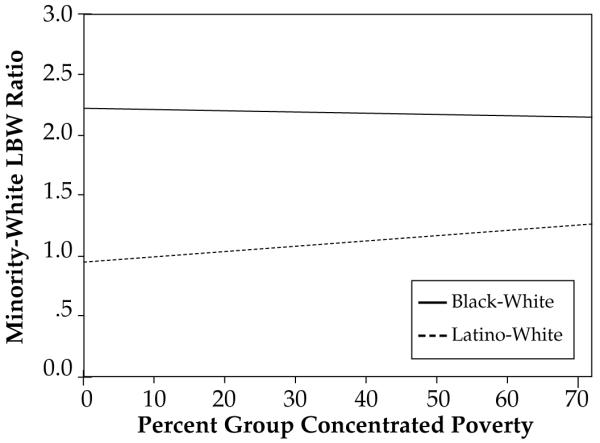
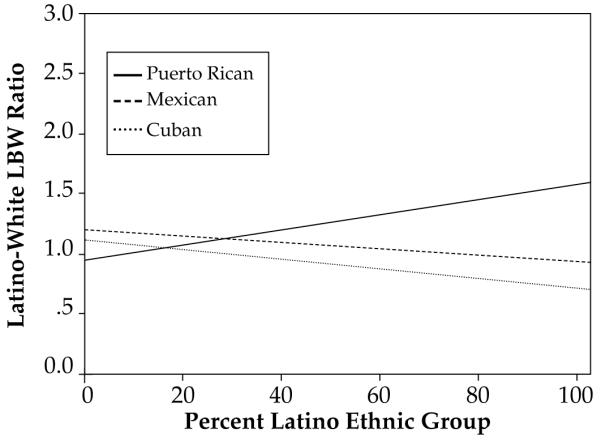
This study examines the extent to which the relationship between area socioeconomic position (SEP) and low birth weight (LBW) varies by race and ethnicity. A cross-sectional, secondary data analysis was performed with 1992-1994 Vital Statistics and 1990 U.S. Census data for selected metropolitan areas. Low birth weight (< 2500 grams) rates were calculated for non-Hispanic Black, Latino, and non-Hispanic White live singleton births. Concentrated poverty was defined as poor persons living in neighborhoods with 40% or more poverty in metropolitan areas. The results showed that the relationship between concentrated poverty and LBW varied by race and ethnicity. Concentrated poverty was significant for Latinos, even when controlling for maternal health and MSA-level factors. By contrast, maternal health characteristics, such as pre-term birth, teen birth and tobacco use, explained much of the variance in African-American and White LBW These findings extend the discussion about race, class, and health disparities to include Latinos and shows how the relationship between SEP and LBW can vary within an ethnic group.
Figures
References
-
- Bruce MA. Contextual Complexity and Violent Delinquency among Black and White Males. Journal of Black Studies. 2004a;35(1):65–98.
-
- Chomitz VR, Cheung LW, Leiberman E. The Role of Lifestyle in Preventing Low Birth Weight. The Future of Children: Low Birth Weight. 1995;5(1):121–138. - PubMed
-
- Collins CA, Williams DR. Segregation and Mortality: The Deadly Effects of Racism? Sociological Forum. 1999;14:495–523.
-
- Collins JW, David RJ. Urban violence and African-American pregnancy outcomes: an ecologic study. Ethnicity and Disease. 1997;7(3):184–190. - PubMed
Publication types
MeSH terms
Grants and funding
LinkOut - more resources
Full Text Sources