Review
. 2009 Feb;21(1):14-21.
doi: 10.1016/j.smim.2008.08.001. Epub 2008 Sep 21.

From the diet to the nucleus: vitamin A and TGF-beta join efforts at the mucosal interface of the intestine

Affiliations
Review

From the diet to the nucleus: vitamin A and TGF-beta join efforts at the mucosal interface of the intestine

Daniel Mucida et al. Semin Immunol. 2009 Feb.

Abstract

The vitamin A metabolites, including retinoic acid (RA), form ligands for retinoic acid-related nuclear receptors and together they play pleiotropic roles in various biological processes. Recently, we described that RA also functions as a key modulator of transforming growth factor-beta (TGF-beta)-driven immune deviation, capable of suppressing the differentiation of interleukin-17 secreting T helper cells (T(H)17) and conversely promoting the generation of Foxp3(+) T regulatory (Treg) cells. This review will focus on the role of RA in the reciprocal TGF-beta-driven differentiation of T(H)17 and Treg and on the importance of such regulatory mechanism to control a functional immune system, in particular at the mucosal interface of the intestine.


Figures
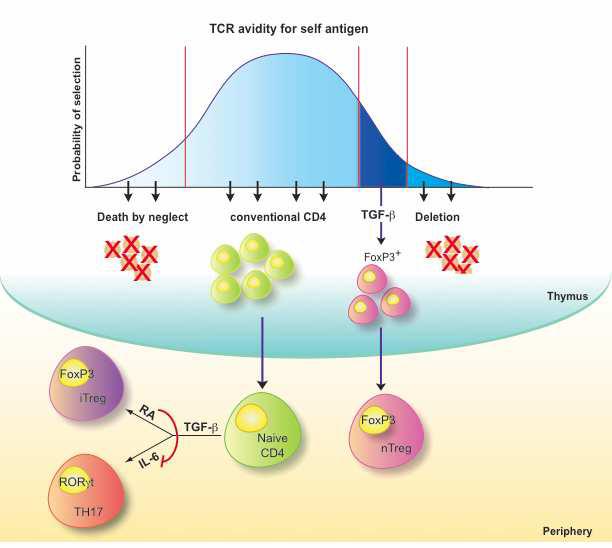
Figure1
Figure1. Development of natural and induced regulatory T cells
Thymus-derived “natural” regulatory T cells (nTreg) are actively selected upon high avidity TCR/self peptide-loaded MHC interactions, express the forkhead-winged helix transcription factor family member, Foxp3, and are fundamental in the process of self-tolerance, so-called “dominant tolerance”. Conventionally selected naïve Foxp3 CD4+ T cells can be “converted” into induced Foxp3+Treg (iTreg) in response to self or non-self antigens encountered post thymically in the periphery. TGF-β is required for both early nTreg development in the thymus and for peripheral induction of iTreg. TGF-β is also able to promote, in the presence of inflammatory cytokines such as IL-6, the development of pro-inflammatory TH17 cells. The vitamin A metabolite, retinoic acid (RA), is capable of inhibit the TGF-β/IL-6–driven induction of pro-inflammatory TH17 cells and simultaneously promote the TGF-β-dependent peripheral differentiation of anti-inflammatory Foxp3+ iTregs.
Figure 2
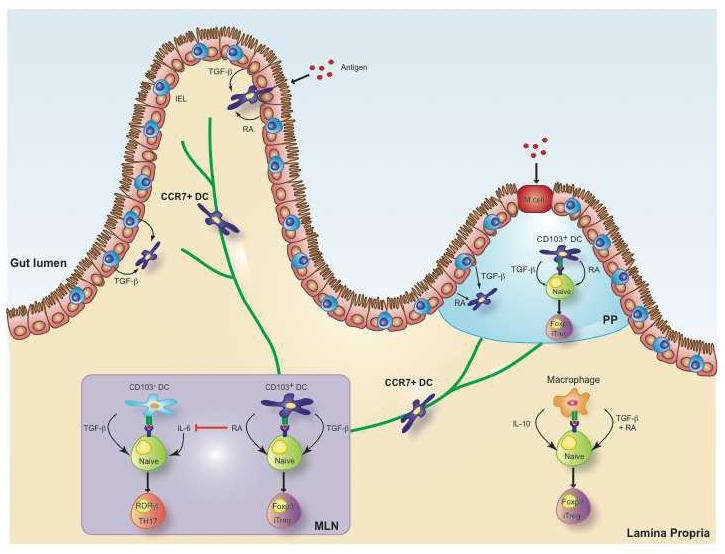
Figure 2. Role of retinoic acid in mucosal immune-regulation
Under the influence of intestinal epithelial cells and intra-epithelial lymphocytes, lamina propria and Peyer's patch CD103+ DCs acquire their ability to produce retinoic acid (RA). LP DCs that have acquired the expression of the chemokine receptor CCR7 are able to migrate through the afferent lymphatic vessels into the mesenteric lymph nodes and influence T-cell activation and differentiation during priming of naïve T cells. Gut-derived CD103+ DCs and LP macrophages efficiently promote the generation of Foxp3+iTreg in a RA-, TGF-β-, and also IL-10 (in the case of LP macrophages) dependent manner. In contrast, release of RA by these DCs suppresses the TGF-β- and IL-6- dependent differentiation of TH17 cells.
Figure3
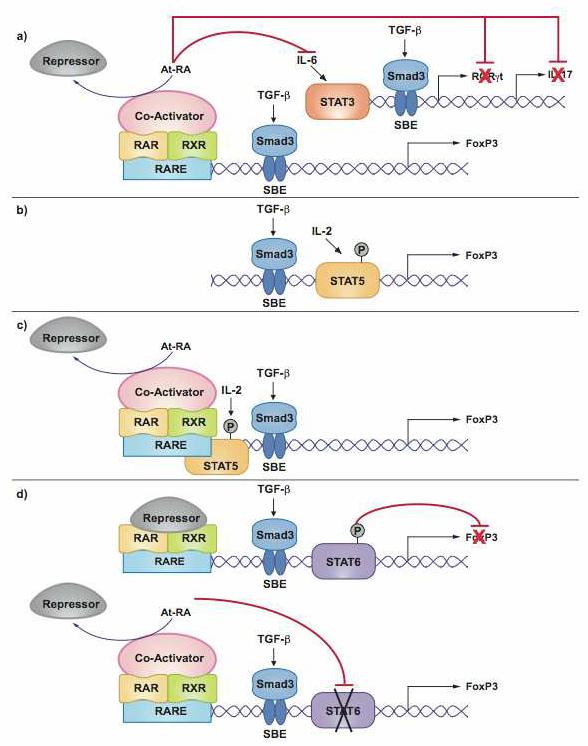
Figure3. Transcriptional regulation of Foxp3 and RORγt/IL-17 mediated by RA
Retinoic acid receptors (RARs) and retinoid X receptors (RXRs) are nuclear receptors able to function as ligand-activated transcription factors through binding to retinoic acid DNA response elements (RARE). Upon ligand (at-RA) binding, RAR/RXRs release co-repressors (CoRs) and recruit co-activators (CoAs). This figure shows possible mechanisms by which RA binding to its nuclear receptors can affect the induction of Foxp3 and IL-17. A. RA could enhance TGF-β signaling via the TGF-β signaling molecules, Smad2 and 3 and SBE (Smad-binding elements) and thus indirectly increase TGF-β-dependent Foxp3 induction. In contrast, RA may also repress different target genes in the TH17-development pathway, including STAT3, RORγt and IL-17. Conversely, the suppression of these molecules could also result in enhanced TGF-β induced Foxp3 expression. B. The induction of Foxp3 expression in naïve T cells requires both TGF-β signaling and IL-2-dependent STAT5 phosphorylation and binding in the Foxp3 promoter. C. STAT5 and RAR interaction may lead to coordinated transcription activity of target genes, therefore enhancing TGF-β-induced Foxp3 expression. D. IL-4 is able to inhibit TGF-β-mediated Foxp3 induction via IL-4 receptor activated STAT6, which directly binds to the Foxp3 promoter. RA binding to RARα/RXRα heterodimers can interfere with the silencing capacity of STAT6 resulting in increased Foxp3 induction.

References

    1. Burnet MF. The Clonal Selection Theory of Immunity. 1st. edition The Vanderbilt and Cambridge University Presses; Nashville/London: 1959.
    1. Sakaguchi S, Takahashi T, Nishizuka Y. Study on cellular events in post-thymectomy autoimmune oophoritis in mice. II. Requirement of Lyt-1 cells in normal female mice for the prevention of oophoritis. J Exp Med. 1982;156(6):1577–86. - PMC - PubMed
    1. Sakaguchi S, Fukuma K, Kuribayashi K, Masuda T. Organ-specific autoimmune diseases induced in mice by elimination of T cell subset. I. Evidence for the active participation of T cells in natural self-tolerance; deficit of a T cell subset as a possible cause of autoimmune disease. J Exp Med. 1985;161(1):72–87. - PMC - PubMed
    1. Sakaguchi S, Takahashi T, Nishizuka Y. Study on cellular events in postthymectomy autoimmune oophoritis in mice. I. Requirement of Lyt-1 effector cells for oocytes damage after adoptive transfer. J Exp Med. 1982;156(6):1565–76. - PMC - PubMed
    1. Taguchi O, Kontani K, Ikeda H, Kezuka T, Takeuchi M, Takahashi T, et al. Tissue-specific suppressor T cells involved in self-tolerance are activated extrathymically by self-antigens. Immunology. 1994;82(3):365–9. - PMC - PubMed

Publication types

MeSH terms