Comparative Study
. 2008 Nov 11;26(48):6108-18.
doi: 10.1016/j.vaccine.2008.09.007. Epub 2008 Sep 20.

Comparison of multiple vaccine vectors in a single heterologous prime-boost trial

Affiliations
Comparative Study

Comparison of multiple vaccine vectors in a single heterologous prime-boost trial

Brice Barefoot et al. Vaccine. .

Abstract

The prevention of infectious disease via prophylactic immunization is a mainstay of global public health efforts. Vaccine design would be facilitated by a better understanding of the type and durability of immune responses generated by different vaccine vectors. We report here the results of a comparative immunogenicity trial of six different vaccine vectors expressing the same insert antigen, cowpox virus B5 (CPXV-B5). Of those vectors tested, recombinant adenovirus (rAd5) was the most immunogenic, inducing the highest titer anti-B5 antibodies and conferring protection from sublethal vaccinia virus challenge in mice after a single immunization. We tested select heterologous prime-boost combinations and identified recombinant vesicular stomatitis virus (rVSV) and recombinant Venezuelan equine encephalitis virus replicons (VRP) as the most synergistic regimen. Comparative data such as those presented here are critical to efforts to generate protective vaccines for emerging infectious diseases as well as for biothreat agents.


Figures
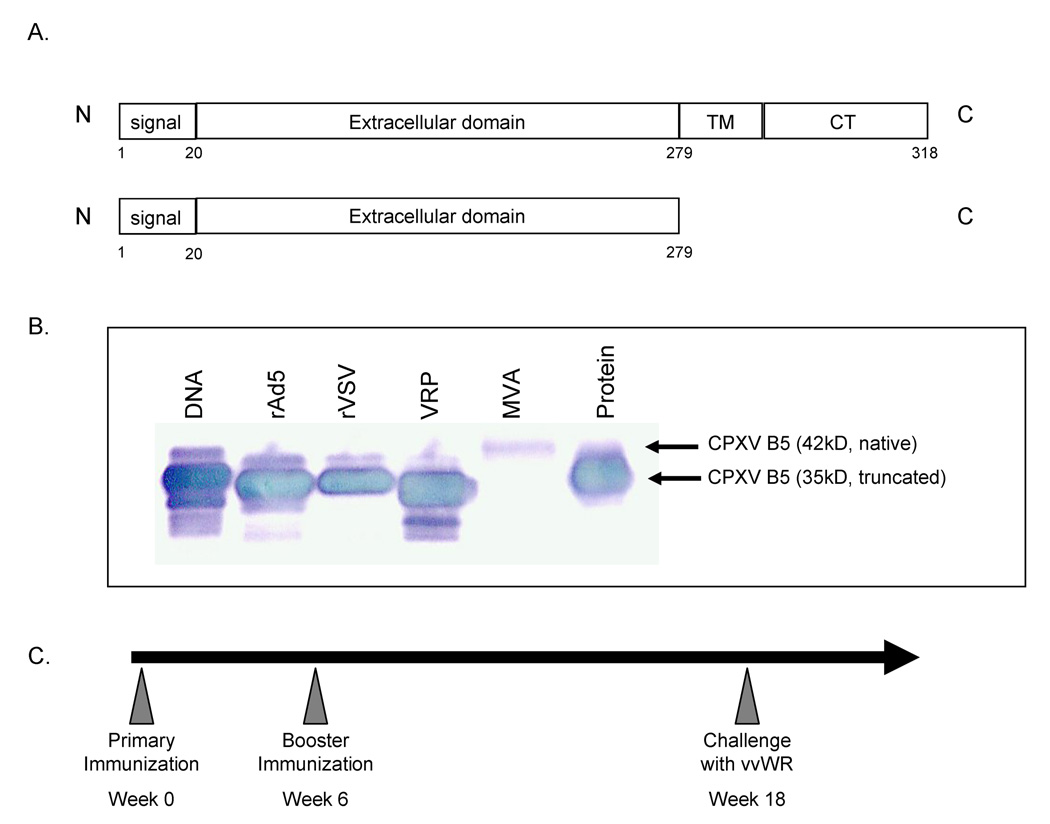
Figure 1
Figure 1. Vaccine vectors express CPXV-B5
Vaccine vectors in this experiment were constructed to express a truncated CPXV-B5 (35kD) from which the transmembrane and cytoplasmic domains have been deleted. A schematic drawing of the CPXV gene insert is shown in Panel A. CPXV-B5 expression was verified in each vaccine vector via Western blotting for B5 (Panel B). Samples were prepared as appropriate for each vector (lysates of infected or transfected cells) and resolved by SDS-PAGE. No attempt was made to equalize protein loading between different samples (i.e. DNA and VRPs). A lysate of cells infected with modified vaccinia Ankara (MVA, lane 5) was included as a positive control for B5 expression. The B5 expressed by MVA is the native non-truncated (42kD) form while the other vectors express the truncated 35kD form.
Figure 2
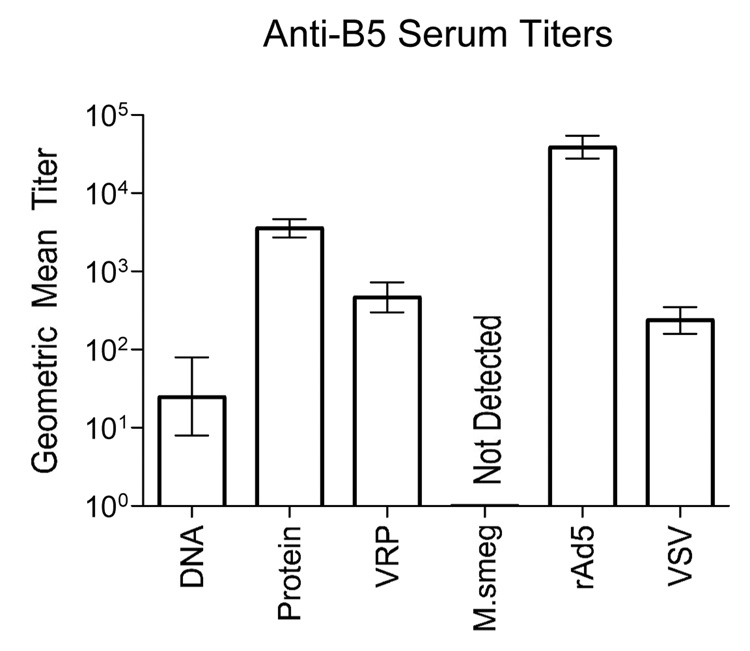
Figure 2. Primary responses to immunization with B5-expressing vaccine vectors
Adult female C57BL/6 mice were immunized with a single intramuscular injection of B5 expressing vaccine vectors. Six weeks after immunization all mice were bled and anti-B5 titers determined by binding ELISA (n= 48 mice per group for DNA, protein, VRP, and M. smegmatis, n=24 mice per group for rAd5, rVSV, and mock immunized). All sera were assayed individually. Endpoint titers were defined as the dilution reading 2x over background where background was the reading for pre-immune sera for each individual animal. Bars on graph are the geometric mean titer for each immunization group and error bars represent the upper and lower limits of the 95% confidence interval. Data shown is compiled from two duplicate experiments.
Figure 3
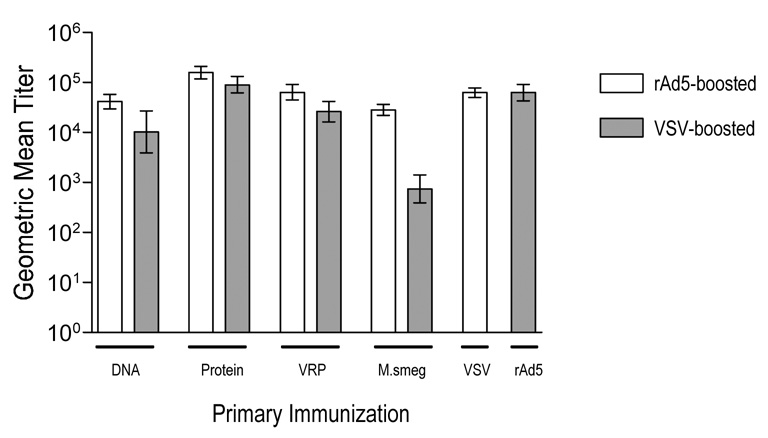
Figure 3. Boosting with heterologous vectors increases serum antibody titers to B5
Adult female C57BL/6 mice were immunized with a single intramuscular injection of B5 expressing vaccine vectors as indicated in Table 1. Six weeks after primary immunization all mice were boosted with a single booster immunization of either rAd5-B5 (open bars), or rVSV-B5 (shaded bars). Animals were bled at multiple timepoints after boosting (from two weeks to three months post boost) and sera were assayed individually for anti-B5 binding activity. Endpoint titers were defined as the dilution reading 2x over background where background was the reading for pre-immune sera for each individual animal. Bars on graph are the peak geometric mean titer for each immunization group and error bars represent the upper and lower limits of the 95% confidence interval. The peak titer was the highest anti-B5 titer reached by an individual animal regardless of the time at which that titer was reached. All groups contained 12 animals.
Figure 4
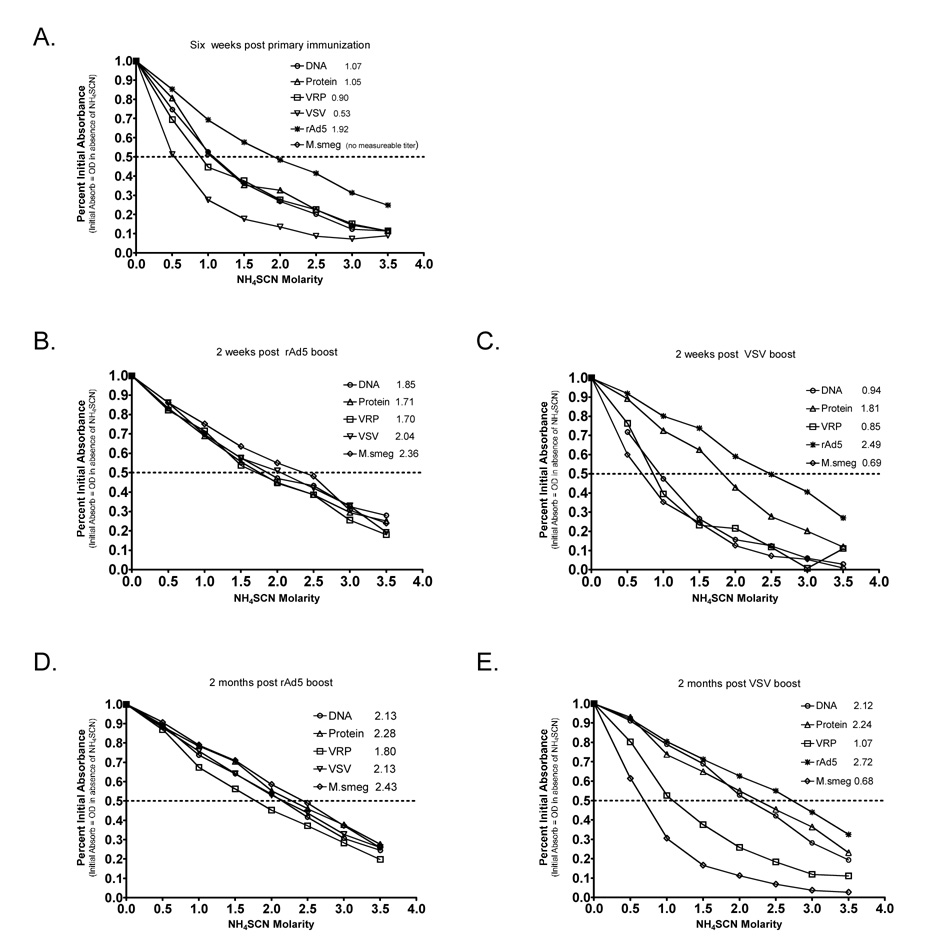
Figure 4. rAd5 immunization induces higher avidity antibody than do other vaccine regimens
Individual sera from mice immunized intramuscularly with B5-expressing vectors were assayed for avidity via competitive binding ELISA. Graphs show binding curves for sera collected six weeks after the primary immunization (Panel A), two weeks after the single booster immunization (Panels B and C), and two months after the boost (Panels D and E). The calculated average avidity index for each group is indicated in the graph legend. Avidity index was defined as the concentration of NH4SCN required to reduce binding of an individual sample by 50%. Each sample was assayed in quadruplicate. Data shown is from the first large-scale immunization experiment, in which there were at least 24 mice per group prior to the boost, and 12 mice per group after the boost. Avidity indices were also calculated from samples collected in the second experiment, and were identical to those shown here.
Figure 5
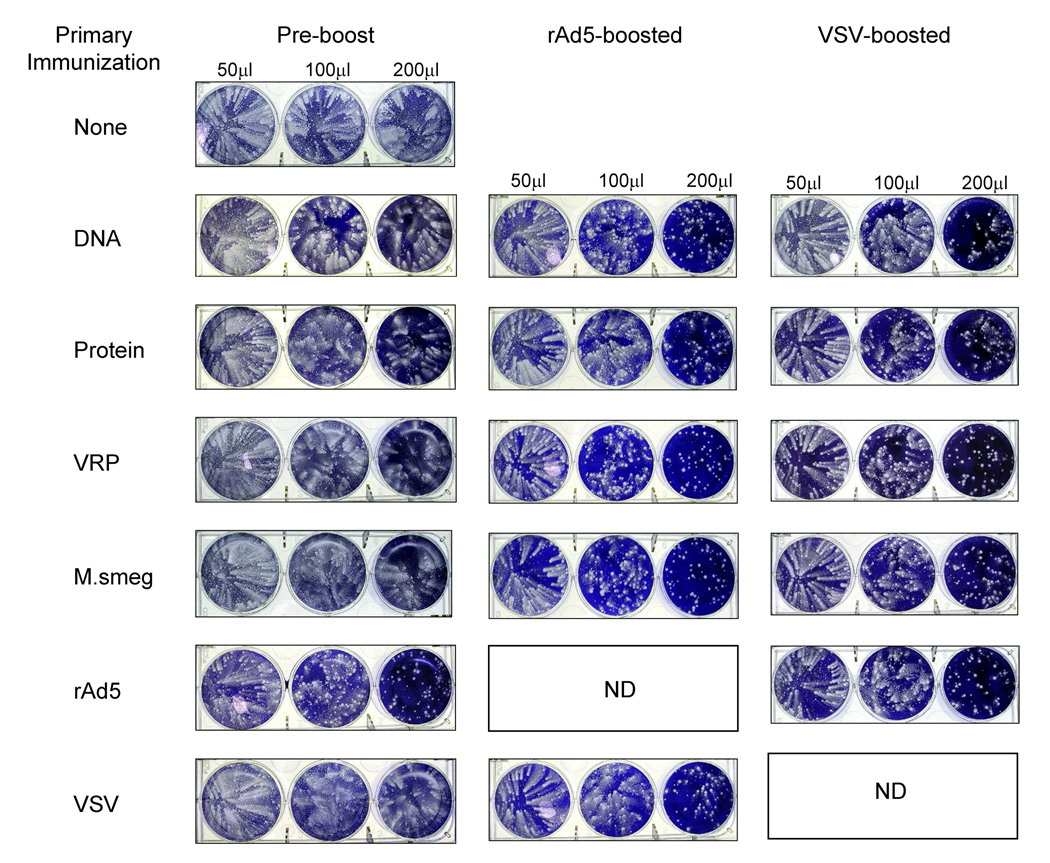
Figure 5. Antibody induced by rAd5 immunization restricts viral dissemination
Pooled sera from mice immunized intramuscularly with B5-expressing vectors were assayed for the ability to inhibit comet formation by vaccinia IHDJ. Figure shows representative plaque assays for each group of pooled sera. BSC-1 cells were infected with approximately 50 PFU of vIHDJ in the presence of 50, 100, or 200µl of the indicated post-immune sera. Sera tested in this assay were collected at three months after the boost. A reduction in the formation of comet “tails” indicates the presence of neutralizing Ab.
Figure 6
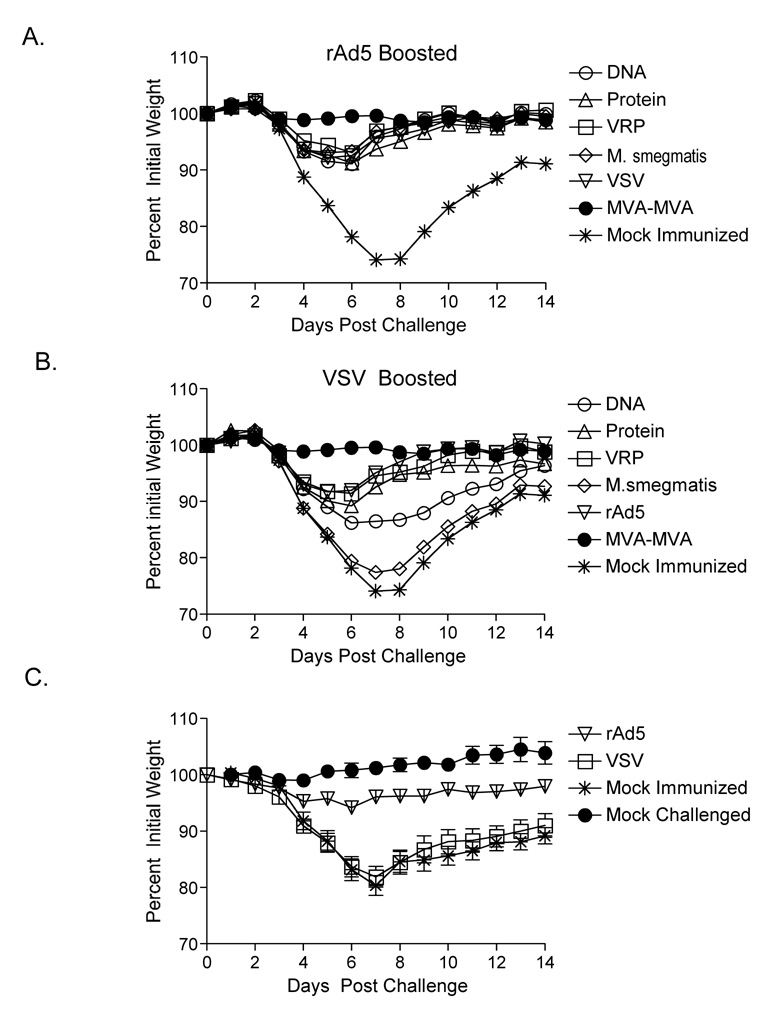
Figure 6. Heterologous prime-boosting confers protection from weight loss after intranasal challenge with vaccinia WR
Mice were primed and boosted intramuscularly with B5-expressing vectors as described in Figure 3. Three months after the single booster immunization all animals were challenged intranasally with 1×10⁵PFU vvWR. Graphs (Panel A and B) show average percent initial weight±SEM for immunized and control animals by group (n=12 per group). Animals losing 20% or more of their pre-infection body weight were euthanized in accordance with our animal protocol. By day 10 after challenge 8 out of the 12 mock immunized control animals were dead. To determine whether immunization with the boosting vector alone could protect animals from challenge we immunized separate cohorts of mice intramuscularly with 1×10⁹ VP rAd5-B5 or 5×10⁶ PFU rVSV-B5. Three months after immunization mice were challenged intranasally with 1×10⁵PFU vvWR. Graph (Panel C) shows average percent initial weight±SEM for immunized (n=15 per group), mock immunized control (n=10), and mock challenged (n=5) animals by group. All rAd5 immunized mice survived. rVSV and mock immunized mice had survival rates of 53% and 40% respectively.
Figure 7
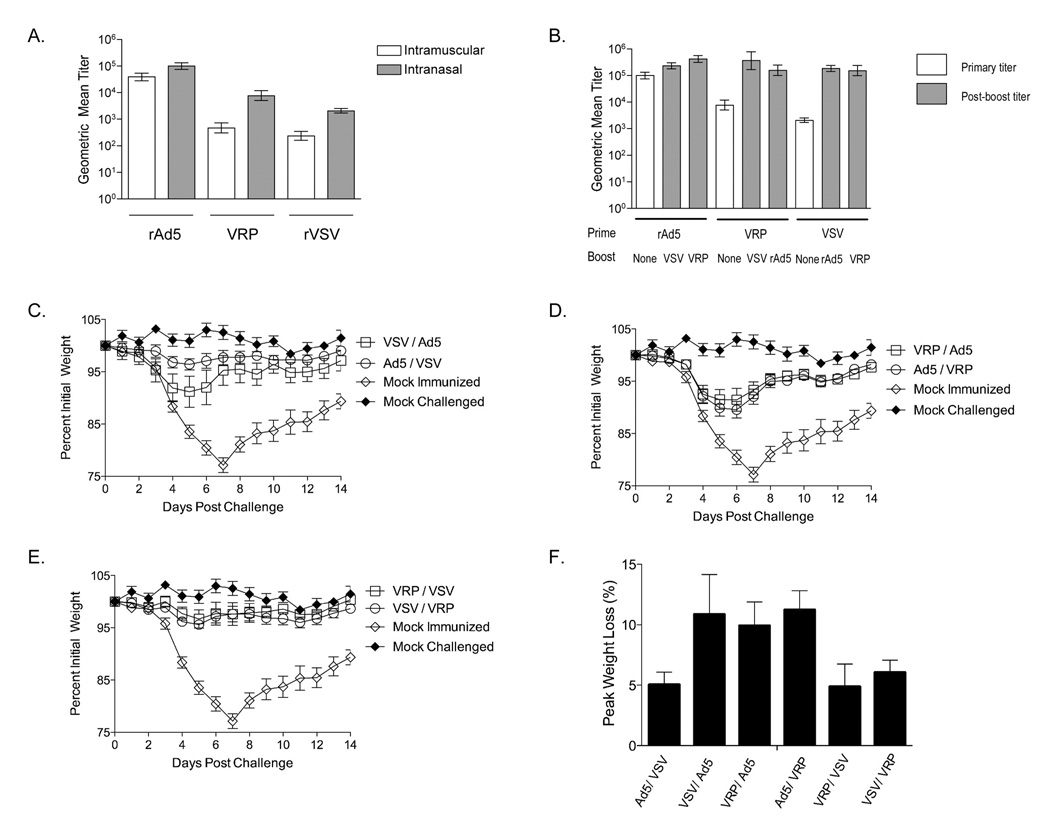
Figure 7. Intranasal immunization generates high titer anti-B5 antibody and protects animals from sublethal challenge
Adult female C57BL/6 mice were immunized with a single intranasal inoculation of B5 expressing vaccine vectors as indicated in Table 1. Six weeks after primary immunization all mice were boosted with a single booster immunization of either rAd5-B5, VRP-B5, or rVSV- B5. Doses for the boost were the same as for the prime. Animals were bled after primary (Panel A) and booster (Panel B) immunization and sera were assayed individually for anti-B5 binding activity. Endpoint titers were defined as the dilution reading 2x over background where background was the reading for pre-immune sera for each individual animal. Bars on graph are the peak geometric mean titer for each immunization group (n=20 per group) and error bars represent the upper and lower limits of the 95% confidence interval. Three months after the boost all animals all animals were challenged intranasally with 1×10⁵PFU vvWR. Graphs (Panel C–E) shows average percent initial weight±SEM for immunized and control animals by group (n=20 per vaccine group). All plots shown are from the same experiment, but have been shown as three separate graphs for clarity. By day 10 after challenge 5 out of the 10 mock immunized control animals were dead. Panel F shows the maximum percent weight loss by group after challenge. Bars represent average ±SEM for each group. The difference in maximum weight loss was not statistically significant among the immunization groups (ANOVA, P=0.0526).

References

    1. Oldstone MB. Viruses, Plagues, and History. New York: Oxford University; 1998. Press.
    1. Morens DM, Folkers GK, Fauci AS. The challenge of emerging and reemerging infectious diseases. Nature. 2004;430(6996):242–249. - PMC - PubMed
    1. Zinkernagel RM, LaMarre A, Ciurea A, Hunziker L, Ochsenbein AF, McCoy KD, et al. Neutralizing antiviral antibody responses. Adv Immunol. 2001;79:1–53. - PMC - PubMed
    1. Krugman S. The clinical use of gamma globulin. N Engl J Med. 1963;269:195–201. - PubMed
    1. Copelovici Y, Strulovici D, Cristea AL, Tudor V, Armasu V. Data on the efficiency of specific antimumps immunoglobulins in the prevention of mumps and of its complications. Virologie. 1979;30(3):171–177. - PubMed

Publication types

MeSH terms