The signature of long-standing balancing selection at the human defensin beta-1 promoter
- PMID: 18817538
- PMCID: PMC2592704
- DOI: 10.1186/gb-2008-9-9-r143
The signature of long-standing balancing selection at the human defensin beta-1 promoter
Abstract
Background: Defensins, small endogenous peptides with antimicrobial activity, are pivotal components of the innate immune response. A large cluster of defensin genes is located on human chromosome 8p; among them the beta defensin 1 (DEFB1) promoterhas been extensively studied since discovery that specific polymorphisms and haplotypes associate with asthma and atopy, susceptibility to severe sepsis, as well as HIV and Candida infection predisposition.
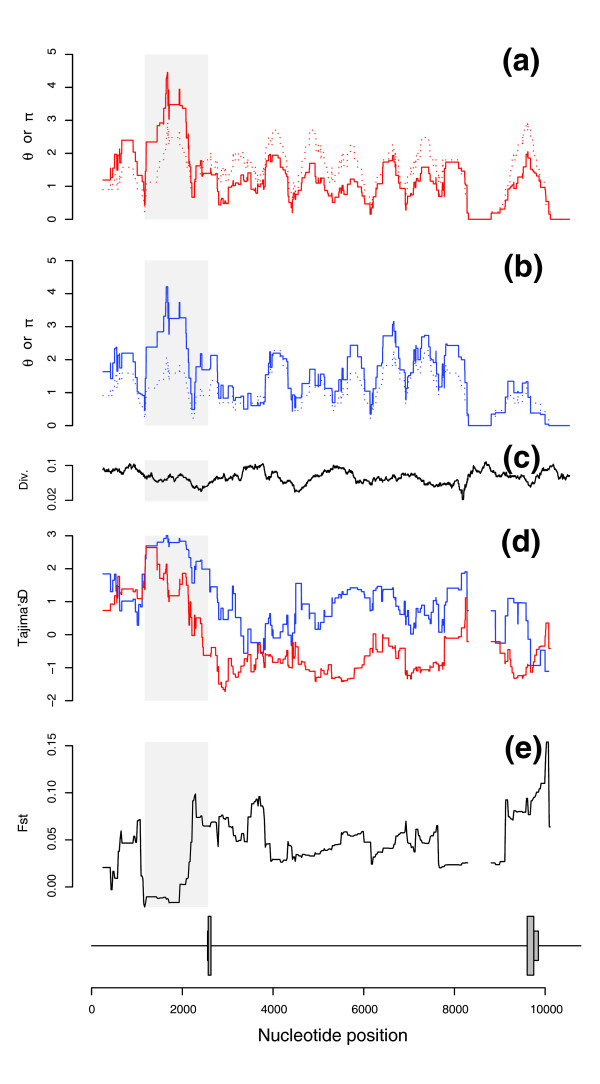
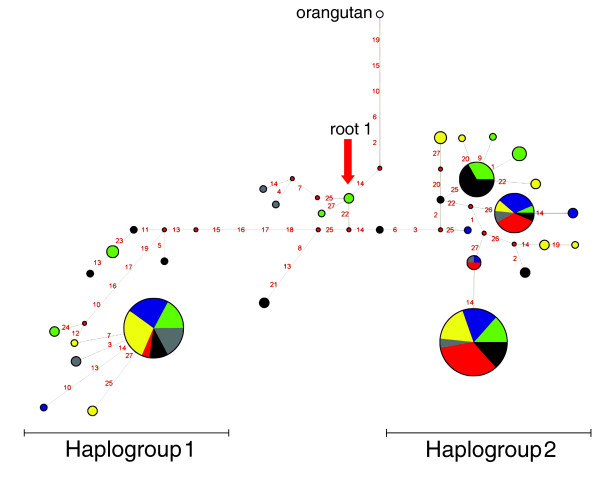
Results: Here, we characterize the sequence variation and haplotype structure of the DEFB1 promoter region in six human populations. In all of them, we observed high levels of nucleotide variation, an excess of intermediate-frequency alleles, reduced population differentiation and a genealogy with common haplotypes separated by deep branches. Indeed, a significant departure from the expectation of evolutionary neutrality was observed in all populations and the possibility that this is due to demographic history alone was ruled out. Also, we verified that the selection signature is restricted to the promoter region and not due to a linked balanced polymorphism. A phylogeny-based estimation indicated that the two major haplotype clades separated around 4.5 million years ago, approximately the time when the human and chimpanzee lineages split.
Conclusion: Altogether, these features represent strong molecular signatures of long-term balancing selection, a process that is thought to be extremely rare outside major histocompatibility complex genes. Our data indicate that the DEFB1 promoter region carries functional variants and support previous hypotheses whereby alleles predisposing to atopic disorders are widespread in modern societies because they conferred resistance to pathogens in ancient settings.
Figures