


Tumor necrosis factor inhibitors and infection complications
- PMID: 18817643
- PMCID: PMC3640452
- DOI: 10.1007/s11926-008-0062-1
Tumor necrosis factor inhibitors and infection complications
Abstract
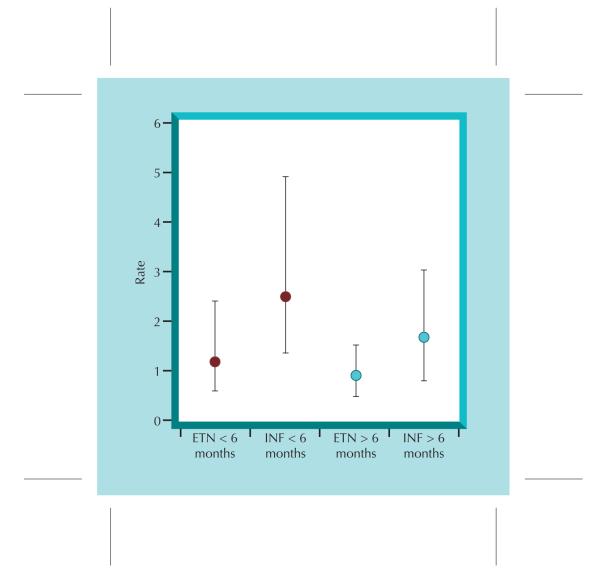
Rheumatoid arthritis patients are at heightened risk for infections because of intrinsic disease severity with associated inflammation, comorbid illnesses, and use of glucocorticoids and various immunosuppressives. Although several studies have reported up to a twofold increase in risk of serious infections in RA patients treated with anti-tumor necrosis factor-alpha agents, results from other studies have been conflicting. Comparing results from different studies is challenging because of differences in patient populations, heterogeneous prevalence of comorbidities, and differing patterns of concomitant medication use. Based on available evidence, an excess risk for infection occurs early after initiation of tumor necrosis factor-alpha inhibitor therapy. Additionally, special circumstances such as surgical procedures may increase infection risk. The appropriate use of biologics in the perioperative setting remains empiric at best.
Figures
References
-
- Kato K, Minagawa T, Kato K, et al. Human tumor necrosis factor increases the resistance against Listeria infection in mice. Med Microbiol Immunol. 1989;178:337–346. - PubMed
-
- Mastroeni P, Villarreal-Ramos B, Hormaeche CE. Effect of late administration of anti-TNF alpha antibodies on a Salmonella infection in the mouse model. Microb Pathog. 1993;14:473–480. - PubMed
-
- Doran MF, Crowson CS, Pond GR, et al. Predictors of infection in rheumatoid arthritis. Arthritis Rheum. 2002;46:2294–2300. - PubMed
-
- Doran MF, Crowson CS, Pond GR, et al. Frequency of infection in patients with rheumatoid arthritis compared with controls: a population-based study. Arthritis Rheum. 2002;46:2287–2293. - PubMed
Publication types
MeSH terms
Substances
Grants and funding
LinkOut - more resources
Full Text Sources
Medical