The temporal relationship between alcohol consumption and HIV-medication adherence: a multilevel model of direct and moderating effects
- PMID: 18823189
- PMCID: PMC2666539
- DOI: 10.1037/a0012664
The temporal relationship between alcohol consumption and HIV-medication adherence: a multilevel model of direct and moderating effects
Abstract
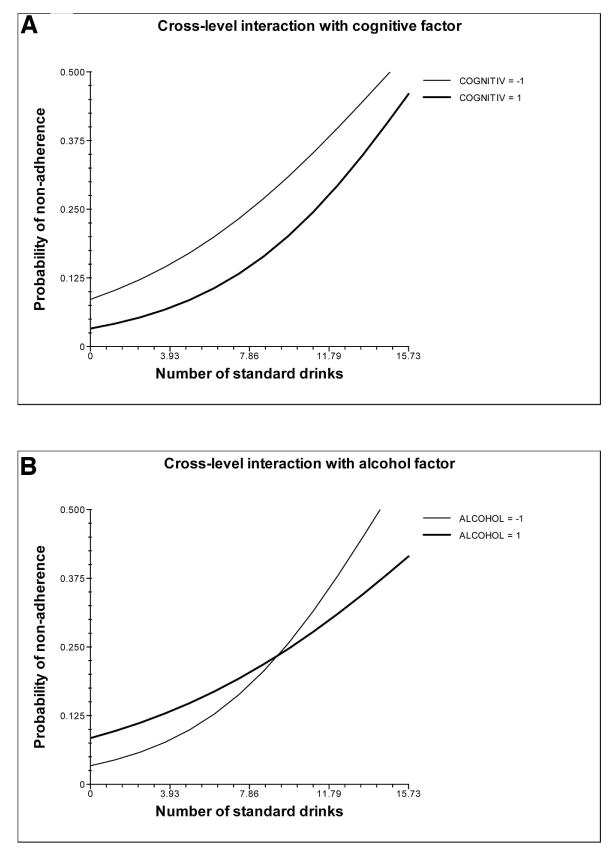
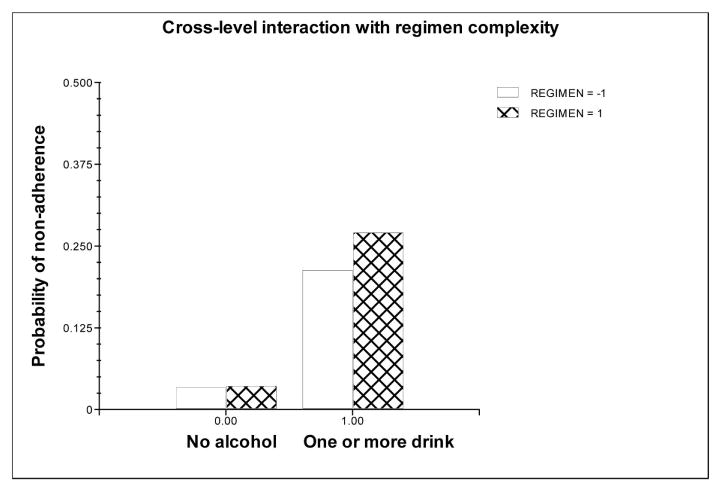
Previous studies documenting an association between alcohol use and HIV medication nonadherence, have been unable to distinguish between-persons characteristics from within-person characteristics representing the temporally linked effects of alcohol. Hierarchical Linear Modeling (HLM) explored within- and between-person predictors of adherence during the past 14 days, as well as factors that moderate the event-level effects of alcohol consumption among 272 HIV-positive men and women with alcohol problems. On days in which participants drank, they had almost 9 times higher odds of medication nonadherence, with each drink increasing the odds by 20%. The cognitive and alcohol factors had significant between-person effects on adherence. Individuals with strong and rigid beliefs about the importance of strict medication adherence were significantly more affected by each dose of alcohol, while individuals with more alcohol use and problems were less affected by each drink. Regimen complexity increased the effects of having 1 or more drinks. These results highlight the importance of promoting medication adherence among alcohol-using adults, especially among patients with complex regimens or with high confidence and positive attitudes toward HIV medication.
PsycINFO Database Record (c) 2008 APA, all rights reserved.
Figures
References
-
- Ammassari A, Murri R, Pezzotti P, Trotta MP, Ravasio L, De Longis P, et al. Self-reported symptoms and medication side effects influence adherence to highly active antiretroviral therapy in persons with HIV infection. Journal of Acquired Immune Deficiency Syndromes. 2001;28:445–449. - PubMed
-
- Bangsberg DR. Less than 95% adherence to nonnucleoside reverse-transcriptase inhibitor therapy can lead to viral suppression. Clinical Infectious Diseases. 2006a;43(7):939–941. - PubMed
-
- Bangsberg DR. Monitoring adherence to HIV antiretroviral therapy in routine clinical practice: The past, the present, and the future. AIDS and Behavior. 2006b;10(3):249–251. - PubMed
-
- Bangsberg DR, Acosta E, Gupta R, Guzman D, Riley ED, Harrigan PR. Differences in protease and non-nucleoside reverse transcriptase inhibitor adherence-resistance relationships are explained by virologic fitness. AIDS. 2005;20(2):223–231. - PubMed
-
- Bohn MJ, Babor TF, Kranzler HR. The Alcohol Use Disorders Identification Test (AUDIT): Validation of a screening instrument for use in medical settings. Journal of Studies on Alcohol. 1995;56:423–432. - PubMed
Publication types
MeSH terms
Substances
Grants and funding
LinkOut - more resources
Full Text Sources
Medical
Miscellaneous