


Exploration of the effectiveness of social distancing on respiratory pathogen transmission implicates environmental contributions
- PMID: 18823270
- PMCID: PMC7109839
- DOI: 10.1086/592711
Exploration of the effectiveness of social distancing on respiratory pathogen transmission implicates environmental contributions
Abstract
Background: In both military and civilian settings, transmission of respiratory pathogens may be due to person-to-person and environmental contributions. This possibility was explored in a military training setting, where rates of febrile respiratory illness (FRI) often reach epidemic levels.
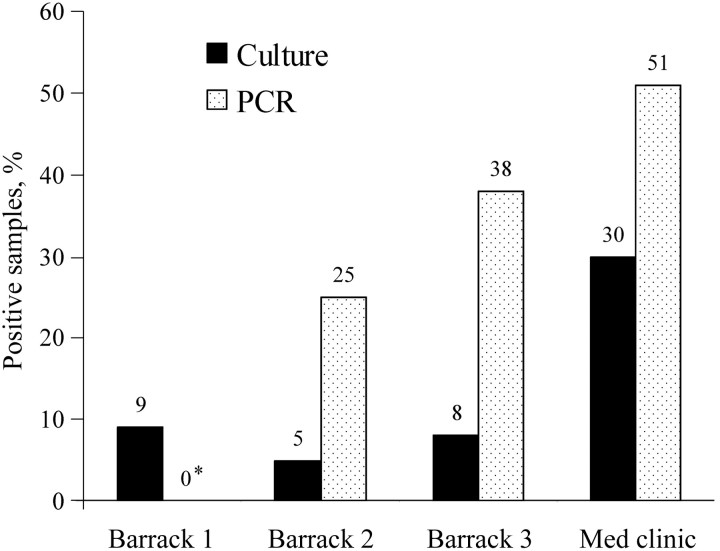
Methods: Population size and FRI rates were monitored over 10 months in the units of 50-90 individuals. Some units were open to the influx of potentially infectious convalescents (hereafter referred to as "open units," and some were closed to such an influx (hereafter referred to as "closed units"). Virologic testing and polymerase chain reaction analysis were used to detect adenovirus on surface structures.
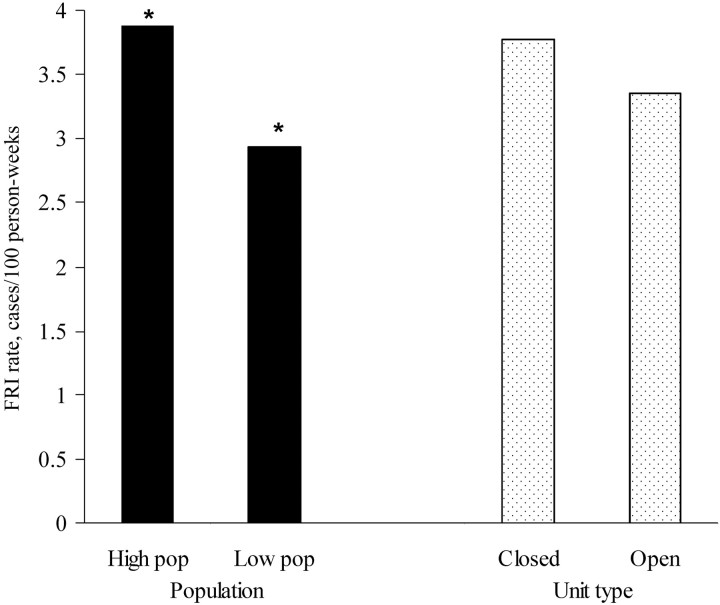
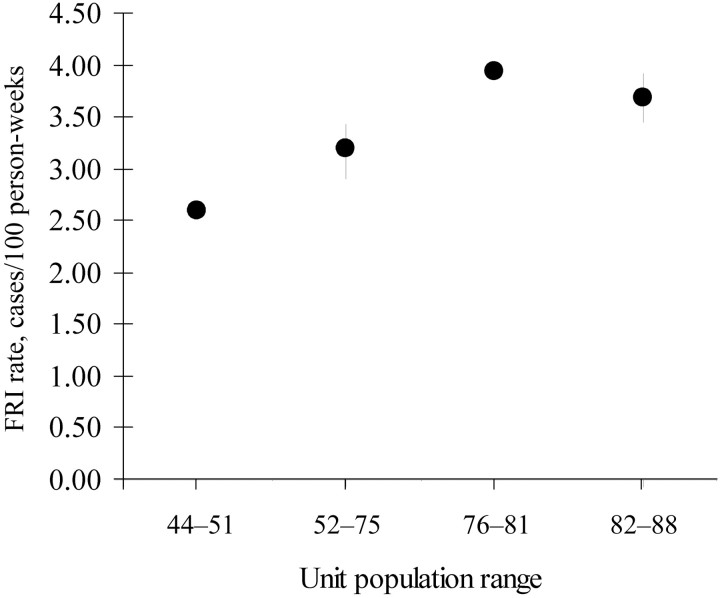
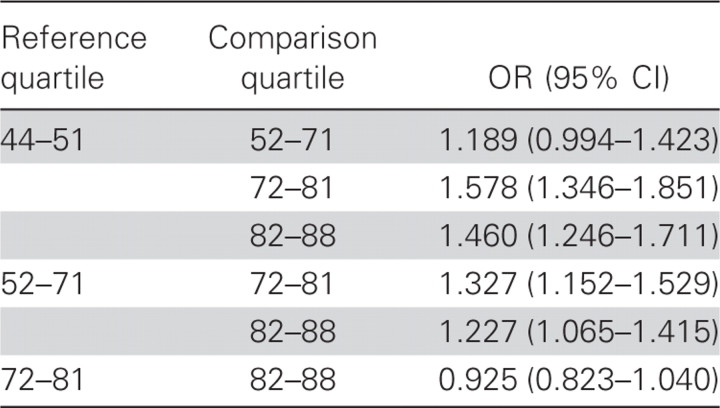
Results: The odds ratio (OR) associated with FRI in closed units, compared with open units, was 1.13 (95% confidence interval [CI], 0.99-1.28). The OR in units with a population greater than the median size, compared with units with a population lower than the median size was 1.38 (95% CI, 1.23-1.55). Between 5% and 9% of surface samples obtained from selected units harbored viable adenovirus.
Conclusions: FRI rates were not reduced in units that were closed to potentially contagious individuals. These findings imply that the primary source of the pathogen is likely environmental rather than human, and they underscore what is known about other virus types. Diligence in identifying the relative roles of different transmission routes is suggested for civilian settings similar to those described in the current study.
Figures
Comment in
-
Respiratory disease, the environment, and the military: important, unexplored frontiers.J Infect Dis. 2008 Nov 15;198(10):1417-9. doi: 10.1086/592712. J Infect Dis. 2008. PMID: 18823271 No abstract available.
References
-
- Feikin DR, Moroney JF, Talkington DF, et al. An outbreak of acute respiratory disease caused by Mycoplasma pneumoniae and adenovirus at a federal service training academy: new implications from an old scenario. Clin Infect Dis. 1999;29:1545–50. - PubMed
-
- Gross PA, Rodstein M, LaMontagne JR, et al. Epidemiology of acute respiratory illness during an influenza outbreak in a nursing home: a prospective study. Arch Intern Med. 1988;148:559–61. - PubMed
Publication types
MeSH terms
LinkOut - more resources
Full Text Sources
Medical
