


The uncrowded window of object recognition
- PMID: 18828191
- PMCID: PMC2772078
- DOI: 10.1038/nn.2187
The uncrowded window of object recognition
Erratum in
- Nat Neurosci. 2008 Dec;11(12):1463
Abstract
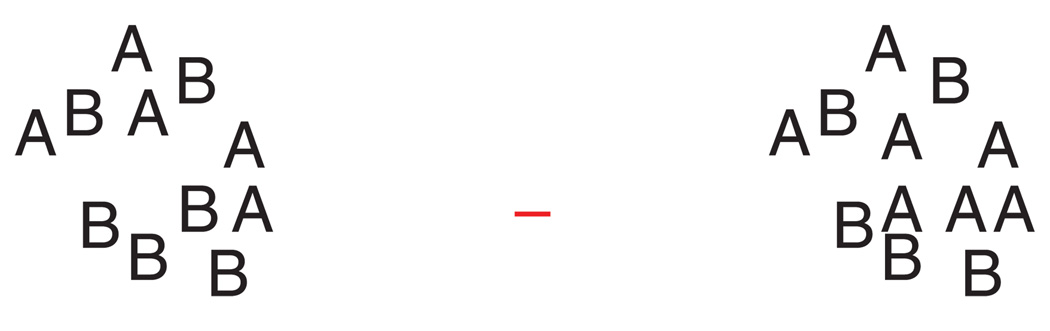
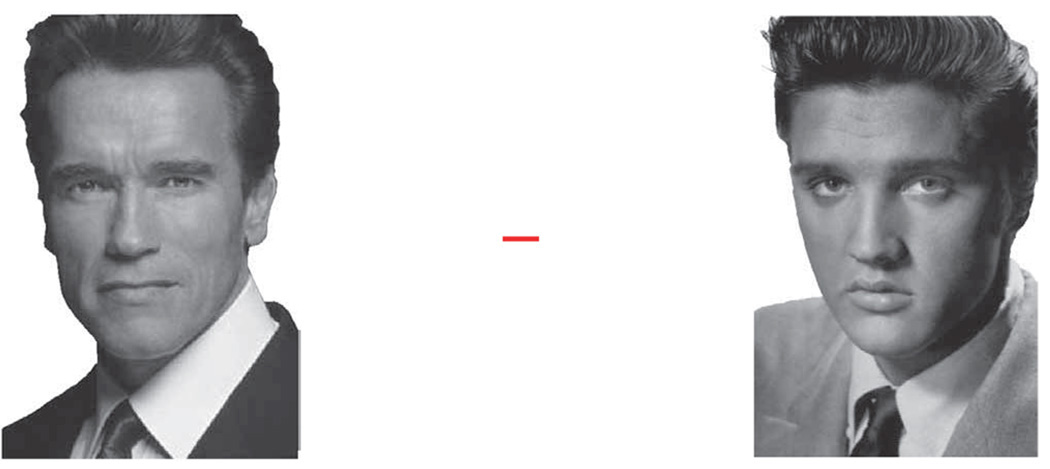
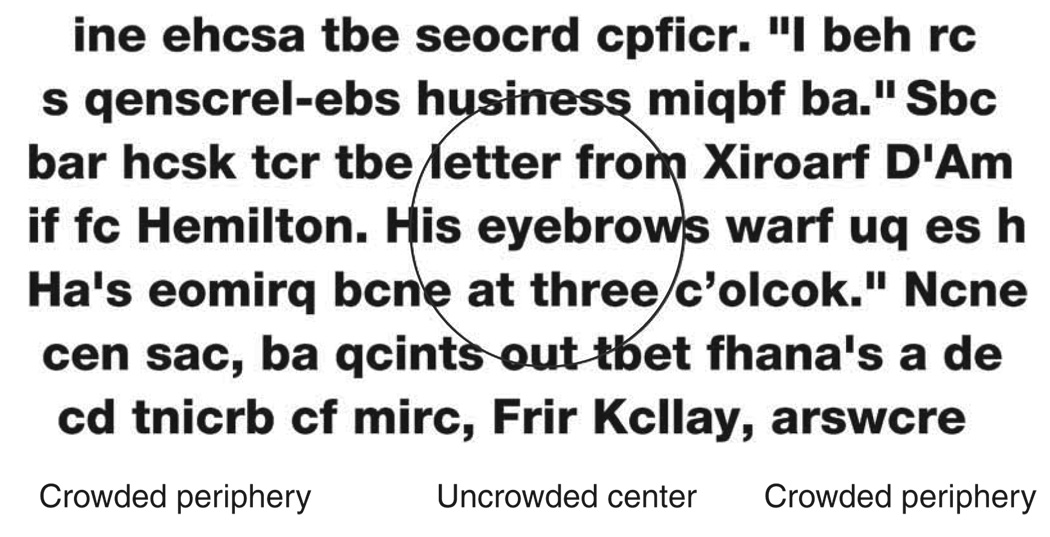
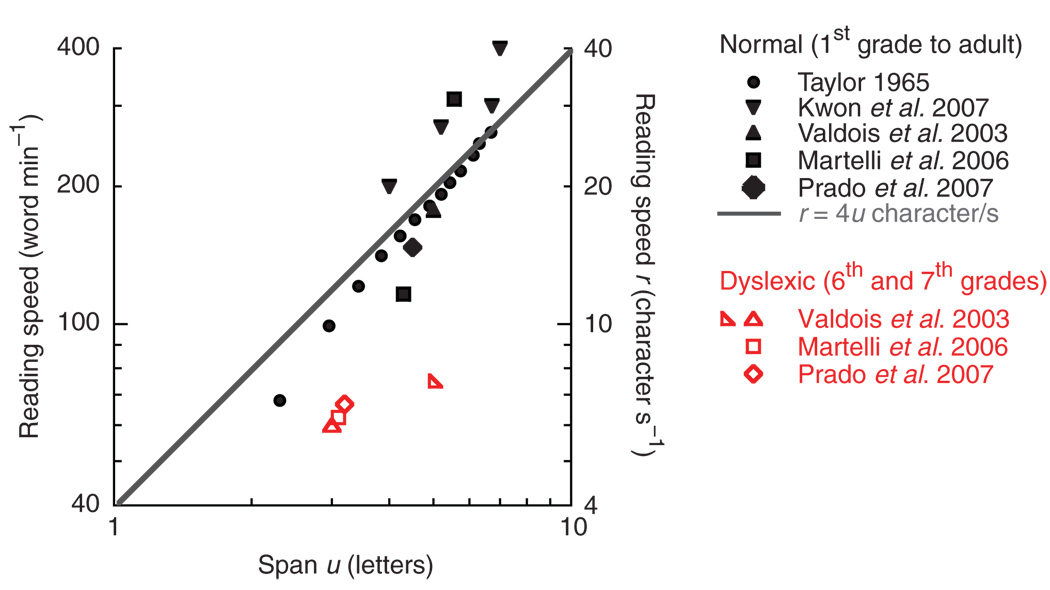
It is now emerging that vision is usually limited by object spacing rather than size. The visual system recognizes an object by detecting and then combining its features. 'Crowding' occurs when objects are too close together and features from several objects are combined into a jumbled percept. Here, we review the explosion of studies on crowding--in grating discrimination, letter and face recognition, visual search, selective attention, and reading--and find a universal principle, the Bouma law. The critical spacing required to prevent crowding is equal for all objects, although the effect is weaker between dissimilar objects. Furthermore, critical spacing at the cortex is independent of object position, and critical spacing at the visual field is proportional to object distance from fixation. The region where object spacing exceeds critical spacing is the 'uncrowded window'. Observers cannot recognize objects outside of this window and its size limits the speed of reading and search.
Figures






References
-
- Robson JG, Graham N. Probability summation and regional variation in contrast sensitivity across the visual field. Vision Res. 1981;21:409–418. - PubMed
-
- Treisman AM, Gelade G. A feature-integration theory of attention. Cognit. Psychol. 1980;12:97–136. - PubMed
-
- Pelli DG, Burns CW, Farell B, Moore-Page DC. Feature detection and letter identification. Vision Res. 2006;46:4646–4674. - PubMed
Publication types
MeSH terms
Grants and funding
LinkOut - more resources
Full Text Sources
