


Brazilian propolis: correlation between chemical composition and antimicrobial activity
- PMID: 18830454
- PMCID: PMC2529390
- DOI: 10.1093/ecam/nem058
Brazilian propolis: correlation between chemical composition and antimicrobial activity
Abstract
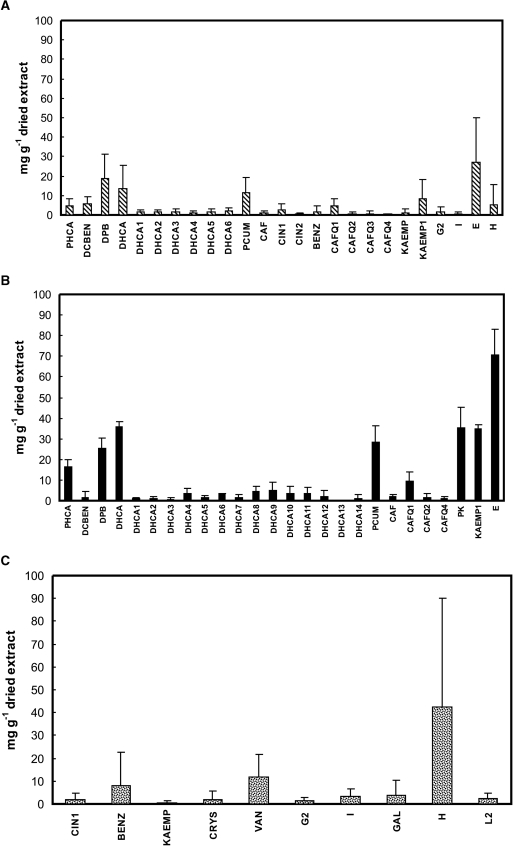
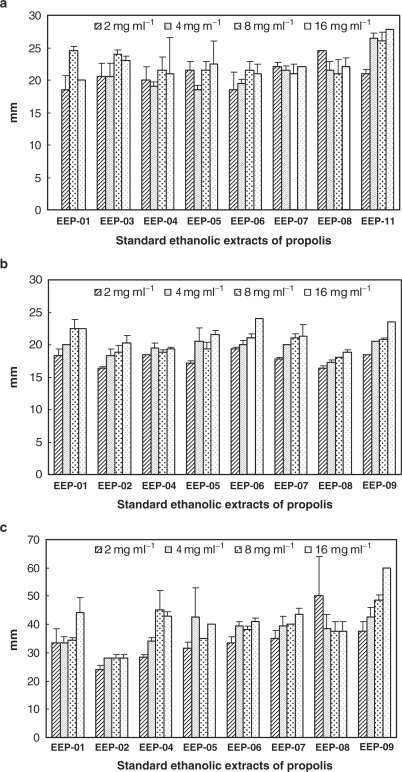
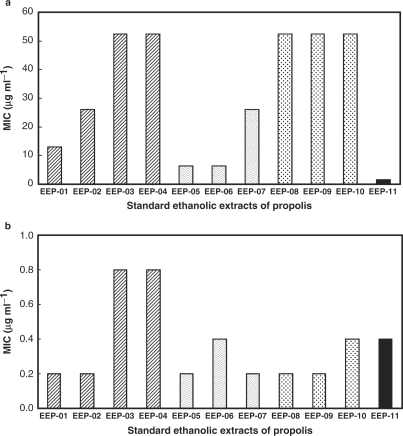
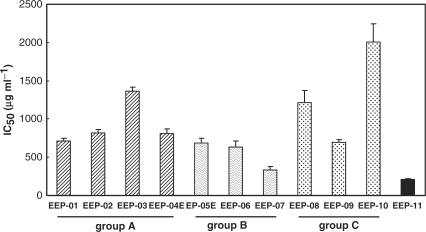
The chemical composition of ethanol extracts from samples of Brazilian propolis (EEPs) determined by HPLC and their activity against Trypanosoma cruzi, Staphylococcus aureus, Streptococcus pneumoniae, Klebisiella pneumoniae, Candida albicans, Sporothrix schenckii and Paracoccidioides brasiliensis were determined. Based on the predominant botanical origin in the region of samples' collection, the 10 extracts were separated into three groups: A (B. dracunculifolia + Auraucaria spp), B (B. dracunculifolia) and C (Araucaria spp). Analysis by the multiple regression of all the extracts together showed a positive correlation, higher concentrations leading to higher biological effect, of S. aureus with p-coumaric acid (PCUM) and 3-(4-hydroxy-3-(oxo-butenyl)-phenylacrylic acid (DHCA1) and of trypomastigotes of T. cruzi with 3,5-diprenyl-4-hydroxycinnamic acid derivative 4 (DHCA4) and 2,2-dimethyl-6-carboxyethenyl-2H-1-benzopyran (DCBEN). When the same approach was employed for each group, due to the small number of observations, the statistical test gave unreliable results. However, an overall analysis revealed for group A an association of S. aureus with caffeic acid (CAF) and dicaffeoylquinic acid 3 (CAFQ3), of S. pneumoniae with CAFQ3 and monocaffeoylquinic acid 2 (CAFQ2) and of T. cruzi also with CAFQ3. For group B, a higher activity against S. pneumoniae was associated DCBEN and for T. cruzi with CAF. For group C no association was observed between the anitmicrobial effect and any component of the extracts. The present study reinforces the relevance of PCUM and derivatives, especially prenylated ones and also of caffeolyquinic acids, on the biological activity of Brazilian propolis.
Keywords: Trypanosoma cruzi; bactericidal activity; chemical composition; fungicidal activity; propolis; statistical analysis.
Figures
References
-
- De Castro SL. Propolis: biological and pharmacological activities. Therapeutic uses of this bee-product. Ann Rev Biomed Sci. 2001;3:49–83.
-
- Marcucci MC, Bankova VS. Chemical composition, plant origin and biological activity of Brazilian propolis. Curr Top Phytochem. 1999;2:115–23.
-
- Park YK, Alencar SM, Aguiar CL. Botanical origin and chemical composition of Brazilian propolis. J Agric Food Chem. 2002;50:2502–6. - PubMed
-
- Park YK, Paredes-Guzman JF, Aguiar CL, Alencar SM, Fujiwara FY. Chemical constituents in Baccharis dracunculifolia as the main botanical origin of southeastern Brazilian propolis. J Agric Food Chem. 2004;52:1100–3. - PubMed
LinkOut - more resources
Full Text Sources
Miscellaneous
