


Poor glycemic control is associated with low BMD detected in premenopausal women with type 1 diabetes
- PMID: 18830554
- PMCID: PMC2748939
- DOI: 10.1007/s00198-008-0763-3
Poor glycemic control is associated with low BMD detected in premenopausal women with type 1 diabetes
Abstract
Summary: The etiology of bone fragility in individuals with type 1 diabetes is unknown. This study demonstrated that bone turnover favors resorption and that poor glycemic control is associated with low bone mineral density (BMD) and low bone turnover, in premenopausal women with type 1 diabetes. The results could inform future interventions.
Introduction: Low BMD and fracture may be complications of type 1 diabetes. We sought to determine the roles of bone turnover and glycemic control in the etiology of low BMD.
Methods: Premenopausal women from the Wisconsin Diabetes Registry Study and matched controls were compared (n = 75 pairs). Heel and forearm BMD were measured, and hip and spine BMD were measured in a subset. Markers of bone formation (osteocalcin) and resorption (NTx), and glycemic control (HbA1c) were determined.
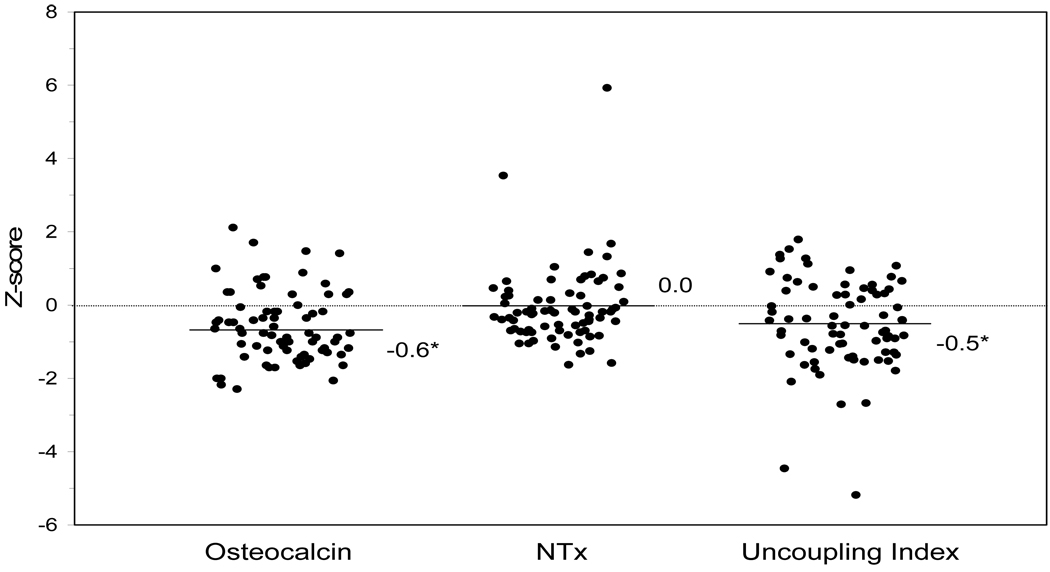
Results: Age ranged from 18 to 50 years with a mean of 28, and 97% were Non-Hispanic white. Among women with diabetes, mean disease duration was 16 years and current HbA1c was 8%. Compared to controls, women with diabetes had a high prevalence of previous fracture (37% vs. 24%) and low BMD for age (heel or forearm: 49% vs. 31%), low heel and forearm BMD, and low osteocalcin levels. Levels of NTx were similar, suggesting uncoupled turnover favoring resorption. Poor glycemic control was associated with low BMD at all bone sites except the spine, and with low osteocalcin and NTx levels.
Conclusions: Optimal glycemic control may prevent low BMD and altered bone turnover in type 1 diabetes, and decrease fracture risk.
Figures
References
-
- Brown SA, Sharpless JL. Osteoporosis: an under-appreciated complication of diabetes. Clinical Diabetes. 2004;22:10–20.
-
- Janghorbani M, Van Dam R, Willetd W, et al. Systematic review of type 1 and type 2 diabetes mellitus and risk of fracture. Amer J Epidemiol. 2007;166:495–505. - PubMed
-
- DIAMOND Project Group. Incidence and trends of childhood Type 1 diabetes worldwide 1990–1999. Diabet Med. 2006;23:857–866. - PubMed
-
- Matsushima M, LaPorte RE, Maruyama M, et al. Geographic variation in mortality among individuals with youth-onset diabetes mellitus across the world. DERI Mortality Study Group. Diabetes Epidemiology Research International. Diabetologia. 1997;40:212–216. - PubMed
-
- Carnevale V, Romagnoli E, D'Erasmo E. Skeletal involvement in patients with diabetes mellitus. Diabetes Metab Res Rev. 2004;20:196–204. - PubMed
Publication types
MeSH terms
Substances
Grants and funding
LinkOut - more resources
Full Text Sources
Medical
