


Protein intrinsic disorder toolbox for comparative analysis of viral proteins
- PMID: 18831795
- PMCID: PMC2559894
- DOI: 10.1186/1471-2164-9-S2-S4
Protein intrinsic disorder toolbox for comparative analysis of viral proteins
Abstract
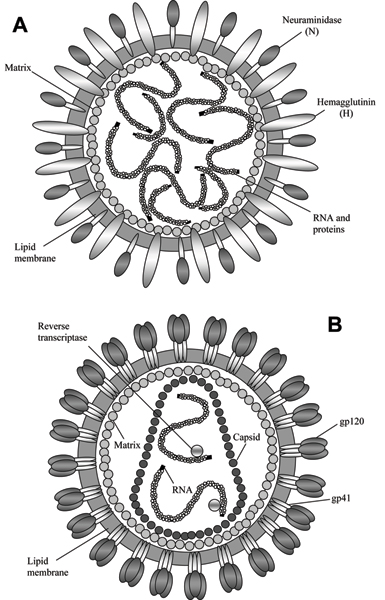
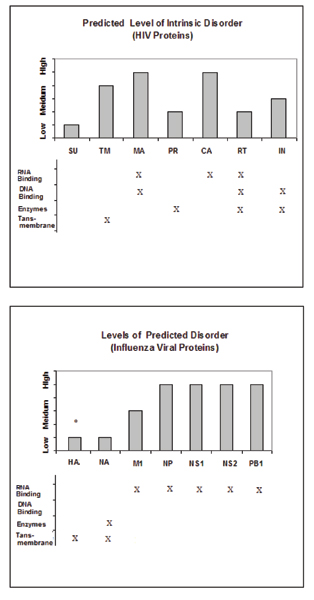
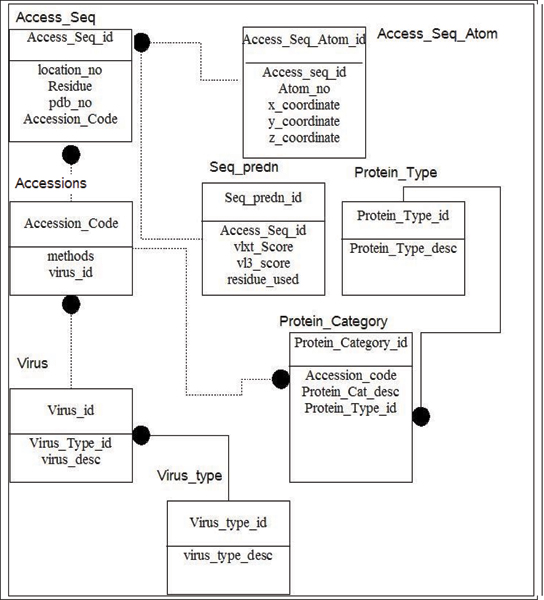
To examine the usefulness of protein disorder predictions as a tool for the comparative analysis of viral proteins, a relational database has been constructed. The database includes proteins from influenza A and HIV-related viruses. Annotations include viral protein sequence, disorder prediction, structure, and function. Location of each protein within a virion, if known, is also denoted. Our analysis reveals a clear relationship between proximity to the RNA core and the percentage of predicted disordered residues for a set of influenza A virus proteins. Neuraminidases (NA) and hemagglutinin (HA) of major influenza A pandemics tend to pair in such a way that both proteins tend to be either ordered-ordered or disordered-disordered by prediction. This may be the result of these proteins evolving from being lipid-associated. High abundance of intrinsic disorder in envelope and matrix proteins from HIV-related viruses likely represents a mechanism where HIV virions can escape immune response despite the availability of antibodies for the HIV-related proteins. This exercise provides an example showing how the combined use of intrinsic disorder predictions and relational databases provides an improved understanding of the functional and structural behaviour of viral proteins.
Figures
References
-
- Burton DR. Antibodies, viruses and vaccines. Nat Rev Immunol. 2002;2:706–713. - PubMed
-
- Garcia-Sastre A, Whitley RJ. Lessons learned from reconstructing the 1918 influenza pandemic. J Infect Dis. 2006;194:S127–132. - PubMed
-
- McMichael A, Mwau M, Hanke T. Design and tests of an HIV vaccine. Br Med Bull. 2002;62:87–98. - PubMed
-
- Hilleman MR. Realities and enigmas of human viral influenza: pathogenesis, epidemiology and control. Vaccine. 2002;20:3068–3087. - PubMed
Publication types
MeSH terms
Substances
Grants and funding
LinkOut - more resources
Full Text Sources
